
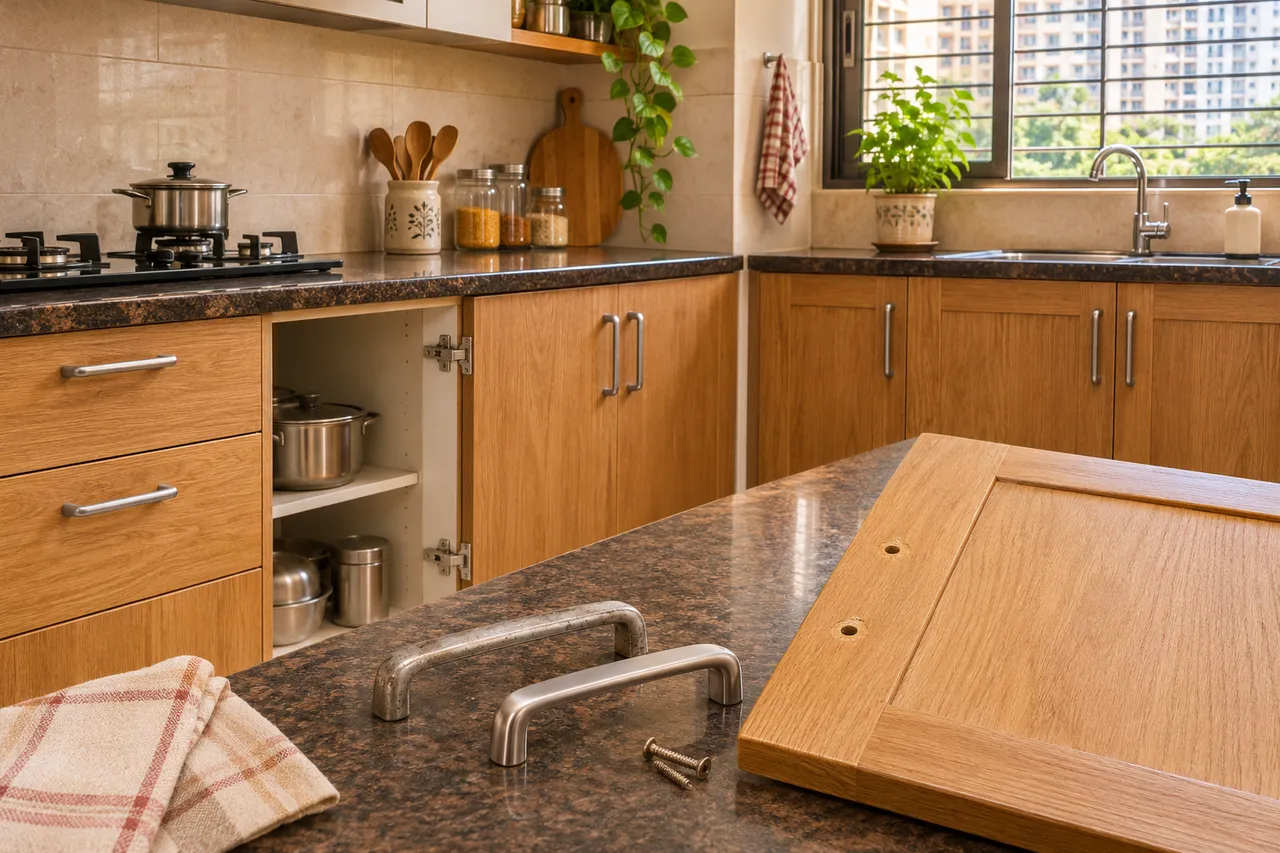
Replacing Kitchen Handles in Bhandup: Check Fixing Holes, Grip and Door Clearance
Replace kitchen handles only after checking the existing fixing pattern, front condition, grip and opening clearance. In a Bhandup kitchen, a similar-looking pull may expose old holes or collide with a neighbouring front. Compare actual samples and agree any repairs before ordering a complete set or drilling retained cabinetry.
Start with your Bhandup property
For a Bhandup apartment, begin with the kitchen you intend to retain, not the appearance of a new display kitchen. Photograph the fronts open and closed and count each handle type separately. Drawers, tall doors and corner cupboards may need different consideration. Note whether the aim is easier operation, replacing damaged hardware or a visual refresh; one handle choice may not solve every concern.
Record the fixing pattern and front condition
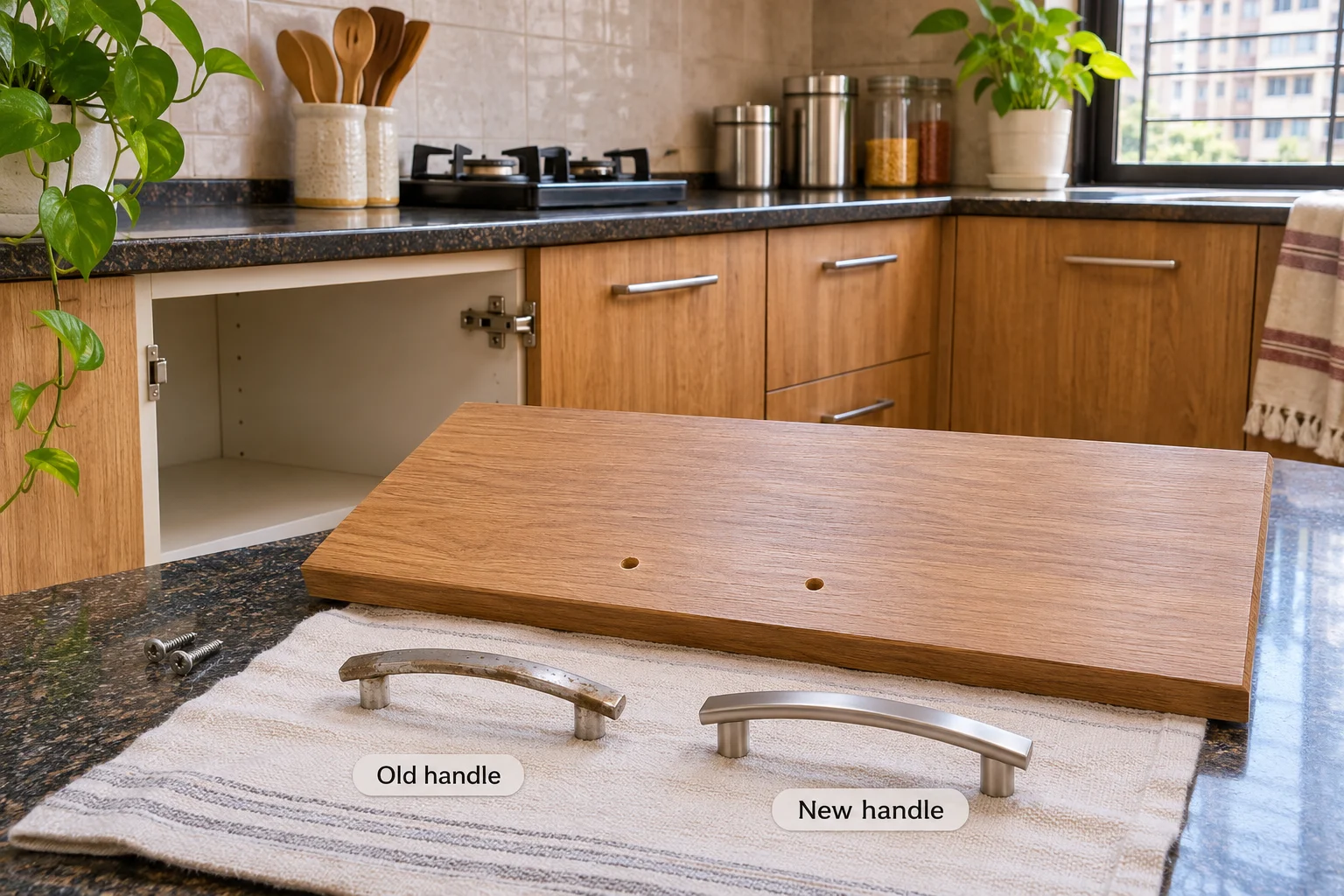
Ask the supplier to identify the dimensions that determine compatibility, including the spacing between fixings where applicable. Overall handle length is not the same measurement. Inspect retained fronts for loose material, damaged holes or previous repairs. A new pull can cover a mark while leaving its support unresolved. Keep a labelled sample or clear record from each distinct front type and have the installer assess whether the intended replacement can use existing fixing locations.
Test the actual grip
Try the sample with the people who normally use the kitchen. Compare grasping, pulling and cleaning around it, rather than judging only the finish. A narrow recessed profile, a knob and a bar pull have different operating patterns. Check what happens with wet or occupied hands in the ordinary household routine without treating the trial as an accessibility certification. Where a user has particular needs, obtain appropriate product and professional advice before committing to the whole set.
Check adjacent movement
Open the front fully and check neighbouring cupboards, drawers, appliances and walls. A projecting handle can create a collision that the old fitting did not. At a corner, test the complete sequence of opening and retrieval. Ask whether an assessed adjustment or a different handle model is more sensible than adding a door stop to hide a mismatch. Keep the kitchen layout and actual hardware visible in the comparison; a front elevation alone will not show every conflict.
Agree the finish and repair scope
Request a real finish sample and the manufacturer’s care instructions. Decide how old marks, exposed holes or disturbed finishes will be treated. Obtain approval before any new drilling or irreversible alteration. For a large order, trial a representative front first and record the selected product. At completion, check secure installation and operation according to the supplier’s instructions, then keep a few relevant product details for future replacement rather than relying on a photograph of the colour.
A practical example to test the decision
A homeowner chooses longer brass-coloured pulls to refresh retained cabinets. A sample trial shows that the fixing pattern differs and one corner handle hits an adjacent front. They select a compatible alternative for most units and agree a separate solution for the corner. The refresh stays limited because compatibility is checked before the entire order arrives.
Step-by-step planning checklist
- Count and photograph distinct front and handle types.
- Have the fixing pattern and retained condition checked.
- Trial sample grip and complete opening movement.
- Agree repairs before new drilling or surface changes.
- Inspect the installed set and retain the model and finish information.
What to put in the quotation
- Exact handle model, quantities and fixing compatibility.
- Retained-front assessment and separately priced repairs.
- Removal, fitting and any approved new holes.
- Finish sample, care information and making good.
Planning budget and scope
| Scope | Planning allowance or pricing method |
|---|---|
| Sample and measurement stage | Confirm any supplier or installer visit fee |
| Compatible replacement handles | Price the exact quantity and product |
| Front repairs or incompatible locations | Separate assessed quotation |
Budget from the complete handle schedule, not a single advertised unit price. Different lengths, hardware and repair needs change the total. No standard Bhandup replacement rate is assumed; compare products and installation on the same retained-front scope.
Preparation and project timing
Check samples before ordering all quantities. Resolve corner movement and repair details before installation. A small job still benefits from a representative trial so a mismatch does not become a whole-kitchen drilling or refinishing exercise.
Before you approve the proposal
Keep the handle schedule with the kitchen maintenance information. If an unavailable product is substituted, repeat the fixing and movement checks rather than accepting a visually similar replacement automatically. The most useful purchase record states which model fits which front and what repairs were made. This makes a later replacement more straightforward and prevents a small decorative change from becoming an unexplained sequence of new holes.
Prepare a clearer brief with WallsToWonder
Collect photographs, measurements and the choices you want to compare. Use Design My Room to explore a visual direction, then have the relevant professional check the measured layout, product requirements and work scope. Account access and current tool allowances apply; a visual concept is not a costed construction drawing.
Organise the scope with the interior cost planning tool and explore interior companies serving Mumbai. Confirm service availability for Bhandup directly and ask the firm to explain deliverables, site involvement and exclusions.
For related planning, read Kitchen Drawer Retrofits in Thirumangalam Homes: Can Your Existing Cabinets Take Them?.
Frequently asked questions
Is overall handle length enough to check fit?
No. Confirm the relevant fixing pattern and other compatibility dimensions with the supplier.
Can a larger pull hide old holes?
It might cover a mark but does not resolve support or repair requirements. Have the front assessed.
Should every front use the same fitting?
Compare operation and collisions. Different front types may require different suitable options.
Can I choose a finish from a photo?
Use a real sample and care information before ordering a complete set.
What should be checked after fitting?
The agreed fixings, secure operation, neighbouring movement and completed repairs.
Turn this idea into a plan for your home
Visualise your space, understand the likely budget, or find a professional who can bring the idea to life.