
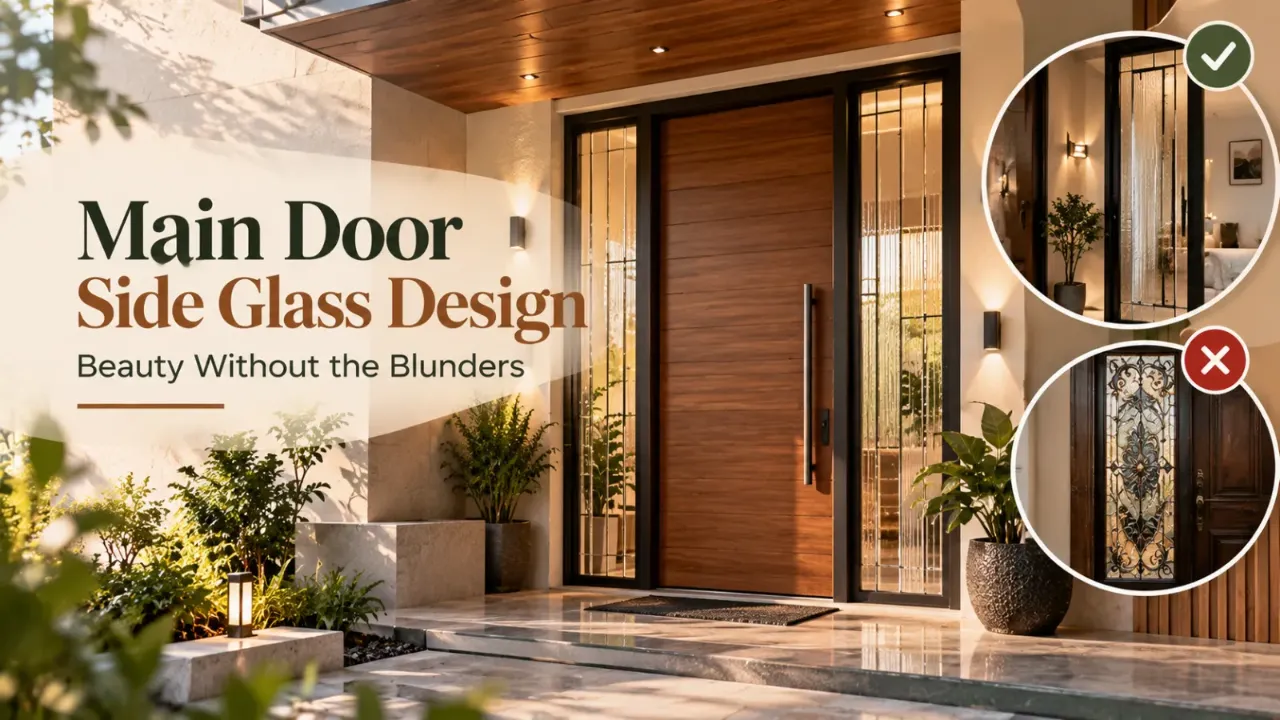
Main Door Side Glass Design: Beauty Without the Blunders
A glass panel beside the main door can completely change the appearance of a home's entrance. It can bring in natural light, make a narrow entryway feel more open and add a contemporary touch without replacing the entire door with glass.
However, main door side glass design in India requires more thought than simply selecting a pattern or frame colour. Privacy, security, weather exposure and installation quality all influence how well the design performs over time.
Whether you live in an apartment, independent house or villa, the right combination of glass, framing and installation details can help create an entrance that looks attractive and works comfortably every day.
Quick answer: Choose safety glazing suited to the entrance, decide how much visibility you want, check the opening and framing, and ensure the installer addresses weather sealing, drainage and door movement before completing the work.
1. Understand What Main Door Side Glass Actually Does
Side glass panels, also called sidelights, are fixed glazed sections positioned beside the entrance door. Some designs feature one narrow panel, while others use matching panels on both sides.
Their main purpose is to introduce daylight while maintaining a defined entrance.
For Indian homes, side glass can be especially useful when an entryway feels dark or enclosed. However, a large transparent panel may also allow people outside to see directly into the living room.
Before selecting a design, decide whether your priority is daylight, privacy, architectural appearance or a combination of these.
2. Choose the Right Type of Glass
The glass itself is one of the most important installation decisions.
Ordinary annealed glass is not an appropriate default for an impact-prone entrance location. Ask a qualified glazing professional to specify safety glazing suitable for the panel's dimensions, position and exposure.
- Toughened glass: Heat-treated safety glass that breaks into relatively small fragments when shattered.
- Laminated safety glass: Glass layers bonded with an interlayer that helps retain fragments after breakage.
- Frosted or obscure safety glass: Offers diffused daylight and reduces direct visibility when made with an appropriate safety-glass construction.
- Tinted safety glass: Can reduce brightness and change the entrance's appearance, although privacy depends on lighting conditions.
Laminated and toughened glass serve different purposes. The installer should assess human-impact risk, security expectations, wind exposure and the glazing system before recommending a specification.
3. Balance Natural Light With Privacy
A fully transparent sidelight may look beautiful in a showroom but feel uncomfortable once installed.
Consider what someone standing outside your door can see. In apartment corridors, neighbours or visitors may be positioned close to the glass. Independent houses may have entrances facing roads or pedestrian pathways.
Frosted, patterned or selectively obscured glazing can offer a better balance between natural light and privacy.
You can also combine a transparent upper section with an obscured lower section, provided the arrangement is designed as a suitable glazing system.
Do not rely on reflective glass for guaranteed privacy. Its visibility characteristics can change when indoor and outdoor lighting conditions reverse at night.
Design tip: Before finalising your entrance colours and finishes, explore visual directions with the Walls to Wonder Design My Room tool. Use the results for inspiration, then confirm practical details with your installer.
4. Measure the Opening Before Finalising the Design
Incorrect measurements can cause expensive installation problems.
The width and height of the opening are only the beginning. The installer should also inspect wall alignment, frame depth, fixing surfaces, sill conditions and the relationship between the glass panel and the main door.
A frame installed into an uneven or poorly prepared opening may be difficult to seal correctly.
Before manufacturing begins, confirm the final dimensions, frame details and required installation clearances with the glazing contractor.
If the proposed work involves enlarging an opening or removing masonry, obtain appropriate structural assessment and any required permissions first.
5. Select a Frame That Suits the Entrance
The frame affects both appearance and performance.
Aluminium systems can provide a slim, contemporary appearance. Other engineered metal, uPVC or timber systems may be suitable depending on the design, exposure and maintenance expectations.
The correct choice depends on more than colour.
Check the frame's structural suitability, corrosion resistance, gasket system, drainage arrangement and compatibility with the specified glass.
For entrances exposed to heavy rain or direct sunlight, choose a system intended for those conditions rather than a decorative indoor partition frame.
6. Plan for Indian Weather Conditions
Weather exposure is an important consideration for main door side glass design in India.
A protected apartment entrance and an exposed villa entrance face very different conditions.
In outdoor locations, wind-driven rain may reach the joints between the glass, frame and surrounding wall. Poorly detailed joints can allow water to enter the home.
The installation should include compatible gaskets, sealants, appropriate sill detailing and any drainage provisions required by the chosen system.
Do not assume that applying a thick layer of silicone around the panel is sufficient. The entire glazing assembly needs to be designed and installed correctly.
7. Keep the Glass Clear of Door Movement
A sidelight should not interfere with the normal operation of the main door.
Check the door's swing direction, hinges, handle, closer and other hardware. Make sure the glass frame does not obstruct opening or closing.
The door frame and sidelight frame must also be supported and connected appropriately so that repeated door use does not damage the glazing assembly.
If the entrance includes a smart lock, video doorbell or access-control equipment, decide the position of the necessary wiring and hardware before the frame is fabricated.
8. Avoid These Common Installation Mistakes
Several mistakes can make an otherwise attractive entrance difficult to live with.
- Choosing appearance over safety: Selecting glass only because it looks elegant can overlook impact and breakage risks.
- Ignoring privacy: Clear glass can expose the entrance or living room to outside views.
- Using unsuitable framing: A frame intended for interior decoration may not perform well in an exposed entrance.
- Poor sealing: Inadequate joints, drainage or sill detailing can contribute to water leakage.
- Skipping site measurements: Manufacturing the glass before confirming the finished opening can result in costly adjustments.
- Ignoring door movement: Poor coordination between the door and side panel can create clearance or vibration problems.
- Accepting an unclear quotation: A low initial price may exclude safety-glass specifications, hardware, installation, finishing or sealing work.
9. Check the Quotation Before Approving Installation
An itemised quotation makes it easier to understand what you are paying for.
Ask the contractor to identify the glass type, thickness, safety classification where applicable, panel dimensions, frame system, finish, hardware, sealants, installation labour and any civil repairs.
Clarify whether dismantling existing materials, transporting glass, removing waste and repairing surrounding finishes are included.
Also ask about workmanship warranties, product warranties and the process for addressing leaks or installation defects.
The cheapest quotation is not necessarily the best choice if essential components have been omitted.
Before you approve the cost: Use the Walls to Wonder Interior Quotation Checker to review pricing clarity, material specifications, missing scope and payment terms. The tool provides planning guidance; confirm technical glass requirements and final pricing with the contractor.
10. Inspect the Finished Installation
Once the glass is installed, examine the entire entrance before accepting the work.
Look for chips, cracks, visible damage, uneven joints and gaps around the frame.
Check that the main door opens and closes normally and that hardware operates without touching the sidelight.
For exposed entrances, ask the installer to demonstrate or document the relevant water-resistance checks appropriate to the system. Also confirm that drainage paths have not been blocked by excess sealant.
Review the finish from inside and outside, and request the final product specifications and warranty details.
Main Door Side Glass Installation Checklist
Before approving the work, make sure you have:
- Identified the entrance's daylight and privacy requirements.
- Selected suitable safety glazing with professional guidance.
- Confirmed the final opening dimensions.
- Checked the structural suitability of the surrounding opening.
- Chosen a frame suitable for the exposure conditions.
- Reviewed weather sealing, sill and drainage details.
- Confirmed door movement and hardware clearances.
- Checked the complete itemised quotation.
- Agreed on installation responsibilities and warranties.
- Inspected the finished panel before final payment.
Plan Your Entrance Design With Walls to Wonder
A beautiful entrance should complement the rest of your home. Before committing to glass patterns, colours and finishes, use Design My Room to explore visual directions for your entrance and adjoining interiors.
If you are planning a larger renovation, explore the Walls to Wonder Whole Home Visualizer to see how your entrance design could fit into a coordinated home concept.
These tools support design exploration, while actual glass specifications, measurements and installation details should always be confirmed by qualified professionals.
A Final Thought
Main door side glass can make an Indian home feel brighter, more welcoming and visually refined. But a successful design depends on decisions that are not always visible in photographs.
Safety glazing, privacy, accurate measurements, suitable framing and proper weatherproofing matter as much as the decorative finish.
Choose a design that suits your home's everyday needs, and make sure the installation details receive the same attention as the appearance.
A good entrance should look beautiful on the first day and continue performing well long after installation.
Frequently Asked Questions
1. Which glass is best for a main door side panel in India?
Toughened or laminated safety glazing may be suitable depending on impact risk, security needs, panel size and exposure. A qualified glazing professional should determine the correct specification.
2. Is frosted glass a good choice for main door sidelights?
Yes. Frosted or obscure safety glazing can allow daylight into the entrance while reducing direct visibility from outside. It is particularly useful for homes where the main door faces a shared corridor or street.
3. Can side glass be installed beside an existing main door?
Often, yes, provided the opening and surrounding structure can accommodate it. Structural changes, frame connections and waterproofing details should be assessed before work begins.
4. Can rainwater enter through a main door glass panel?
Yes, if the framing, seals, sill or drainage arrangement is unsuitable or incorrectly installed. Exposed entrances need appropriate weather-resistant detailing.
5. Is laminated glass better than toughened glass for security?
Laminated glass can offer advantages because its interlayer helps retain broken fragments. However, security performance depends on the complete glazing assembly, including the frame, fixing system and glass specification.
6. What should I check before paying the installer?
Inspect the glass and frame, confirm smooth door movement, check visible seals and finishing, review any required weather-resistance checks, and obtain the agreed specifications and warranty documentation.
Turn this idea into a plan for your home
Visualise your space, understand the likely budget, or find a professional who can bring the idea to life.