
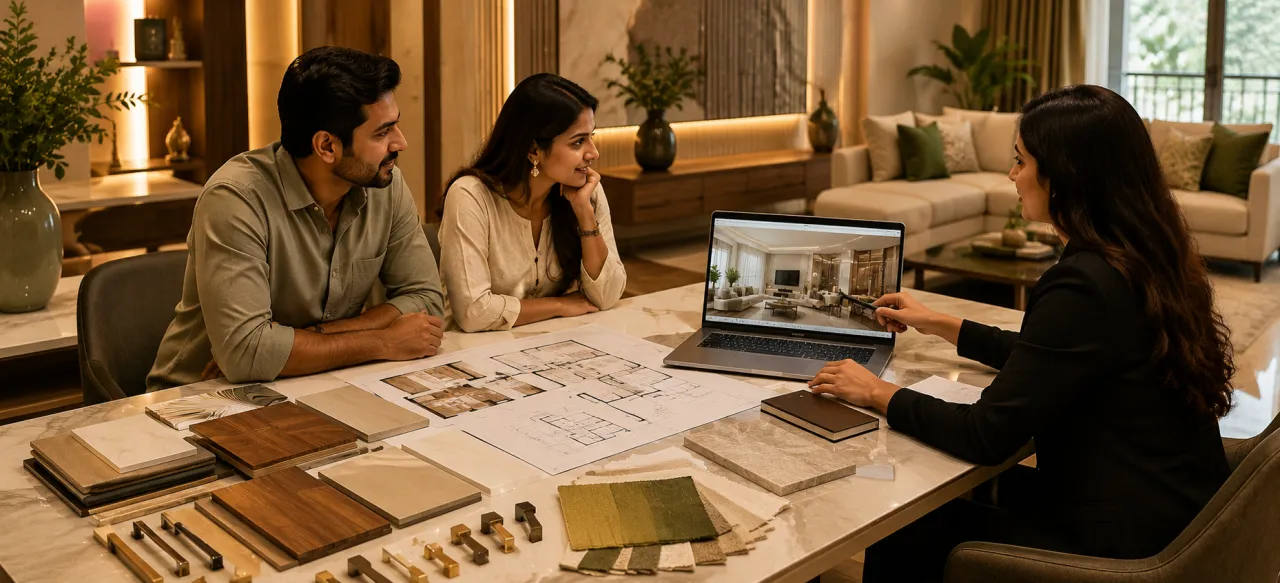
How to Choose an Interior Designer: Complete Homeowner Guide
Choosing an interior designer is one of the most important decisions you make while planning a new home, renovation, or apartment makeover. A good designer can help you use space better, control your budget, select the right materials, avoid costly mistakes, and create a home that fits your lifestyle.
But the wrong designer can lead to unclear pricing, poor execution, delays, hidden costs, and stress during the project. Many homeowners start by asking, “Who is the best interior designer near me?” A better question is: which interior designer is right for my home, budget, timeline, and design expectations?
Quick answer: Choose an interior designer by comparing their portfolio, experience, material knowledge, quotation clarity, timeline, reviews, communication style, warranty, and ability to work within your budget.
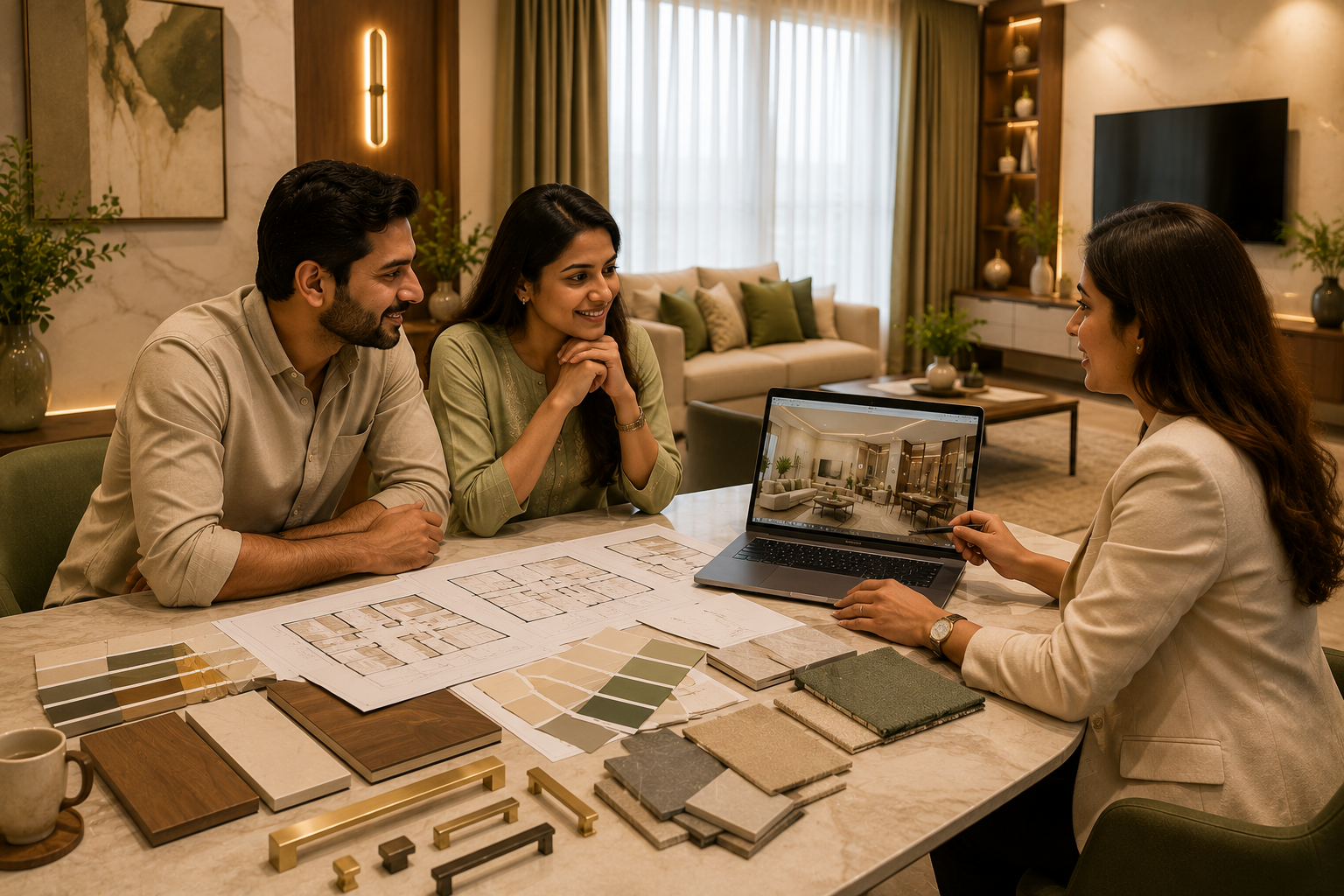
Why Choosing the Right Interior Designer Matters
Interior design is not just about selecting colours, furniture, and decor. It involves space planning, storage design, material selection, electrical coordination, carpentry, modular work, site supervision, budgeting, and execution.
Whether you are planning a 2 BHK, 3 BHK, villa, office, showroom, or renovation project, the designer becomes your planning partner. A reliable designer will help you understand what is practical, what is unnecessary, and where your money should be spent first.
This is especially important when your budget is limited and you want the best possible result without overspending. The right designer can guide you on where to invest, where to save, and how to avoid unnecessary changes after work begins.
Interior Designer Selection Checklist
Before you finalize a designer, use this simple checklist to compare your options clearly.
| Factor | What to Check | Why It Matters |
|---|---|---|
| Portfolio | Completed projects, design style, room types, before-after work | Shows real experience and design quality |
| Budget Fit | Whether they can work within your expected budget | Avoids cost mismatch later |
| Material Knowledge | Plywood, HDHMR, laminate, acrylic, PU, veneer, hardware | Impacts durability and final cost |
| Quotation Clarity | Room-wise pricing, material details, inclusions and exclusions | Prevents hidden charges |
| Timeline | Design time, production time, installation time, handover date | Helps you plan move-in and payments |
| Reviews | Client feedback, ratings, project photos, service quality | Builds trust before selection |
| Communication | Response time, clarity, patience, documentation | Reduces confusion during execution |
Step-by-Step Guide to Choose an Interior Designer
1. Start with Your Budget Range
Before contacting designers, decide your approximate budget. You do not need an exact number, but you should know whether you are looking for a basic, standard, or premium interior.
Your budget should include modular kitchen, wardrobes, TV unit, storage, false ceiling, lighting, furniture, decor, civil work, electrical changes, appliances, GST, and a small contingency amount.
Not Sure About Your Interior Budget?
Use the WallsToWonder Interior Design Cost Estimator to get a quick budget idea before meeting designers.
Calculate Interior Cost2. Check Their Portfolio Carefully
A designer’s portfolio tells you more than their words. Look at completed projects, room-wise work, design quality, material usage, storage planning, lighting style, and finish level.
Do not look only at beautiful 3D renders. Ask for real project photos whenever possible. Check whether the designer has experience with homes similar to yours.
A designer who mostly works on luxury villas may not be the best fit for a compact apartment budget. Similarly, a basic carpenter-style contractor may not be ideal if you want detailed design planning and premium finishing.
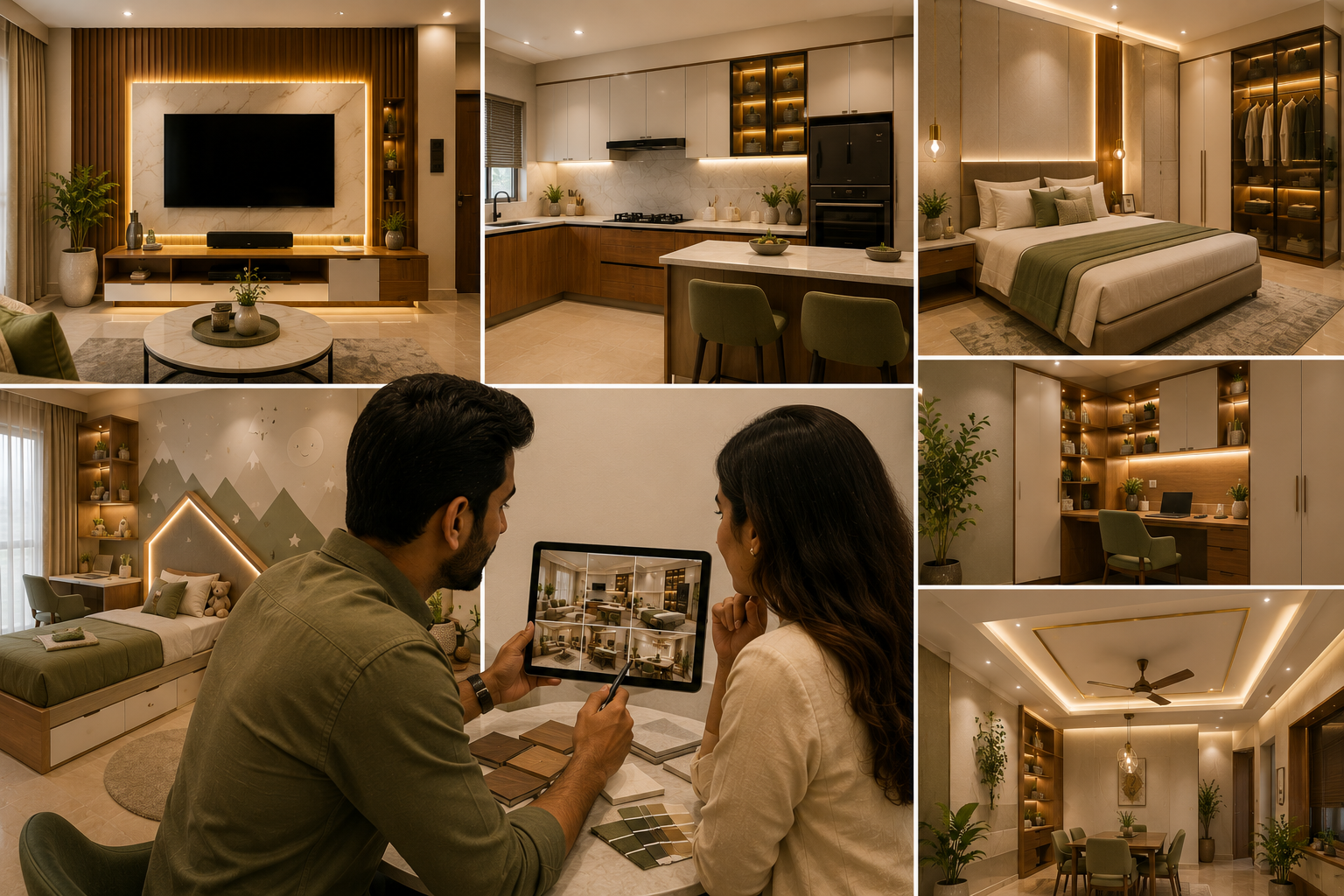
3. Match Their Style with Your Taste
Every designer has a natural design style. Some are strong in modern minimal interiors, some in luxury interiors, some in traditional Indian homes, and some in space-saving apartment layouts.
Choose a designer whose work already feels close to what you want. You can share reference images, but avoid copying blindly. A good designer should adapt ideas to your actual room size, budget, lighting, lifestyle, and material availability.
4. Compare Scope, Not Just Price
Many homeowners make the mistake of choosing the lowest quotation. But two quotes may look similar while offering very different materials, hardware, thickness, finishes, warranties, and installation quality.
A lower quote may exclude important items such as countertop, electrical changes, premium hardware, soft-close fittings, lighting, painting, civil work, appliances, GST or installation charges. Always compare what is included and what is excluded.
| Quote Item | Low Detail Quote | Better Quote |
|---|---|---|
| Kitchen | Modular kitchen - ₹2.5L | Kitchen size, material, shutter finish, hardware, countertop, accessories listed clearly |
| Wardrobe | Bedroom wardrobe - ₹1.2L | Sq. ft. size, internal layout, loft, shutter type, laminate, handles and hardware mentioned |
| TV Unit | TV unit included | Design size, storage type, panel material, lighting and finish clearly defined |
| False Ceiling | Ceiling work included | Area, design type, lighting points and electrical scope mentioned |
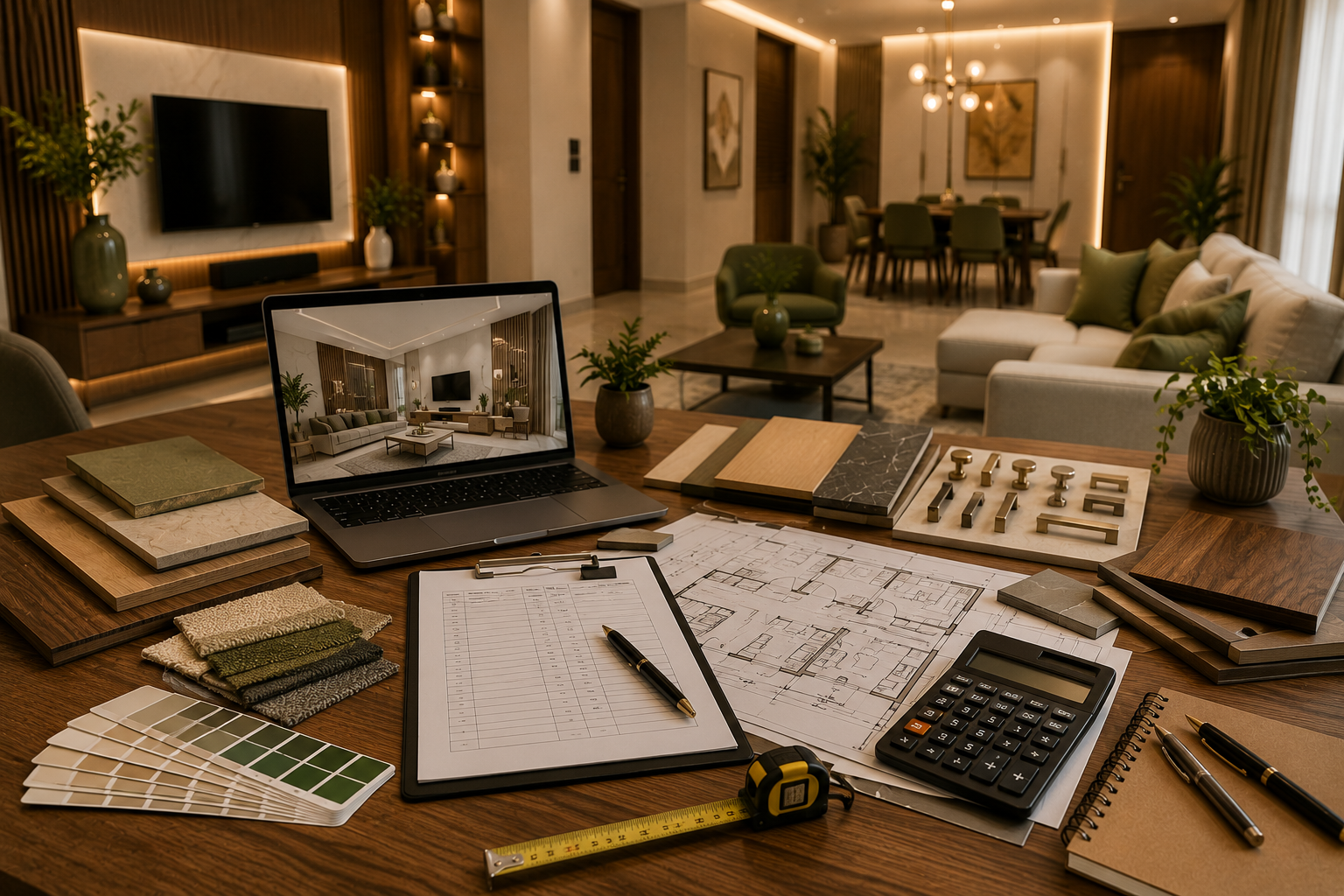
5. Ask About Materials and Hardware
Materials decide how long your interiors will last. Ask what board or plywood will be used, which laminate or finish is included, what hardware brand is offered, and whether soft-close fittings are part of the quote.
For kitchens, moisture resistance is important. For wardrobes, shutter quality and internal layout matter. For TV units and wall panels, finish and installation quality create the final look.
6. Understand the Design Process
A professional designer should have a clear process. This may include requirement discussion, site measurement, layout planning, 2D drawings, 3D views, material selection, quotation finalization, production, installation, supervision, and handover.
Ask how many design revisions are included. Also ask when the final working drawings will be shared and who will coordinate with carpenters, electricians, painters, and site workers.
7. Check Reviews and Past Client Experience
Reviews help you understand how the designer behaves during real execution. Look for feedback about timelines, transparency, finishing, after-sales support, and communication.
A designer may have beautiful photos, but client experience is equally important. On WallsToWonder, homeowners can explore interior designers and companies, check profiles, browse work, and compare professionals before starting conversations.
8. Discuss Timeline Before Payment
Interior projects often get delayed because timelines are not discussed clearly in the beginning. Ask how much time is needed for design, production, installation, finishing, and handover.
| Project Type | Approx. Timeline | Important Note |
|---|---|---|
| Small room makeover | 10 - 25 days | Depends on furniture and decor scope |
| 2 BHK interior | 35 - 75 days | Kitchen and wardrobes usually take maximum time |
| 3 BHK interior | 50 - 100 days | More rooms and furniture increase timeline |
| Full renovation | 60 - 120+ days | Civil, plumbing and electrical work may add time |
9. Review Payment Terms and Contract
Never start a project without written terms. The quotation or agreement should mention scope, cost, payment schedule, materials, timeline, warranty, cancellation terms, and change request policy.
Avoid paying a very large amount upfront unless the designer or company has a strong track record and clear documentation. A milestone-based payment schedule is safer for both sides.
10. Check After-Sales Support
Interior work does not end on handover day. Small adjustments, hardware alignment, shutter issues, or minor finishing corrections may be needed later.
Ask whether the designer provides warranty or service support after completion. A good designer or interior company should clearly explain what is covered and what is not covered.
Questions to Ask Before Finalizing an Interior Designer
- Have you completed similar homes before?
- Can I see real project photos, not only 3D renders?
- What materials and hardware are included in this quote?
- What is excluded from the price?
- How many design revisions are included?
- Who will supervise the site?
- What is the expected project timeline?
- How will extra work or changes be charged?
- Is GST included or extra?
- Do you provide warranty or after-sales service?
Red Flags to Avoid While Choosing a Designer
| Red Flag | Why It Is Risky |
|---|---|
| Very low quote without details | May lead to hidden charges or poor material quality |
| No real project photos | Portfolio may not show actual execution experience |
| No written scope | Can create disputes during work |
| Unclear material brands | Quality may change after payment |
| No timeline commitment | Project may get delayed without accountability |
| Poor communication | Can create confusion and stress during execution |
Local Designer vs Interior Company: Which One Should You Choose?
Both local designers and interior companies can be good choices depending on your requirement. A local designer may offer flexibility and personal attention, while an established company may provide a structured process, larger team, stronger documentation and better project management.
| Option | Good For | Things to Check |
|---|---|---|
| Freelance Interior Designer | Personalized design, flexible budgets, smaller projects | Execution support, vendor network, site supervision |
| Interior Design Company | Full-home interiors, modular work, larger projects | Package clarity, material details, warranty and timeline |
| Carpenter / Contractor | Small furniture work, basic wardrobes, repairs | Design planning, finish quality, measurements and material quality |
WallsToWonder Tip: Do not choose only by price or popularity. Choose a designer who understands your lifestyle, respects your budget, explains materials clearly, and provides transparent execution details.
Use WallsToWonder to Shortlist Interior Designers Smarter
WallsToWonder helps homeowners make better interior decisions before hiring a professional. You can estimate your budget, explore city-wise interior professionals, compare designer profiles, view work, and connect with suitable designers based on your requirement.
Instead of calling random contacts, start with a clear budget and shortlist designers whose work, location, service type and style match your home.
Find Interior Designers for Your Home
Explore interior designers and companies on WallsToWonder, compare profiles, and plan your home interior with more confidence.
Explore Interior DesignersHelpful Internal Links
- Interior Design Cost Estimator
- Explore Interior Designers
- Interior Companies in Pune
- 2 BHK Interior Design Cost in India 2026
- Modular Kitchen Cost Guide in India
- Wardrobe Cost Guide for Indian Homes
- Living Room Interior Cost Guide India
FAQs on Choosing an Interior Designer
How do I choose the right interior designer?
Choose an interior designer by checking their portfolio, budget fit, material knowledge, quotation clarity, reviews, communication style, timeline and after-sales support.
Should I choose the cheapest interior designer?
Not always. A very low quote may exclude important items or use lower-quality materials. Compare scope, material, hardware, warranty and timeline before deciding.
What should be included in an interior design quote?
A good quote should include room-wise scope, material details, hardware, finish type, furniture, electrical work, installation charges, GST, payment schedule and timeline.
Is it better to hire a designer or carpenter?
A carpenter may be suitable for small furniture work, but a designer is better for full-home planning, layout, material selection, style coordination and execution management.
How many interior designers should I compare?
It is usually good to compare at least 2 to 4 designers. This helps you understand pricing, scope, material differences and communication quality.
What is the most common mistake homeowners make?
The most common mistake is finalizing a designer based only on price without checking scope, material quality, timeline, warranty and past work.
Final Thoughts
Choosing an interior designer is not just about finding someone who can make your home look beautiful. It is about finding a professional who understands your budget, lifestyle, space, timeline and long-term needs.
Start with a clear budget, compare portfolios, ask the right questions, check the quotation properly, and avoid rushing into a decision. When you choose carefully, your interior project becomes smoother, more transparent and more enjoyable.
Plan Your Home Interior Smarter
Estimate your budget, explore designers, and make better home interior decisions with WallsToWonder.
Start with Cost EstimateGet a personalised estimate for your home
Choose your rooms, materials and preferences to understand a practical interior budget before you commit.