
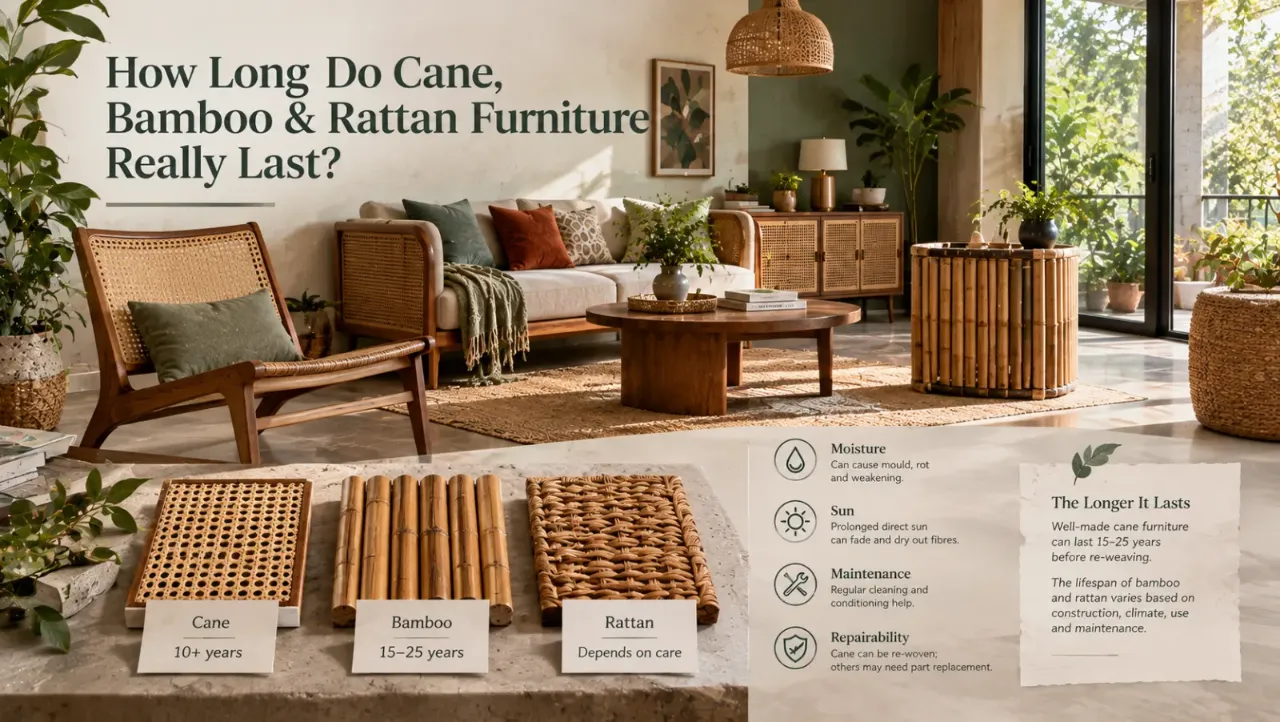
How Long Do Cane, Bamboo & Rattan Furniture Really Last?
Cane furniture has a reputation for being either incredibly durable or surprisingly fragile. Both can be true. A beautifully made cane chair can remain in use for decades, while a poorly constructed woven piece may begin loosening, cracking or sagging after only a few years.
Cane, Bamboo and Rattan Are Not the Same Thing
These names are often used interchangeably in furniture stores. They shouldn't be.
Rattan is a climbing palm that produces long, solid canes used for structural furniture components and weaving.
Cane is commonly used for the outer skin or strips taken from rattan, especially in woven applications such as chair backs and seats.
Bamboo is a grass, not a type of rattan. Its hollow, jointed stems behave differently and are used in furniture in different ways.
Then there is wicker. Wicker is a weaving technique, not a material. It can be made from rattan, bamboo, other natural fibres or synthetic materials.
The useful question is therefore not “How long does wicker last?” but “What material is this, how is it constructed and where will I use it?”
So How Long Can They Really Last?
There is no honest single lifespan number.
Cane
Often 10–20+ years for a well-made indoor piece, with the woven cane sometimes needing repair or re-caning before the frame itself needs replacement.
Rattan
Often 10–20+ years indoors when properly constructed and protected from prolonged moisture and harsh exposure.
Bamboo
Often 10–15+ years indoors when properly dried, treated, finished and maintained.
These should be treated as realistic planning ranges, not warranties. A premium handcrafted piece can last much longer. A low-quality piece can fail far earlier. The environment can change the answer dramatically.
The Most Important Factor Is Not the Material
People often ask whether rattan is stronger than bamboo or whether cane is durable enough for daily use.
Those questions matter. But construction quality can be just as important.
Imagine two chairs. One uses high-quality material, strong joints, a properly tensioned weave and a good protective finish. The other uses thinner material, weak connections, poor joining and a decorative coating that is already starting to fail.
Even if both are sold under the same material name, their lifespans can be completely different.
No single word on a product label can tell you the whole story.
Cane Furniture: The Weave Often Ages Before the Frame
A cane-backed chair may have a very strong timber frame. But the woven cane seat or back is the part receiving repeated flexing and tension.
Over time, you may notice:
- Slight sagging
- Broken strands
- Loose sections
- Darkening
- Brittleness
- Small gaps in the weave
That does not necessarily mean the entire chair has reached the end of its life. The frame can remain perfectly usable, while the cane can often be repaired or replaced.
Re-Caining Can Extend the Life of a Piece
A good cane chair should not automatically be thrown away because the seat has sagged.
If the structural frame is still sound, the woven section may be re-caned or repaired.
This principle also applies to woven backs, cabinet inserts and decorative cane panels.
Rattan: The Structural Side of Natural Fibre Furniture
Rattan is commonly used in furniture frames and structural forms because its long, flexible canes can be bent and shaped.
That gives rattan furniture a different character from flat woven cane panels.
A well-made rattan frame can be surprisingly durable for its weight.
But durability does not mean weatherproofing.
Rattan's Biggest Enemy Is Often Exposure
Natural rattan generally performs best when protected from prolonged direct sun, heavy rain and constantly damp conditions.
This matters particularly in Indian homes.
A piece kept in an air-conditioned bedroom has a very different environment from one sitting on an uncovered terrace through a monsoon and summer.
Same material. Completely different longevity expectations.
Don't Confuse Natural Rattan With Synthetic Outdoor Rattan
A lot of outdoor furniture is described using words such as “rattan look”, “wicker” or “all-weather rattan”. But the material may actually be a synthetic resin weave over a metal frame.
That is not the same thing as natural rattan.
Synthetic outdoor wicker is specifically designed to tolerate conditions that natural fibres are not.
The answer can completely change where you should use it.
Bamboo: Strong, But Not Immune to Moisture
Bamboo can be structurally strong when properly processed and constructed.
But raw or poorly treated bamboo is not magically protected from:
- Moisture
- Fungal growth
- Insects
- Splitting
- Surface degradation
- Prolonged sun exposure
The treatment and drying process therefore matter. A well-finished bamboo piece used indoors can perform very differently from untreated bamboo left outdoors.
The Finish Is Doing More Work Than You Think
When people inspect natural furniture, they often focus on the material itself.
But the finish is part of the durability system.
A suitable finish can help protect the surface from moisture, staining and everyday wear.
That doesn't make the furniture maintenance-free. It gives the material another layer of protection.
Humidity Is Not the Same as Water Exposure
A humid climate does not automatically mean cane, rattan or bamboo furniture will fail.
The bigger concern is often trapped or prolonged moisture.
A cane chair in a well-ventilated room may be perfectly comfortable. The same chair pushed tightly against a damp wall can have a much harder life.
A piece exposed to occasional humidity is different from one repeatedly getting wet and staying wet.
Ventilation matters. Drying matters. Placement matters.
Sunlight Can Age Natural Fibre Furniture Too
Natural material can change appearance with time.
Depending on the material and finish, direct sunlight may contribute to fading, drying or surface deterioration.
That is why a sunny balcony is not automatically a good location for natural cane or rattan furniture.
The furniture may survive, but the finish and fibre can age faster than they would indoors.
A designer should therefore think about exposure, not just aesthetics.
Daily Use Matters More Than You Think
A decorative cane chair used once a week has a very different workload from a dining chair used three times a day.
Think about:
- Frequency of sitting
- User weight
- Repeated loading
- Children climbing
- Pets
- Dragging furniture
- Cushion use
- Outdoor exposure
When someone says, “This furniture lasts 15 years,” the next question should be: “Under what use?”
The Frame and the Weave Have Different Lifespans
This is another reason simple lifespan numbers can be misleading.
That does not mean the chair lasts only ten years. It may mean that the seat needs attention before the frame does.
The same logic applies to cane cabinet doors, woven headboards, rattan screens, bamboo panels and woven lampshades.
What Usually Fails First?
There is no universal order, but several failure points are common.
For cane and rattan pieces, the weave, joints and finish deserve particular attention.
For bamboo, inspect the surface finish, joints and any early signs of splitting or cracking.
The point is not to memorise a failure chart. It is to inspect the parts that actually carry stress.
The Joints Matter More Than the Instagram Photograph
A beautifully styled chair can hide poor construction.
Turn it over. Look underneath.
Check:
- How the legs meet the frame
- Whether joints are tight
- Whether screws or fasteners are secure
- Whether the frame twists
- Whether the weave is tensioned evenly
- Whether there are cracks around stress points
A beautiful material cannot rescue a badly built frame.
Sit on It Before You Buy It
This sounds obvious. People still forget.
For seating, apply normal pressure.
Does the chair flex in a controlled way? Does the frame wobble? Do the arms feel secure? Does the seat feel evenly tensioned? Does the back move excessively?
A small amount of natural flex can be normal. Uncontrolled movement is a different story.
Listen for the Sounds
Sometimes the furniture tells you something.
A creak is not automatically a problem. But sudden popping, cracking or repeated movement at a joint deserves attention.
This can be especially useful when checking old cane chairs, loose rattan frames or bamboo joints.
Check Where It Will Live Before You Buy It
Bedroom
Usually a comfortable environment for natural cane, rattan and bamboo furniture.
Living Room
Generally suitable, depending on sunlight and usage.
Covered Balcony
Potentially workable for some pieces, but exposure still matters.
Open Balcony
Natural cane and rattan require much more caution because of weather exposure.
Terrace or Garden
Weather-resistant synthetic alternatives may be more appropriate for prolonged exposure.
The Monsoon Test
For Indian homes, the monsoon is a useful annual checkpoint.
Look for:
- Mildew or mould
- Swelling
- Softened fibres
- Staining
- Loose joints
- Sagging
- Musty odour
If a piece becomes damp, allow it to dry properly rather than covering it while moisture remains trapped.
Airflow Is a Design Detail Too
Don't push natural-fibre furniture tightly against damp walls just because it fits there.
A little breathing room can help, particularly in poorly ventilated corners, enclosed balconies, utility spaces, rooms with recurring condensation and homes with damp walls.
Cleaning Should Be Gentle
Natural woven furniture does not need aggressive cleaning to stay attractive.
Dust regularly. Deal with spills promptly. Use appropriate gentle cleaning methods.
Avoid harsh chemicals and abrasive scrubbing unless the manufacturer specifically allows them.
The goal is to clean the piece without damaging the finish or weakening the natural fibres.
Don't Soak the Furniture to Clean It
A weave can trap moisture. If water gets into joints, recesses or tightly woven areas and stays there, it can create problems that are much harder to see.
A damp wipe and proper drying are usually safer than flooding the furniture with water.
Cushions Can Protect More Than Comfort
A seat cushion is not just decorative. On certain chairs, it can also reduce direct abrasion and distribute repeated loading across the seat.
But cushions introduce another issue: moisture retention.
If the cushion stays damp against natural cane or rattan, it can create exactly the environment you are trying to avoid.
What Does “Handmade” Actually Tell You?
Not enough.
Handmade can be excellent. It can also be inconsistent.
Ask about the actual construction:
- What is the frame made from?
- What is the woven material?
- How has it been treated?
- Is it intended for indoor or outdoor use?
- Can the weave be repaired?
- Are replacement parts available?
These questions are much more useful than simply asking whether something is handmade.
The Repair Question Is a Smart Buying Question
Before spending more on natural furniture, ask:
Can the cane be replaced? Can a rattan joint be repaired? Can the bamboo panel be renewed? Can the finish be restored? Can the cushions be replaced?
A product that is repairable can have a very different long-term value from one that has to be discarded when one component fails.
When Should You Repair Rather Than Replace?
Repair
Repair is worth exploring when the main frame is sound, the damage is local and the woven or finished components can be renewed.
Replace
Replacement makes more sense when structural members are seriously cracked, major joints are failing, widespread decay is present or the furniture has become unsafe.
The important distinction is between cosmetic wear and structural failure.
What About Termites and Insects?
Natural plant-based materials can be vulnerable to biological attack depending on processing, storage and conditions.
This is another reason treatment, drying and proper indoor conditions matter.
Don't assume that a natural-fibre piece is automatically insect-proof because it is finished.
And don't assume that a single visible insect hole means the furniture is beyond repair. The source and extent of the damage need to be assessed.
Is Natural Furniture Good for Indian Homes?
Yes—but with the right expectations.
Cane, bamboo and rattan can work beautifully in Indian homes because they suit a wide range of interior styles and can add texture without making a room feel heavy.
They can work in bedrooms, balconies, living rooms, dining areas, reading corners, entry spaces, home offices and children's rooms.
Cane, Bamboo or Rattan: Which Is the Most Durable?
There is no universal winner.
A well-built rattan frame can be extremely durable. A properly treated bamboo piece can last many years. A cane chair with a strong frame can outlive the original weave and simply be re-caned.
So instead of asking “Which material lasts longest?” ask:
That is a much more useful design question.
A Practical Longevity Guide
Cane
Strength: repairability and light woven character.
Main risk: sagging, broken strands and moisture-related deterioration.
Best placement: indoor and protected areas.
Rattan
Strength: strong, flexible structural canes.
Main risk: prolonged weather exposure, moisture and finish degradation.
Best placement: indoor and protected areas unless specifically designed for outdoor conditions.
Bamboo
Strength: lightweight, strong and versatile when properly processed.
Main risk: moisture, splitting, insects and poor treatment.
Best placement: indoor and appropriately protected settings.
What Makes a Piece Last 20 Years Instead of 5?
Usually, it is not one magical treatment.
It is a series of boring decisions:
- Good material
- Good joints
- Proper drying and treatment
- Suitable finish
- Correct indoor/outdoor placement
- Reasonable loading
- Regular cleaning
- Prompt moisture control
- Timely repairs
That is what longevity actually looks like.
Before You Buy: The 10-Point Checklist
2. What exactly is the frame made from?
3. What is the weave made from?
4. Is it meant for indoor or outdoor use?
5. How has the material been treated?
6. How are the joints constructed?
7. Can the weave be repaired or replaced?
8. What exposure does the manufacturer recommend?
9. What maintenance does the finish require?
10. Are replacement or repair services available?
The Biggest Mistake: Buying for the Look and Placing It Anywhere
This is the mistake that shortens the life of natural furniture fastest.
You see a beautiful cane chair. You love it. You put it wherever it looks best.
Maybe that means direct afternoon sun, an exposed balcony, a damp wall or an area under a dripping plant.
Then, two years later, you decide:
Often, the material was never the real problem.
The location was.
The Bottom Line
Cane, bamboo and rattan furniture can absolutely be long-term furniture.
A well-made natural piece used indoors and looked after properly can remain useful for a decade or much longer, with some woven elements potentially being repaired or renewed along the way.
But there is no universal “20-year furniture” promise.
And that is why the best buying question is not:
It is:
Natural furniture is not fragile. It is simply honest. Treat it according to what it is, and it can stay beautiful for years.
Design With Materials That Suit the Way You Live
When choosing furniture, it helps to see how natural textures work with the rest of the room rather than evaluating one chair or table on its own. You can use Walls to Wonder's Design My Room tool to explore different room styles and furniture directions.
For broader project planning, the Walls to Wonder Interior Cost Estimate tool can help you build a room-wise budget.
When you are ready to work with a professional, explore designers through the Walls to Wonder designer directory.
Final Thought
Good natural furniture does not have to look perfect forever.
It can age.
The cane can be renewed. The rattan can develop character. The bamboo can deepen in colour. Small marks can become part of its story.
The real goal is not to buy furniture that never changes.
It is to buy furniture that can age without becoming disposable.
Frequently Asked Questions
How long does cane furniture last?
A well-made cane piece used indoors can often last 10–20 years or longer, especially when the structural frame is strong and the woven cane is maintained or re-caned when necessary.
How long does rattan furniture last?
Good natural rattan furniture used indoors can often serve for a decade or more and may last 20 years or longer when well constructed and protected from prolonged moisture and harsh exposure.
How long does bamboo furniture last?
Properly processed, treated and maintained bamboo furniture can last many years indoors, with around 10–15 years being a reasonable planning range for a good-quality piece.
Is cane the same as rattan?
Not exactly. Rattan is the climbing palm material, while cane commonly refers to the outer strips or skin of rattan used in weaving. Furniture terminology can vary, so it is worth asking the seller exactly what material is being used.
Is wicker the same as rattan?
No. Wicker refers to a weaving technique. Wicker furniture can be made from natural rattan, bamboo, other plant fibres or synthetic materials.
Can natural rattan be used outdoors?
It can work in protected outdoor areas, but prolonged exposure to rain and direct sun can shorten its life. Furniture specifically designed for outdoor conditions may use synthetic weather-resistant materials instead.
Does cane furniture sag over time?
It can. Repeated use can loosen or relax woven cane. Sagging does not automatically mean the whole chair needs replacing; the weave may be repairable or replaceable if the frame remains sound.
Is bamboo furniture durable enough for everyday use?
Yes, when it is properly processed and constructed. Quality, treatment, joints, finish and moisture exposure matter more than simply choosing bamboo because it is bamboo.
What damages cane and rattan furniture most?
Prolonged moisture, direct harsh sunlight, poor ventilation, heavy or inappropriate use, weak construction and delayed maintenance can all shorten the life of natural cane and rattan furniture.
How can I make cane or rattan furniture last longer?
Keep it reasonably dry, avoid prolonged direct weather exposure, clean it gently, maintain good ventilation, inspect joints and woven sections periodically, and repair small problems before they become structural.
Is natural furniture better than synthetic furniture?
Not automatically. Natural cane, bamboo and rattan can offer repairability, texture and a distinctive feel. Synthetic outdoor materials can make more sense where furniture must withstand prolonged sun and rain. The right choice depends on where the furniture will be used.
Turn this idea into a plan for your home
Visualise your space, understand the likely budget, or find a professional who can bring the idea to life.