
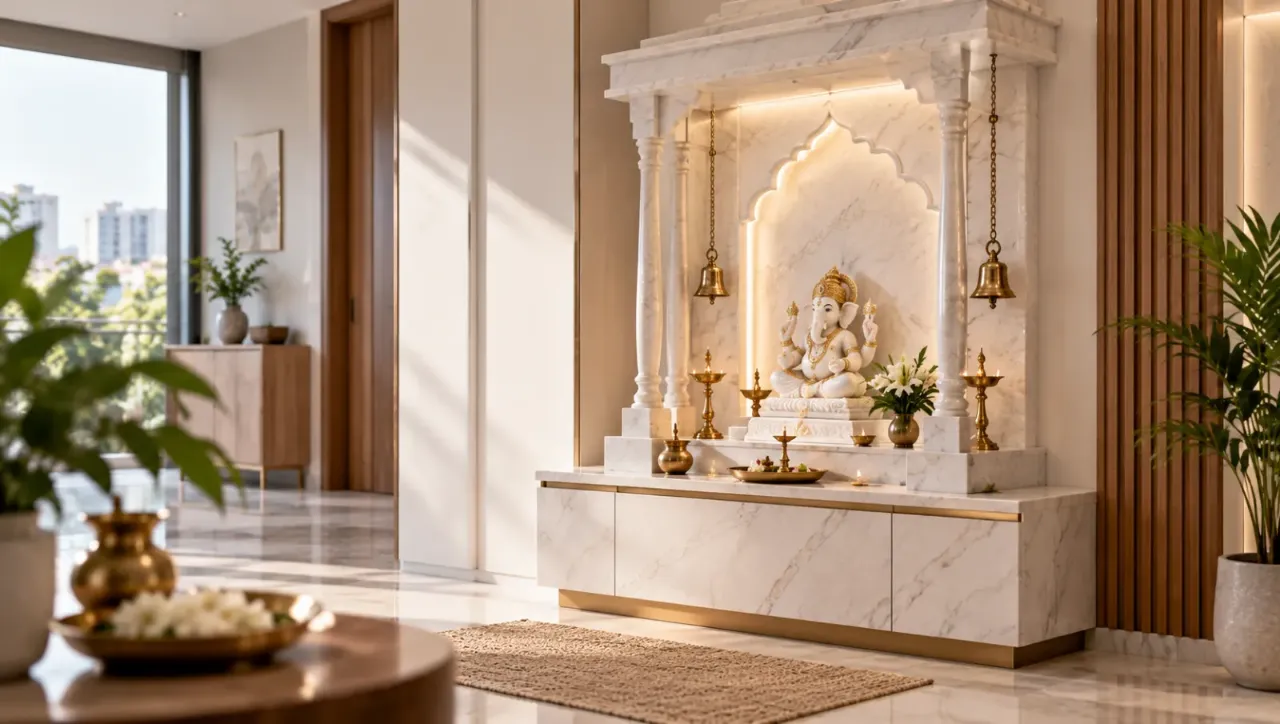
Choosing a Marble Mandir: Beauty Beyond the First Look
A marble temple can bring a sense of calm, tradition and permanence to a home. Whether it is a compact mandir in a bedroom alcove or a carved temple in a dedicated pooja room, its appearance often makes it an important part of the interior.
But a marble mandir is more than a decorative purchase. The quality of the marble, the precision of the carving, the design proportions, the ease of cleaning and the requirements for installation all influence how well it serves your home over time.
A lower price may be attractive, while intricate carving or a glossy finish may catch your eye immediately. Neither, on its own, tells you whether the temple is the right choice. The better decision comes from comparing the full offering: materials, workmanship, practical details, upkeep and total cost.
Quick answer: When choosing a marble temple for home, compare marble quality, carving and finishing, dimensions, storage, cleaning access, safe placement and installation costs. Choose a design that suits your space and routine rather than paying extra for decorative details you may not need.
1. Begin With the Space and Purpose
Before browsing designs, decide where the mandir will be placed and how you intend to use it. A small temple in a living room may need a compact footprint and closed storage, while a dedicated pooja room may accommodate a larger structure with a raised platform and more elaborate detailing.
Measure the available width, depth and height. Check nearby doors, windows, cupboards and walking routes. Make sure there is enough room to stand comfortably in front of the mandir and access the items stored inside or around it.
Think about your everyday routine as well. Will you keep prayer books, incense, lamps, flowers or other pooja essentials nearby? Do you need drawers or a shelf for these items? Will more than one person use the space at a time?
These details help determine the right size and layout before you invest in a particular design.
2. Understand What You Are Paying for in Marble Quality
Not every marble temple offers the same material quality. The stone's appearance, natural variation, surface condition and suitability for the intended use can differ between products.
Look closely at the marble rather than judging it from a photograph alone. Check for visible cracks, chips, filled areas, uneven surfaces and inconsistencies that are not part of the intended pattern. Natural stone may contain variations in colour and veining; these are not automatically defects, but you should know what to expect in the finished piece.
Ask the seller what marble is being used and whether the description refers to a specific stone type, grade or origin. If those details matter to your decision, request them in writing. Terms such as “premium marble” are not enough to establish exactly what you are buying.
Also ask about surface treatment and care. Marble can react to certain substances and may stain or mark, depending on its characteristics and finish. The correct maintenance approach should be based on the actual stone and any treatment applied to it.
3. Evaluate Craftsmanship, Not Just Carving Complexity
Intricate pillars, arches, domes and floral motifs can give a marble temple a distinctive traditional appearance. However, the amount of carving is not a reliable measure of overall quality.
Examine the symmetry of the structure, the consistency of repeated patterns and the neatness of the edges. Look at joints, corners, transitions between components and the finish of less visible areas. If the mandir includes doors, drawers or removable elements, check that they fit and operate smoothly.
A simpler design can offer excellent value when the stone is suitable, the proportions are well considered and the workmanship is consistent. An elaborate design may justify its cost if the detail is well executed and genuinely important to you, but decorative complexity should not distract from structural stability or practical use.
Where possible, inspect the actual piece or clear photographs from several angles before confirming the order.
4. Choose a Design That Fits Your Home
Marble mandirs come in a range of styles, from simple white structures with clean lines to traditional designs featuring carved pillars, arches and decorative tops. The right choice should complement the home without making the surrounding space feel crowded.
A compact room may suit a wall-adjacent or niche-based design with minimal projection. In a larger home, a freestanding mandir can become a focal point, provided the layout leaves enough room for movement and cleaning.
White and cream marble can create a light, understated appearance. Natural veining, contrasting borders or selected decorative details can add character, while elaborate carving may suit a more traditional interior. There is no single finish that works for every room; consider the flooring, wall colour, nearby furniture and available light.
Keep the proportions balanced. A temple that is too large may dominate a small room, while one that is too small can look disconnected from a generous dedicated space. Choose dimensions that feel appropriate both visually and functionally.
5. Consider Daily Use, Storage and Cleaning
A mandir should be convenient to use, not just beautiful to look at. Think about where prayer books, incense, matchboxes, small lamps, flowers and other essentials will be placed. A design with suitable drawers or discreet shelving can help keep the area organised.
Cleaning access is equally important. If the structure has intricate carvings, recessed corners or closely spaced decorative elements, dust may collect in places that are difficult to reach. Ask how the marble should be cleaned and whether the finish needs any specific care.
Use a soft cloth and a cleaning product recommended for the stone and its treatment. Avoid experimenting with harsh acids or abrasive cleaners, which may damage the surface. Address oil, turmeric, coloured powders or other spills promptly, using a method suitable for the marble.
A less elaborate mandir may be a better long-term choice if you prefer quick, simple maintenance. Choose the level of detailing you can comfortably look after rather than judging the design only by its visual effect.
6. Plan Lighting, Ventilation and Safe Use of Diyas
Lighting can highlight marble veining, carved details and the mandir's overall form. Soft, well-positioned illumination may be sufficient for a compact temple, while a dedicated pooja room can accommodate more layered lighting if the layout supports it.
Plan electrical points and fixtures before installation. Wiring should be properly installed, safely positioned and accessible for maintenance. Keep lights from producing excessive heat near vulnerable finishes or decorative elements.
If you use oil lamps, diyas or incense, make safe placement a priority. Keep flames away from curtains, flowers, stored materials and other combustible items. Use a stable, heat-suitable surface, provide appropriate ventilation and follow sensible fire-safety precautions.
A glossy or richly veined marble surface may look striking under light, but lighting should support safe, comfortable use first. The design should not create heat, glare or awkward access around the prayer area.
7. Compare the Full Cost, Not Just the Purchase Price
The quoted price of a marble temple may cover only the piece itself. Depending on the design and supplier, the overall cost may also include delivery, careful handling, installation, assembly, a supporting platform, electrical work, lighting, storage components and any finishing required at the site.
Carving complexity, size, marble specification and construction details can all affect cost. A custom design may involve measurements, drawings or additional labour, while a ready-made option may have a more predictable price but fewer opportunities for adjustment.
Ask the supplier to provide a clear breakdown and identify what is included or excluded. Confirm the delivery location, access route, installation responsibilities and what happens if a component is chipped or damaged during transit or fitting.
Compare quotations against the same requirements. A lower price is not necessarily better value if it excludes transport or installation, while a more expensive design should offer identifiable benefits that matter to you.
8. Check Placement, Support and Installation Requirements
Marble is a substantial material, so the weight and dimensions of the temple need to be considered before delivery. Do not assume that every floor, shelf or cabinet can safely support a large stone structure.
Confirm the finished weight or approximate weight with the supplier, along with the required support and installation method. For a large or unusually heavy mandir, seek appropriate professional advice about the floor, platform or supporting structure.
Plan how the temple will enter the home. Doorway widths, staircases, lifts, corridor turns and available working space can affect delivery and installation. A structure that cannot be moved into the intended room may require an alternative design or an installation plan agreed in advance.
Also consider access for cleaning around and behind the mandir, as well as the position of electrical points and lamps. Secure installation and suitable support are part of the temple's long-term value, not details to leave until delivery day.
9. Think About Long-Term Value and Maintenance
The long-term value of a marble mandir comes from how well it fits your home, how consistently it is made and how manageable it is to maintain. Price and appearance matter, but they are only part of the decision.
A carefully chosen, well-finished temple that meets your storage and usage needs may deliver better value than an ornate structure that requires awkward cleaning or does not suit the available space. Equally, paying more for high-quality craftsmanship can be worthwhile when the material, detailing and installation justify the difference.
Ask about any recommended sealing or surface treatment, how often it may need attention and which cleaning products are appropriate. Requirements vary by stone and finish, so rely on instructions for the specific product rather than assuming all marble is maintained identically.
Keep the purchase details and care instructions for future reference. With suitable placement, careful everyday use and appropriate cleaning, a marble temple can remain a meaningful part of the home for years.
A Simple Checklist Before Buying a Marble Temple
- Measure the space and confirm the mandir's dimensions.
- Ask what marble is used and inspect its surface and finish.
- Check the carving, joints, symmetry and less visible edges.
- Plan storage, cleaning access, lighting and safe diya placement.
- Confirm weight, supporting requirements and the delivery route.
- Compare prices for the same design, material and installation scope.
- Clarify transport, installation, damage handling and any extra charges.
- Obtain care instructions suited to the specific marble and finish.
Ready to Plan Your Home Mandir?
Consider how the mandir will sit within the room, how much space it requires and which design details matter most to you. Walls to Wonder's Design My Room tool can help you explore a visual direction for the surrounding space. Use that as a planning aid, then confirm the marble specification, dimensions, weight and installation requirements directly with your supplier.
A Final Thought
A marble temple should be chosen for more than the impression it makes at first glance. The stone, craftsmanship, proportions, ease of maintenance and installation all contribute to its value over time.
Compare the complete product rather than the decorative details alone. When the design suits your home, the marble is appropriate for the intended use and the installation is planned carefully, your mandir can remain both a meaningful focal point and a practical part of everyday life.
Frequently Asked Questions
1. Is a marble temple a good choice for every home?
It can be suitable for many homes, but the best choice depends on available space, weight, budget, cleaning preferences and installation conditions. Compact spaces may benefit from a smaller design that is easier to access and maintain.
2. How can I check the quality of a marble mandir?
Inspect the surface for cracks, chips and uneven finishing, and examine the symmetry, joints, carving and edges. Ask the seller to identify the marble and provide relevant product or care details in writing.
3. Does white marble require special maintenance?
Care depends on the particular marble, finish and any surface treatment. Use a suitable soft cloth and recommended cleaner, avoid unapproved acidic or abrasive products, and address spills promptly.
4. What should be included in the cost of a marble temple?
Confirm whether the price includes the mandir structure, carving, storage components, delivery, handling, installation, supporting platform, lighting and any finishing or electrical work. Ask for exclusions and extra charges to be identified clearly.
5. Can a large marble mandir be installed in any room?
Not automatically. The weight, dimensions, access route and supporting surface should be assessed before installation. For a large or unusually heavy structure, seek appropriate professional advice about support and safe placement.
Turn this idea into a plan for your home
Visualise your space, understand the likely budget, or find a professional who can bring the idea to life.