
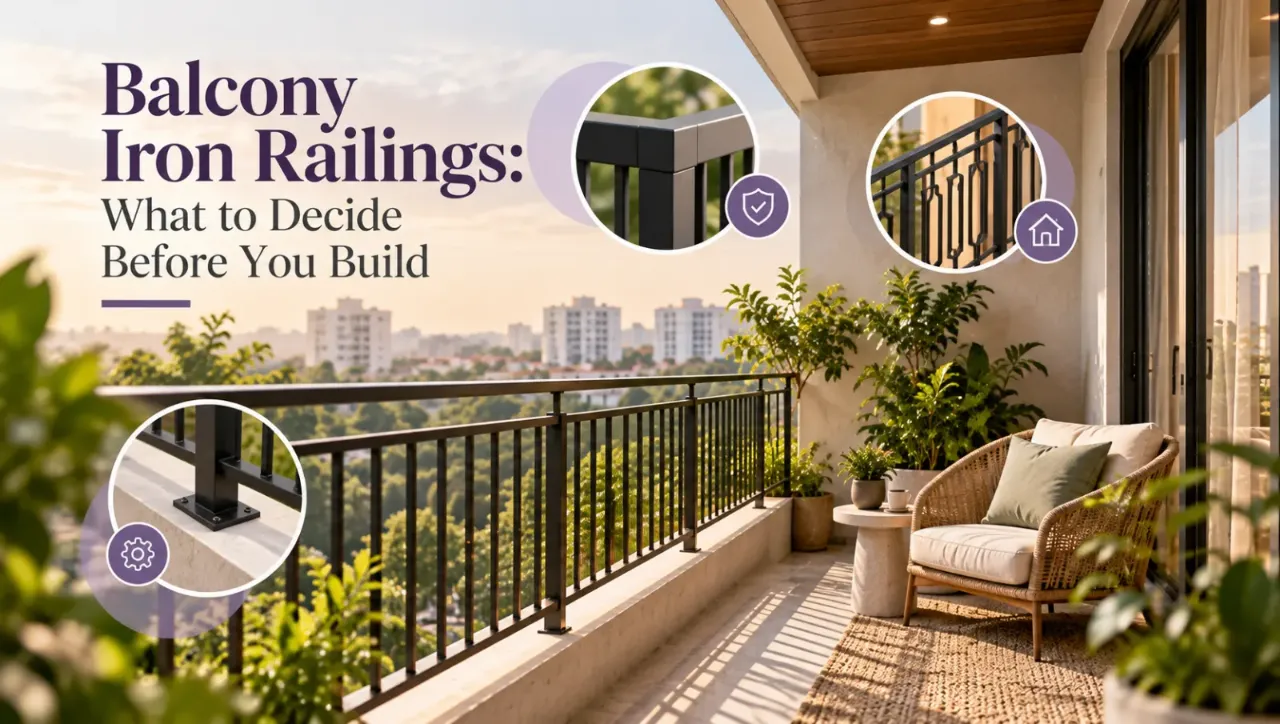
Balcony Iron Railings: What to Decide Before You Build
An iron railing can give a balcony a strong architectural character. A simple arrangement of vertical bars may suit a contemporary apartment, while decorative metalwork can complement a more traditional home. But a balcony railing is not just a design feature. It is also an important safety barrier that needs suitable materials, secure installation and appropriate detailing.
Before selecting a pattern, homeowners should consider the balcony's dimensions, exposure to rain and sunlight, building requirements, maintenance needs and overall budget. A design that looks attractive in a photograph may not be suitable for the actual site or the way the balcony will be used.
The best iron railing design balances appearance with safety, durability and practical upkeep. Here is what to decide before commissioning or installing one.
Quick answer: Before choosing an iron balcony railing, confirm the applicable safety and building requirements, measure the space, identify the actual metal specification, choose a suitable outdoor finish and establish how the railing will be securely fixed. Compare complete quotations that include fabrication, corrosion protection, installation and finishing rather than judging by the design or headline price alone.
1. Start With the Balcony and Its Intended Use
Begin by understanding the balcony itself. Is it a compact apartment balcony, a large terrace, a projecting balcony on an upper floor or an outdoor space exposed to heavy rain and strong sunlight? These conditions influence the railing's design, finish and installation requirements.
Consider how the balcony will be used. A space intended for sitting outdoors may need a railing that preserves the view while providing an appropriate barrier. A family balcony may require additional attention to gaps, climbability and how children interact with the railing. If you plan to place pots or other objects nearby, consider whether they could affect safe access or create additional hazards.
Measure the balcony's length and note corners, returns, doors, columns and any changes in floor level. The arrangement of these elements affects the number of railing sections, fabrication requirements and installation details.
Do not start by choosing a pattern from a catalogue. First establish what the railing must do at your particular site, then select a design that meets those needs.
2. Clarify What “Iron Railing” Actually Means
The term iron railing is often used broadly, even when the product is fabricated from mild steel or another metal. These materials may have different properties, finishes and maintenance requirements, so the description should be clarified before you approve a quotation.
Ask the fabricator to specify the actual material, including the type and dimensions of the sections, bars or profiles being used. Confirm that the proposed material is suitable for the balcony's exposure and the intended railing design.
Decorative wrought-iron-style railings can offer traditional curves and ornamental patterns. Fabricated mild-steel designs can provide clean lines, geometric arrangements and contemporary profiles. However, the name or style alone does not establish the material grade, strength or corrosion resistance.
Request written specifications rather than relying only on the phrase “heavy-duty iron” or “premium metal.” If a coating, galvanising process or other corrosion-protection treatment is proposed, ask exactly what it is and where it will be applied.
The goal is to understand what you are purchasing and how the complete railing system is intended to perform.
3. Choose a Railing Pattern That Suits Your Home
Once the basic requirements are clear, consider the design. Iron balcony railings can be simple, geometric, ornate or a combination of metal bars and other materials.
Vertical-bar railings can create a clean, understated appearance and work well with many contemporary façades. Their spacing and dimensions should still meet the applicable safety requirements.
Geometric railings use repeated lines, rectangles or other patterns to create a more architectural look. Keep the pattern proportionate to the balcony and consider how easily its corners and joints can be cleaned.
Decorative railings can introduce curves, floral motifs or traditional craftsmanship. They may suit homes with more ornate architectural detailing, but intricate designs can take additional fabrication and maintenance.
Minimalist metal railings often rely on simpler profiles, restrained colours and neat joints. Their appearance depends heavily on accurate alignment, finishing and the quality of the installation.
Avoid choosing a pattern solely because it looks premium. A complicated design is not necessarily safer or more durable than a simpler one. The best choice is the one that meets safety requirements, suits the building and can be manufactured and maintained properly.
4. Confirm Safety Requirements Before Finalising the Design
A balcony railing is a safety-critical feature. Its height, openings, strength, anchoring and overall construction must be suitable for the building and comply with the applicable local requirements.
Do not assume that a dimension seen in another home is automatically appropriate for yours. Ask the architect, qualified professional, building management or relevant local authority to confirm the requirements that apply to your property before fabrication begins.
Pay particular attention to the gaps between bars or panels. The openings must be appropriate for the applicable safety rules, particularly where children may use the balcony. Also consider whether horizontal members or decorative elements could be climbed.
The railing must be capable of resisting the loads required for its intended application. Material thickness, member spacing, welds, connections and anchoring all contribute to the performance of the complete system. Appearance alone cannot establish that the railing is safe.
If you are replacing an existing railing, do not assume the old fixing locations or supporting surface are suitable for a new design. Have the condition of the relevant structure and proposed attachment points assessed when needed.
5. Decide How the Railing Will Be Fixed
The way a railing is attached to the building is as important as the pattern of its bars. Depending on the design and supporting structure, installation may involve base plates, mechanical or chemical anchors, embedded components or other engineered connections.
The appropriate method depends on the balcony structure, edge condition, railing loads and the connection system being used. It should not be selected simply because it is convenient for the fabricator.
Before work begins, ask how the railing will be supported, where the fixing points will be located and how the installation will be completed without damaging important structural or waterproofing elements.
Drilling into a balcony slab or its edge can create problems if it is done without the appropriate assessment. Check the building's rules and obtain the necessary approvals before making structural or façade changes.
The installer should check alignment, stability and the condition of the connections after fitting. For an upper-floor balcony, secure fixing is essential; if the supporting structure or attachment details are uncertain, seek advice from a suitably qualified professional rather than relying on a visual inspection alone.
6. Choose a Finish That Protects Against Corrosion
Metal railings exposed to outdoor conditions face rain, humidity, sunlight, dust and airborne contaminants. The extent of exposure varies by location, but corrosion protection should be considered from the beginning rather than treated as a decorative finishing step.
Ask the fabricator to specify the surface-preparation method, primer or protective system, topcoat and any proposed galvanising or powder-coating process. These are not interchangeable treatments, and the right system depends on the base metal, product details and site conditions.
Pay attention to joints, welds, corners and other areas where moisture or coating damage may be more difficult to notice. The finish should be applied consistently, with appropriate preparation before coating. A fresh coat of paint does not automatically correct poor preparation or an unsuitable underlying system.
Colour also matters to the overall design. Black, charcoal and other darker shades can provide a defined outline, while lighter colours can create a softer appearance. Select the colour to suit the façade, but do not let appearance outweigh the need for a suitable protective finish.
Request the manufacturer's maintenance recommendations and any applicable warranty details for the specific coating system.
7. Coordinate the Railing With the Façade and Balcony Design
A well-chosen railing should look like part of the building rather than an unrelated addition. Consider the exterior wall colour, window frames, balcony flooring, doors and other metal elements when selecting the profile and finish.
Simple vertical lines may complement a contemporary façade, while decorative patterns can suit a more traditional design. If other balconies in the building follow a common design, check the applicable rules before proposing a different pattern or colour.
Think about the view and privacy as well. A dense pattern may feel more enclosed, while a more open design may preserve the outlook but provide less visual screening. Plants or other accessories can change how the balcony feels, but they should not obstruct the railing or compromise safety.
Also consider how the railing will appear from inside the home. It can be visible through sliding doors or from adjoining rooms, so its appearance may influence the interior as well as the exterior.
8. Plan Maintenance Before You Commit
All outdoor metal railings require some level of inspection and maintenance. The amount of attention needed depends on the material, finish quality, weather exposure and condition of the installation.
Inspect the railing periodically for peeling paint, corrosion, loose connections, damaged coating or movement. Pay special attention to joints, welds, base plates and fixing locations. If you notice movement, significant rust or damage to a connection, have the condition assessed promptly.
Cleaning requirements depend on the finish. A suitable soft cloth and gentle cleaning method may be enough for routine dust and surface dirt. Follow the coating manufacturer's instructions and avoid abrasive tools or chemicals that may damage the protective layer.
If corrosion develops, simply painting over it may not provide a lasting repair. The affected area may need appropriate preparation, treatment and recoating. Widespread corrosion, structural damage or loose anchors should be assessed by a competent professional before the railing is relied upon.
A simpler design may be easier to inspect and clean than one with many tightly spaced ornamental details. Consider maintenance alongside appearance, especially if the balcony is difficult to access.
9. Compare the Full Cost of Fabrication and Installation
The cost of an iron balcony railing depends on more than its length. Material specifications, profile dimensions, design complexity, finish system, fixing method, site access and installation requirements can all affect the quotation.
Decorative patterns may require additional fabrication, while simple designs can still incur substantial costs if they use specified heavy sections or need more complex anchoring. Protective treatments, surface preparation, transport, access equipment and removal of the old railing may also contribute to the total.
When comparing quotations, confirm that each one covers the same length, height, material, section dimensions, pattern, coating and installation scope. Ask whether measurement, fabrication, transportation, fitting, finishing and any repairs to the surrounding surface are included.
The lowest headline rate may exclude protective finishing or installation work that another quotation includes. Compare the complete scope and ask for all exclusions and additional charges to be documented before approval.
Do not reduce the specification of a safety-critical railing simply to meet a lower budget. If the proposed design is expensive, discuss simpler patterns or finish options with the professional while retaining the required safety and structural performance.
10. Inspect the Railing Before Accepting the Work
The final inspection should cover appearance, workmanship and installation—not just the colour or pattern.
Check that the railing follows the agreed dimensions and design, is aligned consistently and has a uniform finish. Look for rough edges, incomplete coating, visible fabrication defects or damage to the adjoining floor and wall.
Ask the installer to explain how the connections were completed and to provide any agreed documentation, product information or coating details. Confirm that the railing feels stable under the appropriate inspection procedure; do not test it by leaning dangerously over the balcony or applying improvised loads.
Any concerns about movement, anchor security, weld quality or the supporting structure should be assessed by a qualified professional. Record incomplete work or finish defects and agree on the correction process before treating the project as complete.
Finally, keep the approved quotation, material specifications, installation details and maintenance instructions. These records can help when the railing requires future inspection, repair or repainting.
A Simple Checklist Before Installing an Iron Balcony Railing
- Measure the balcony and identify all corners, openings and fixing locations.
- Confirm the applicable building and safety requirements before fabrication.
- Specify the actual metal type, sections and relevant material details.
- Choose a pattern that suits the façade and is practical to clean.
- Confirm the protective coating system and surface preparation.
- Agree on the fixing method with the appropriate professional.
- Check building approvals and façade restrictions before making changes.
- Compare complete quotations, including fabrication, finishing and installation.
- Arrange a final inspection and retain the relevant project records.
Ready to Plan Your Balcony Railing?
Before settling on a design, confirm the safety requirements, supporting structure, material specification and coating system. You can then compare patterns and colours that suit your home's architecture without compromising the practical details. Ask your fabricator or designer to document the agreed design and installation scope before work begins.
A Final Thought
An iron balcony railing should be judged by more than its appearance. The pattern gives it character, but the material specification, corrosion protection, fixing method and workmanship determine how well the completed railing performs over time.
Make the safety and technical decisions first, then refine the design to suit your home. With clear specifications, appropriate installation and a realistic maintenance plan, you can choose a railing that looks considered and serves its purpose reliably.
Frequently Asked Questions
1. Which iron railing design is best for a balcony?
The best design depends on the building's architecture, balcony dimensions, maintenance preferences and applicable safety requirements. Simple vertical bars, geometric patterns and decorative designs can all work when properly specified and installed.
2. Is mild steel the same as wrought iron for balcony railings?
No. These terms refer to different materials or fabrication approaches, although they are sometimes used loosely in product descriptions. Ask the supplier to identify the actual metal and provide the relevant specifications instead of relying on the style name alone.
3. How can I protect an iron balcony railing from rust?
Use a protective system suitable for the base metal and outdoor exposure. Appropriate surface preparation, primer or treatment, coating application and periodic inspections all matter. Follow the specific coating manufacturer's maintenance recommendations.
4. What should an iron balcony railing quotation include?
It should identify the dimensions, material specification, profile sizes, design, finish, fabrication, fixing method, installation, transport and applicable additional work. Ask for exclusions and extra charges to be stated clearly.
5. Can I replace my balcony railing without professional assessment?
Not always. The railing's connections, supporting structure, building rules and applicable safety requirements need to be considered. For upper-floor balconies or any uncertainty about anchors and structural support, consult an appropriately qualified professional before installation.
Turn this idea into a plan for your home
Visualise your space, understand the likely budget, or find a professional who can bring the idea to life.