
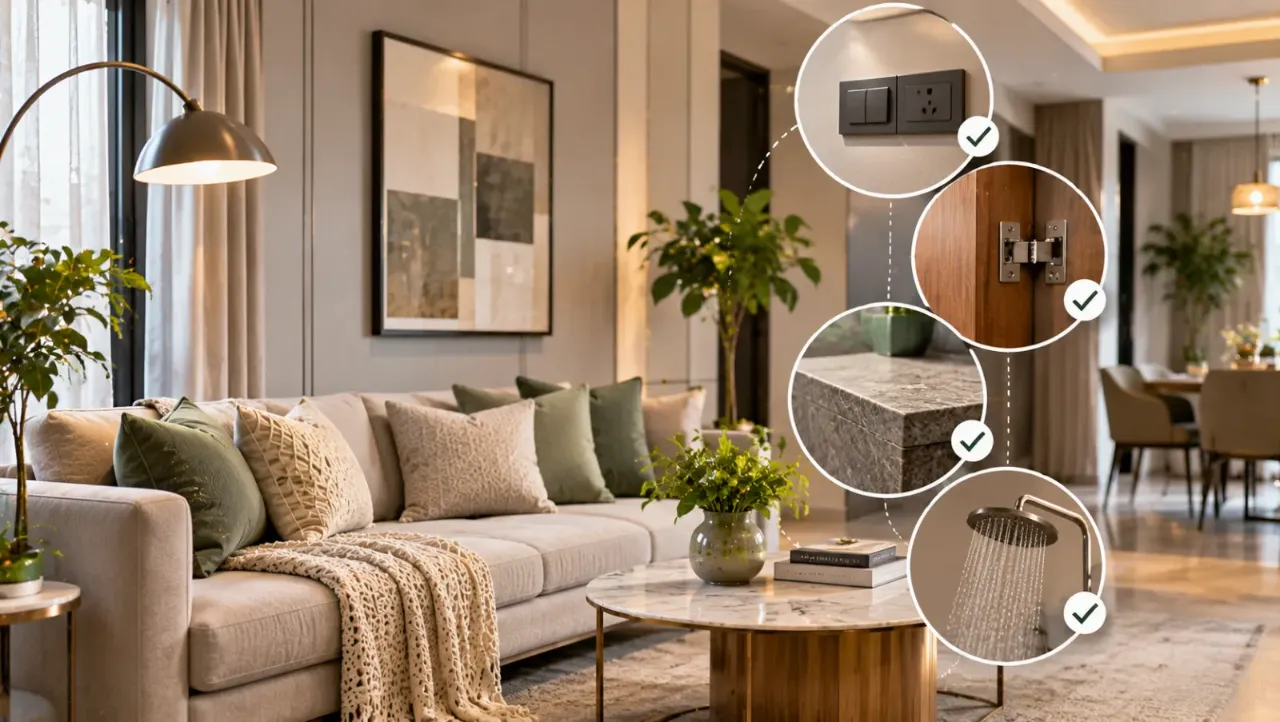
Where Not to Save Money When Designing Your Home
Planning a home interior project often involves making difficult budget decisions. From choosing furniture and finishes to selecting lighting, fittings and materials, every decision affects the overall cost. While it is sensible to look for savings wherever possible, reducing expenses in the wrong places can create problems that are much more expensive to fix later.
A lower-priced material may look similar to a premium alternative initially, but its durability, performance and maintenance requirements can be very different. Similarly, choosing inexperienced professionals or skipping essential installation work may affect the safety and functionality of your home.
The challenge is not to spend more on everything. It is to understand which interior elements deserve a larger share of your budget and which ones can be simplified without affecting quality.
Here are the areas where saving money in interiors may not be the best decision, especially when designing or renovating an Indian home.
1. Electrical Wiring and Installation
Electrical work is one of the most important areas where you should avoid unnecessary cost-cutting. Wiring, switches, distribution boards and protective devices directly affect the safety of your home.
Choosing cheaper electrical materials without checking their specifications can create long-term risks. Poor-quality wiring, incorrect circuit sizing and improper installation can lead to overheating, electrical faults and potentially dangerous situations.
Before finalising electrical work, pay attention to:
- Quality of wiring: Choose appropriately rated wires from reliable manufacturers.
- Circuit planning: Ensure that lighting, air conditioning, kitchen appliances and other high-load equipment have suitable electrical circuits.
- Safety devices: Use appropriately specified MCBs, RCCBs or RCBOs and other protective devices as required by the electrical design.
- Switches and sockets: Choose reliable fittings that can withstand regular usage.
- Professional installation: Have electrical work designed, installed and tested by qualified professionals.
Electrical work is also difficult and disruptive to replace once walls, ceilings and cabinetry are completed. Planning it correctly at the beginning can prevent expensive modifications later.
2. Waterproofing and Plumbing
Waterproofing is another area where reducing costs can create serious problems. Leakage from bathrooms, balconies, utility areas and concealed plumbing can damage walls, ceilings, flooring and furniture.
The visible damage is often only part of the problem. Water can travel through concealed areas, making the source difficult to identify and repairs more complicated.
Do not compromise on:
- Appropriate waterproofing systems for bathrooms and wet areas.
- Proper floor slopes and drainage arrangements.
- Reliable plumbing pipes and fittings.
- Correct sealing around sanitary fixtures.
- Adequate testing before tiles and other finishes are installed.
For Indian homes, particular attention should be given to bathrooms, balconies, terraces, kitchen plumbing and utility areas.
A properly executed waterproofing system may not be visible after the project is completed, but its importance becomes clear when the home is exposed to regular water usage and seasonal rainfall.
3. Kitchen Hardware and Cabinet Fittings
Kitchen cabinets are opened and closed several times every day. This makes their hinges, drawer channels, handles and other hardware particularly important.
Saving money by choosing unsuitable or poor-quality fittings may result in misaligned shutters, noisy drawers, damaged hinges and difficult-to-use storage.
Some hardware components worth investing in include:
- Good-quality hinges with suitable load capacity.
- Durable drawer channels.
- Soft-close mechanisms where appropriate.
- Reliable handles and cabinet accessories.
- Pull-out storage systems that suit the cabinet dimensions and intended load.
However, expensive hardware is not automatically better for every kitchen. Select fittings based on frequency of use, load requirements, available space and after-sales support.
A well-designed kitchen should remain easy to operate after years of regular use, not just look attractive on installation day.
4. Quality of Furniture Materials
Furniture is one of the most visible parts of an interior project, but its construction and material quality determine how well it performs over time.
A wardrobe, bed, dining table or kitchen cabinet may look impressive in photographs while hiding weak internal construction or unsuitable materials.
Before choosing furniture, understand the differences between solid wood, plywood, MDF, particleboard and other engineered materials.
| Material | Common applications | What to consider |
|---|---|---|
| Plywood | Kitchen cabinets, wardrobes and furniture | Grade, thickness and moisture suitability |
| MDF | Decorative panels and selected furniture components | Moisture exposure and edge protection |
| Particleboard | Economical furniture and cabinet components | Density, edge sealing and moisture exposure |
| Solid wood | Beds, tables and selected storage furniture | Wood quality, movement and maintenance |
| Veneer and laminates | Cabinet fronts, shutters and decorative surfaces | Surface durability and finishing quality |
Do not judge furniture quality only by the exterior finish. Ask about internal material specifications, thickness, edge treatment, joinery and hardware.
5. Bathroom Fittings and Sanitaryware
Bathrooms experience frequent water exposure, cleaning and daily use. Poor-quality fittings can lead to leakage, corrosion, malfunctioning mechanisms and repeated replacement expenses.
It is worth paying attention to the quality of:
- Faucets and shower fittings.
- Concealed flush systems.
- Health faucets and shower accessories.
- Floor drains and drainage fittings.
- Sanitaryware and installation components.
Before purchasing, check the material, finish, water compatibility, warranty and availability of replacement parts.
You do not necessarily need premium designer fittings throughout the bathroom. Reliable products with suitable specifications and accessible servicing are often a better investment than expensive products selected only for their appearance.
6. Flooring and Surface Finishes
Flooring is a major interior expense and one of the most frequently used surfaces in a home. Replacing it later can involve considerable labour, dust, disruption and additional costs.
Instead of choosing flooring only because it is inexpensive, consider its suitability for the room.
- Living rooms: May benefit from durable tiles, stone or other suitable flooring materials.
- Bathrooms: Require appropriate slip resistance and water-compatible finishes.
- Kitchens: Need surfaces that can handle regular cleaning, spills and everyday activity.
- Bedrooms: Can use materials that provide the desired comfort and maintenance characteristics.
Also consider tile quality, thickness, surface finish, installation method, grout selection and skirting details.
A slightly more expensive flooring option may provide better long-term value if it suits the space and requires less maintenance.
7. Professional Installation and Skilled Labour
Even good materials can perform poorly when installed incorrectly. This is why professional workmanship deserves an appropriate budget.
Poor installation can affect the appearance, strength and functionality of several interior elements, including:
- Modular kitchen cabinets.
- Wardrobes and storage systems.
- False ceilings.
- Electrical fittings.
- Flooring and wall tiles.
- Bathroom fixtures.
- Custom furniture.
For example, incorrectly aligned kitchen cabinets may create uneven gaps, while improperly installed wardrobes can develop alignment and stability issues.
Before finalising a contractor or installation team, review previous work, understand the scope of services and clarify responsibility for defects and corrections.
A lower quotation is not necessarily a better deal if it excludes essential installation work or uses inadequate labour.
8. Lighting and Electrical Planning
Lighting influences how a room looks and how comfortably it can be used. While decorative fixtures can be changed relatively easily, the underlying electrical planning is much more difficult to modify after construction.
Do not reduce costs by ignoring the lighting requirements of different activities.
A well-planned lighting arrangement should consider:
- General lighting: For overall visibility.
- Task lighting: For cooking, reading and working.
- Accent lighting: For selected architectural or decorative elements.
- Colour temperature: Suitable lighting tones for different rooms.
- Fixture placement: Appropriate positioning and glare control.
Choose reliable LED fixtures, drivers and electrical accessories. Consider replaceability and service support before selecting integrated lighting products.
You do not need expensive decorative lights everywhere. Invest in good lighting quality and planning first, then introduce statement fixtures where they make a meaningful difference.
9. Hardware, Hinges and Drawer Mechanisms
Small hardware components may appear insignificant in an interior quotation, but they have a major effect on daily usability.
A wardrobe with poor hinges, a kitchen drawer with weak channels or a cabinet with unreliable handles can become frustrating to use.
Pay attention to:
- Load-bearing capacity of drawer channels.
- Hinge quality and opening angles.
- Corrosion resistance.
- Soft-close performance.
- Availability of spare parts.
- Warranty and service support.
These components are used repeatedly, so choosing them only on the basis of the lowest price can result in frequent repairs.
At the same time, avoid paying for complicated accessories that you will rarely use. Prioritise hardware according to actual storage requirements and daily habits.
10. Why Good Interior Planning Saves Money
Sometimes the biggest interior expense is not a material or a furniture piece. It is a change made after work has already started.
Moving electrical points after wall finishing, changing kitchen layouts after cabinetry fabrication or modifying plumbing after tiling can increase project costs significantly.
This is why planning deserves proper attention before execution begins.
Before starting the project:
- Finalise the room layout and furniture placement.
- Confirm electrical points and appliance requirements.
- Plan plumbing and drainage locations.
- Finalise major material selections.
- Prepare detailed furniture drawings and dimensions.
- Review the quotation and clarify inclusions.
- Establish a realistic contingency budget.
If you are still exploring different design directions, use visualisation and planning tools before committing to expensive purchases.
11. Where You Can Save Money Without Compromising Quality
Avoiding cost-cutting in essential areas does not mean spending excessively on every part of your home.
There are several areas where you can make sensible savings:
| Area | How to save money |
|---|---|
| Decorative accessories | Purchase gradually instead of buying everything together. |
| Feature walls | Use paint or simple finishes instead of expensive cladding. |
| Designer furniture | Combine a few statement pieces with practical furniture. |
| Decorative lighting | Use affordable fixtures while maintaining good lighting quality. |
| Soft furnishings | Choose standard sizes and replace them as needed. |
| Wall decor | Use artwork, framed photographs and simple arrangements. |
| Open shelving | Use it selectively instead of installing expensive custom storage everywhere. |
| Unnecessary automation | Invest only in features that genuinely improve everyday convenience. |
The idea is to reduce spending on elements that are relatively easy to update while protecting the quality of components that are difficult or expensive to replace.
12. How to Prioritise Your Interior Budget
When planning your interior budget, separate essential expenses from optional upgrades.
A useful way to approach the budget is to organise expenses into three categories:
- Essential investments: Electrical work, plumbing, waterproofing, structural safety, reliable installation and important material specifications.
- Long-term functional investments: Kitchen hardware, furniture construction, flooring, bathroom fittings and storage systems.
- Optional design upgrades: Decorative wall treatments, premium accessories, statement lighting and additional styling elements.
The exact allocation will depend on the size of your home, existing construction, material choices and project scope.
Keep a contingency amount for unexpected expenses rather than allocating your entire budget to planned purchases. This gives you flexibility when site conditions or technical requirements change.
Closing Thoughts
A well-designed home is not necessarily the one with the most expensive furniture, finishes or decorative elements. It is the one where the important decisions have been made thoughtfully.
Saving money on decorative accessories or easily replaceable elements can be a sensible approach. However, compromising on electrical safety, waterproofing, plumbing, furniture construction or skilled installation can create problems that are much more expensive to resolve later.
Before approving an interior quotation, look beyond the final price. Understand the materials, specifications, workmanship and services included.
The goal should not be to spend the least amount possible. It should be to spend wisely on the things that make your home safe, durable, comfortable and functional for years to come.
Explore More with Walls to Wonder
Planning a home interior project? Explore Walls to Wonder's AI tools to visualise design ideas, understand costs and make more informed decisions.
- Whole Home Visualizer – Explore design ideas across your home.
- Design My Room – Experiment with different room styles and looks.
- Interior Design Cost Estimate – Get an initial understanding of interior costs.
- Interior Quotation Checker – Review and understand interior quotations.
- Rate My Room Design – Get feedback on your room design.
- Interior Style Finder – Discover an interior style that suits your preferences.
Visit Walls to Wonder for more interior design ideas and inspiration.
Get a personalised estimate for your home
Choose your rooms, materials and preferences to understand a practical interior budget before you commit.