
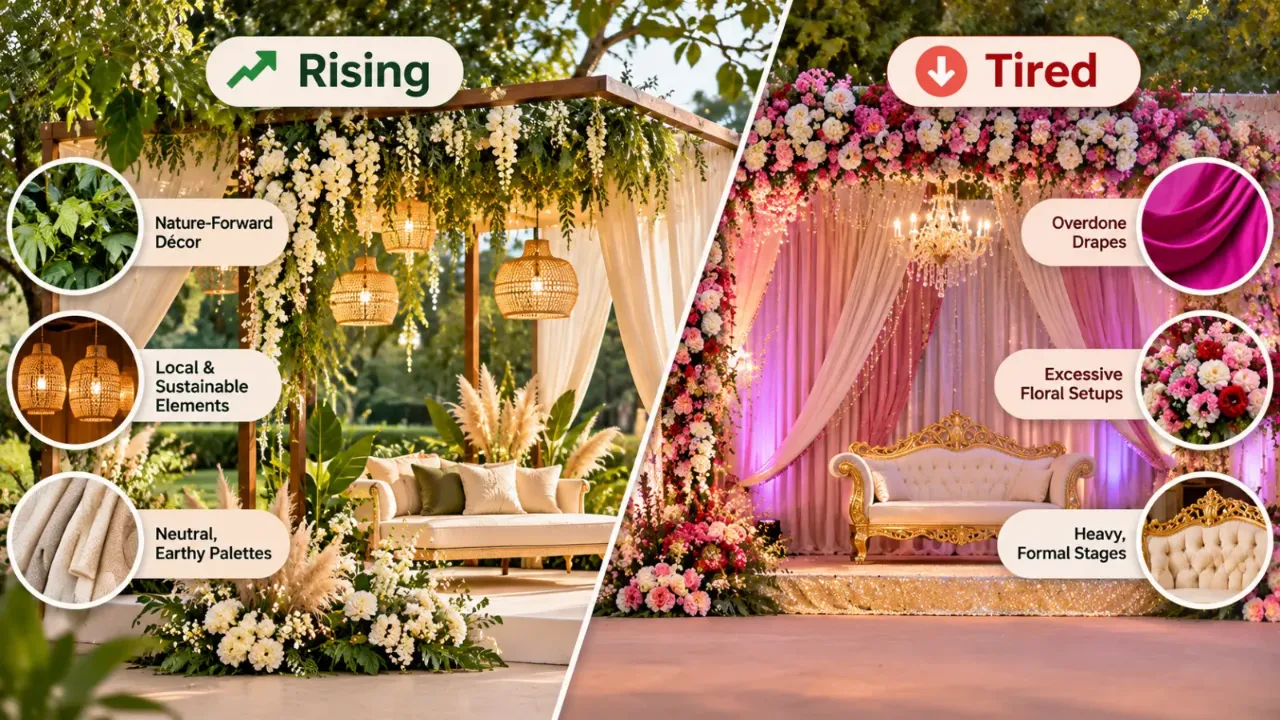
Wedding Decor Trends This Season: What's Rising and What's Tired
Wedding décor trends change every season, but not every new idea deserves a place at your celebration. Some styles bring a fresh perspective to traditional weddings, while others are simply familiar decorations presented in a different colour palette.
For the 2026–27 Indian wedding season, the direction is becoming clearer. Couples are showing greater interest in personalised settings, sculptural mandaps, statement lighting, natural floral arrangements and designs that make guests feel part of the celebration. At the same time, oversized installations and decorations created mainly for photographs are being reconsidered.
The aim is not to abandon traditional wedding décor. It is to use familiar elements more thoughtfully and create a setting that feels connected to the couple, the venue and the occasion.
1. Personalised Wedding Themes Are Replacing Copy-Paste Designs
One of the strongest shifts in wedding décor is the move towards personalisation. Rather than selecting a popular theme and reproducing it exactly, couples are incorporating details that reflect their relationship, family traditions and cultural background.
This can include:
- Custom signage featuring the couple's names or wedding story.
- Family photographs displayed as part of the welcome area.
- Regional artwork, textiles or craft elements.
- Personalised table details and ceremony installations.
- Different visual identities for different wedding functions.
A haldi celebration, for example, can use cheerful marigold arrangements and traditional fabrics, while the reception can have a more formal palette and sophisticated lighting.
What's rising: Thoughtful details that tell a personal story.
What's getting tired: Identical Pinterest-inspired themes that look disconnected from the couple and the venue.
2. Sculptural and Open Mandaps Are Gaining Attention
The wedding mandap remains a central design element, but its styling is becoming more architectural and experimental.
Instead of relying only on four heavily decorated pillars and a dense floral canopy, decorators are exploring asymmetrical structures, curved frames, suspended elements and designs that can be appreciated from different angles.
One interesting variation is the 360-degree mandap. It places the ceremony closer to the guests, sometimes with seating arranged around the structure rather than in conventional rows.
Other possibilities include:
- Circular or curved mandap frames.
- Lotus-inspired structures.
- Suspended floral arrangements.
- Brass and wooden architectural details.
- Open mandaps that preserve views of the surrounding venue.
The design should still respect the ceremony's practical requirements. Priest access, seating, visibility and movement around the mandap need to be considered before choosing an experimental structure.
What's rising: Sculptural, open and thoughtfully positioned mandaps.
What's getting tired: Heavy, repetitive mandap structures that look almost identical regardless of the venue or wedding style.
3. Statement Lighting Is Becoming the Main Attraction
Lighting is no longer just something added after the flowers and stage have been finalised. It is becoming an important part of the overall décor concept.
A carefully planned lighting arrangement can transform an ordinary venue, highlight architectural features and create atmosphere without requiring an enormous amount of additional decoration.
Some ideas gaining attention include:
- Oversized chandeliers above the mandap or dining area.
- Brass lamps and traditional deepams along pathways.
- Candlelit tables and lantern arrangements.
- Warm pin lights around trees and outdoor structures.
- Illuminated sheer fabric backdrops.
- Projection-based patterns on selected walls.
- Architectural lighting that highlights arches, columns and heritage details.
The best approach is to layer different lighting sources rather than relying on one bright lighting arrangement throughout the venue.
What's rising: Warm, layered and statement lighting.
What's getting tired: Excessively bright, mismatched coloured lights that compete with the flowers, fabrics and photographs.
4. Natural and Sculptural Florals Are Replacing Floral Overload
Flowers remain an essential part of Indian wedding décor, but the way they are arranged is changing.
Instead of covering every available surface with dense floral installations, decorators are experimenting with more natural arrangements. These include loose floral clusters, cascading vines, hanging blooms and combinations of flowers with foliage.
Popular directions include:
- Garden-inspired arrangements with trailing greenery.
- Monochromatic floral installations in ivory, blush or deep red.
- Seasonal marigold, jasmine and locally available flowers.
- Hanging floral arrangements above selected areas.
- Sculptural floral forms around the mandap.
This does not mean large floral installations have disappeared. They still work beautifully when the venue and budget support them. The difference is that flowers are increasingly being used to create shape, movement and focal points rather than simply covering every surface.
What's rising: Organic arrangements, sculptural flowers and selective floral installations.
What's getting tired: Overloaded floral walls and repetitive flower coverage without a clear design purpose.
5. Earthy Colours and Richer Palettes Are Taking Over
Wedding décor is moving beyond the assumption that every celebration needs the same combination of red, gold and pink.
Couples are exploring colours that complement the venue, season and function. Softer earthy palettes are popular for garden-style celebrations, while richer jewel tones remain suitable for evening receptions and traditional settings.
Some combinations worth exploring include:
Sage Green and Ivory
A fresh, understated combination that works well with greenery and natural materials.
Terracotta and Muted Gold
Warm and earthy, particularly suited to outdoor celebrations and rustic settings.
Blush and Champagne
A soft combination for elegant reception décor.
Emerald and Antique Gold
A richer palette that creates a more dramatic evening atmosphere.
Peach and Warm Beige
A gentle, welcoming combination for daytime functions.
The important thing is to choose a palette that works with the venue rather than forcing every function into the same colour scheme.
What's rising: Considered colour combinations with natural undertones and richer accents.
What's getting tired: Using the same predictable colour combination for every function without adapting it to the setting.
6. Sustainable Décor Is Becoming a Design Choice
Sustainability is gradually becoming part of wedding décor planning rather than an afterthought.
A wedding installation may look impressive for a few hours, but the materials used to create it can generate considerable waste. Couples and decorators are therefore exploring ways to reuse materials and choose elements that have a longer life.
Some practical ideas include:
- Potted plants that can be reused or gifted.
- Locally sourced and seasonal flowers.
- Reusable wooden or metal structures.
- Fabric drapes that can be used across multiple functions.
- Natural materials such as bamboo, jute and wood.
- Reusable decorative props and signage.
Sustainable décor does not automatically mean a minimal or inexpensive setup. The benefit comes from making thoughtful material choices and planning what happens to the décor after the event.
What's rising: Reusable structures, locally sourced materials and potted greenery.
What's getting tired: Single-use decorative installations with no clear plan for reuse or responsible disposal.
7. Wedding Spaces Are Becoming More Guest-Friendly
A wedding venue should look beautiful, but guests should also be able to enjoy it comfortably.
This is an important shift away from treating every corner as a decorative opportunity. More attention is being given to seating, movement, accessibility and the overall guest experience.
Consider introducing:
- Comfortable lounge seating near social areas.
- Clear walkways between the stage, dining and seating zones.
- Shaded areas for outdoor daytime functions.
- Adequate seating for older guests.
- Easy access to food and refreshments.
- Lighting that makes steps and pathways visible.
A beautiful installation should not block the main entrance or make it difficult for guests to move around.
What's rising: Comfortable layouts and décor that supports the event experience.
What's getting tired: Over-decorated spaces that look impressive in photographs but leave little room for guests.
8. Regional Fabrics and Traditional Details Are Getting a Modern Update
Another interesting direction is the use of traditional materials and regional craftsmanship in contemporary wedding settings.
Rather than relying entirely on imported-looking decorative elements, couples are incorporating familiar Indian materials in more creative ways.
Examples include:
- Handloom textiles used for backdrops and seating.
- Silk and organza drapes.
- Brass lamps and traditional metal accessories.
- Regional embroidery and textile patterns.
- Wooden furniture and handcrafted decorative objects.
- Local flowers and culturally meaningful motifs.
These elements can make a wedding feel rooted in its location and traditions without making the décor look dated.
What's rising: Traditional Indian materials interpreted through contemporary design.
What's getting tired: Generic luxury styling that ignores the cultural character of the wedding.
9. Instagram-First Décor Is Losing Its Appeal
Photo-friendly wedding installations are not going away, but there is a growing realisation that a wedding should offer more than a collection of attractive backgrounds.
A large neon sign, elaborate photo wall or dramatic entrance can create a memorable photograph. However, if the installation does not contribute to the atmosphere or experience of the celebration, it can feel unnecessary.
Instead, consider creating moments that guests can genuinely enjoy:
- A beautifully lit entrance pathway.
- A comfortable conversation corner.
- A personalised welcome installation.
- A well-designed dining area.
- A ceremony layout that allows guests to feel involved.
- Small interactive details connected to the couple's story.
Photographs should capture the celebration, not dictate every design decision.
What's rising: Experience-led décor that feels meaningful in person and photographs naturally.
What's getting tired: Oversized photo installations and props designed only to create social-media content.
10. How to Adopt the Trends Without Making Your Wedding Look Overdone
Following every trend can make a wedding look inconsistent. A better approach is to select a few ideas that complement each other.
Use these guidelines when discussing the design with your decorator:
- Start with the venue: Study its architecture, natural surroundings, ceiling height and existing finishes.
- Choose one main design direction: Decide whether the wedding should feel traditional, garden-inspired, contemporary, royal or minimal.
- Limit the colour palette: Select two or three main colours and use supporting shades where necessary.
- Create one strong focal point: Prioritise the mandap, stage or entrance instead of giving every area equal visual importance.
- Plan lighting early: Lighting should be part of the original design, not an addition at the end.
- Include personal details: Use meaningful objects, regional materials or custom elements.
- Keep guest comfort in mind: Ensure that decorative structures do not interfere with seating, visibility or movement.
- Consider the budget: Choose trends that can be adapted to your venue and available resources.
A wedding does not need all the latest installations to feel contemporary. A few well-executed choices can create a much stronger result.
Closing Thoughts
Wedding décor in the 2026–27 season is moving towards more personal, immersive and thoughtful celebrations. Sculptural mandaps, layered lighting, natural florals, earthy colour palettes and regional materials are offering fresh ways to reinterpret traditional wedding settings.
At the same time, oversized installations, repetitive themes and décor designed exclusively for photographs are becoming less appealing when they compromise the actual experience.
The best wedding décor is not necessarily the most expensive or the most elaborate. It is the one that feels right for the couple, complements the venue and gives guests a celebration they can enjoy and remember.
Explore More with Walls to Wonder
Looking for inspiration to transform your spaces? Explore Walls to Wonder's AI-powered interior design tools to experiment with colours, visualise design ideas and understand your interior planning options.
- Whole Home Visualizer
- Design My Room
- Interior Design Cost Estimate
- Interior Quotation Checker
- Rate My Room Design
- Interior Style Finder
Discover more ideas and inspiration at Walls to Wonder.
Turn this idea into a plan for your home
Visualise your space, understand the likely budget, or find a professional who can bring the idea to life.