
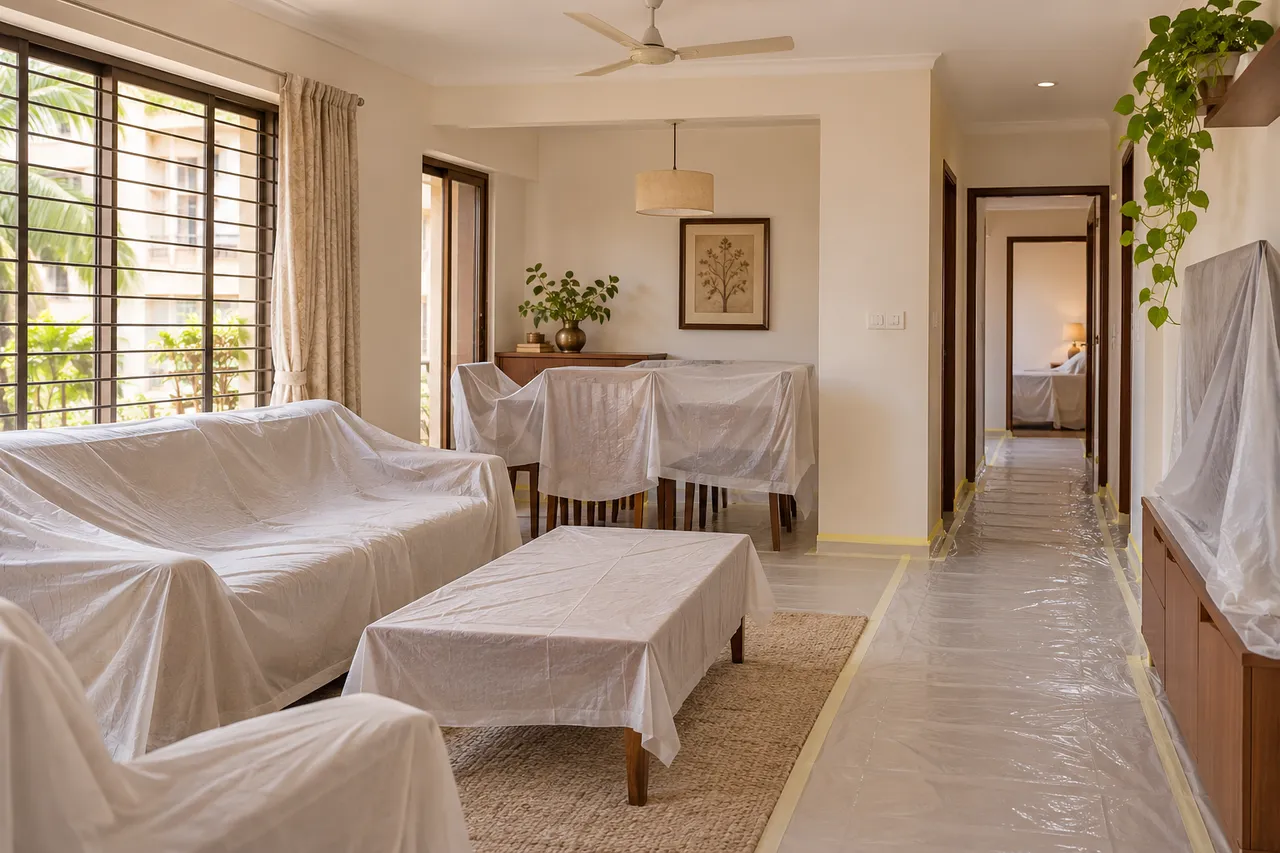
Painting a Vile Parle Flat With Furniture Inside: Agree Protection and Room Access First
Before painting a furnished Vile Parle flat, agree room access, furniture handling, protection and the conditions for returning spaces to use. Ask the contractor whether occupancy suits the selected products and work sequence. A paint-only price does not explain how daily living, preparation, drying and final cleaning will be managed.
Start with your Vile Parle property
For a Vile Parle home, list occupied rooms, retained belongings and the building’s work arrangements. Do not assume a room-by-room programme is appropriate for every household or paint system. Discuss the actual property and intended scope with the provider before deciding to stay during work. This article helps define responsibilities; product information and the relevant professionals determine suitable working and reoccupation arrangements.
Decide occupancy before the programme
Explain who uses the home, which rooms are essential and what alternative arrangements are possible. Ask the provider to assess the proposed occupancy against the actual preparation and products. Do not rely on a marketing label such as low-odour to settle suitability. Asian Paints’ planning information advises discussing occupancy and preparation with the team. A credible programme states which areas are unavailable and when, rather than simply promising that normal life will continue unchanged.
Assign furniture and belongings
Prepare a retained-item list with photographs where useful. Agree who moves heavy items, disconnects equipment appropriately and restores the arrangement. Keep valuables, important documents and other private belongings under the household’s control. Do not assume a decorator’s quote includes emptying every cupboard or moving specialist equipment. Identify items that need a separate provider or should leave the work area. This makes responsibility clearer than describing all contents as furniture that will somehow be covered.
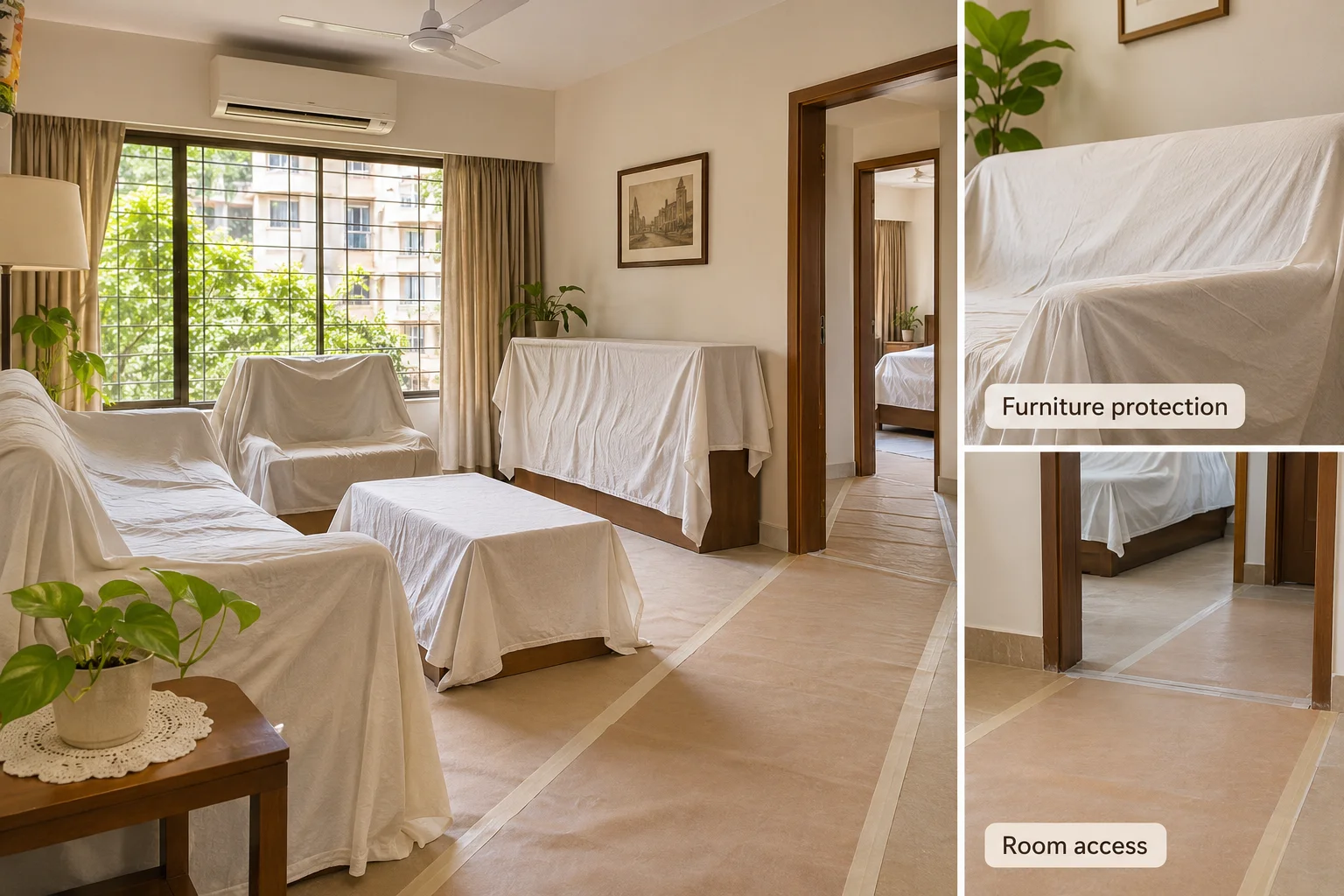
Specify protection and preparation
Ask the contractor to state floor, furniture and route protection, surface preparation and cleanup. Confirm how protected areas remain accessible to the workers without becoming household storage routes. Relevant dust-control, ventilation and product requirements should be addressed by the provider for the actual work, not improvised from a generic checklist. Have reported wall-condition problems assessed before decoration. A protective sheet is one part of the scope, not proof that every retained item or occupied room is suitable for the process.
Agree reoccupation and handover
Use the selected products’ information and provider guidance for drying, curing and return to use. Do not assume a surface that feels dry establishes every condition for occupancy or moving furniture against it. Agree inspection, removal of protection, final cleaning and making good. Check the completed work in ordinary lighting and compare the condition of retained items with the record. Keep the product and colour information so future repairs do not depend on guessing from a photograph.
A practical example to test the decision
A family plans to remain in a flat during repainting and assumes the quote covers all furniture movement. The provider identifies rooms that cannot stay in normal use and equipment requiring separate handling. They revise occupancy arrangements, record protection and agree when each space can return to use. The clearer programme prevents the paint price from concealing unresolved logistics.
Step-by-step planning checklist
- Describe occupancy needs and possible alternatives.
- Ask the provider to assess the actual work and products.
- List retained belongings and assign movement responsibilities.
- Agree preparation, protection, access and cleanup.
- Confirm return-to-use guidance and inspect the handover record.
What to put in the quotation
- Products, wall condition and preparation scope.
- Furniture handling and retained-item exclusions.
- Floor and route protection with cleanup responsibilities.
- Programme, return to use and making good.
Planning budget and scope
| Scope | Planning allowance or pricing method |
|---|---|
| Painting and preparation | Quote the measured and assessed surfaces |
| Protection and handling | State inclusions and separate services |
| Temporary arrangements or specialist items | Price independently where required |
Compare the complete project rather than wall-area rates alone. No standard Vile Parle occupied-home package is assumed. Protection, handling, repairs and occupancy arrangements can affect value as much as the paint selection.
Preparation and project timing
Confirm occupancy and item handling before booking the start. The provider should sequence preparation, coats and product-specific intervals. Retain time for inspection and return-to-use guidance rather than treating the final coat as an automatic handover moment.
Before you approve the proposal
Ask each contractor to explain a normal working day: which areas are closed, where equipment stays and how the household enters and leaves. This makes access assumptions visible before work starts. A clear process is more useful than a vague promise of minimal disruption, and helps the homeowner compare providers without treating every omitted service as included.
Prepare a clearer brief with WallsToWonder
Collect photographs, measurements and the choices you want to compare. Use Design My Room to explore a visual direction, then have the relevant professional check the measured layout, product requirements and work scope. Account access and current tool allowances apply; a visual concept is not a costed construction drawing.
Organise the scope with the interior cost planning tool and explore interior companies serving Mumbai. Confirm service availability for Vile Parle directly and ask the firm to explain deliverables, site involvement and exclusions.
For related planning, read How to Renovate Your Home While Living In It.
Frequently asked questions
Can we always stay during painting?
Ask the provider to assess the actual household, products and work; do not assume it suits every project.
Does a quote include moving furniture?
Only as stated. Assign heavy, fragile and specialist items explicitly.
Does low odour mean normal use can continue?
Do not infer suitability from that label. Follow appropriate product and provider guidance.
When can furniture return?
Use the selected system’s instructions and provider assessment rather than a universal delay.
What records are useful?
Retained-item photographs, agreed handling scope, product and colour details, and handover notes.
Further reference: Asian Paints project preparation and occupancy guidance.
Turn this idea into a plan for your home
Visualise your space, understand the likely budget, or find a professional who can bring the idea to life.