
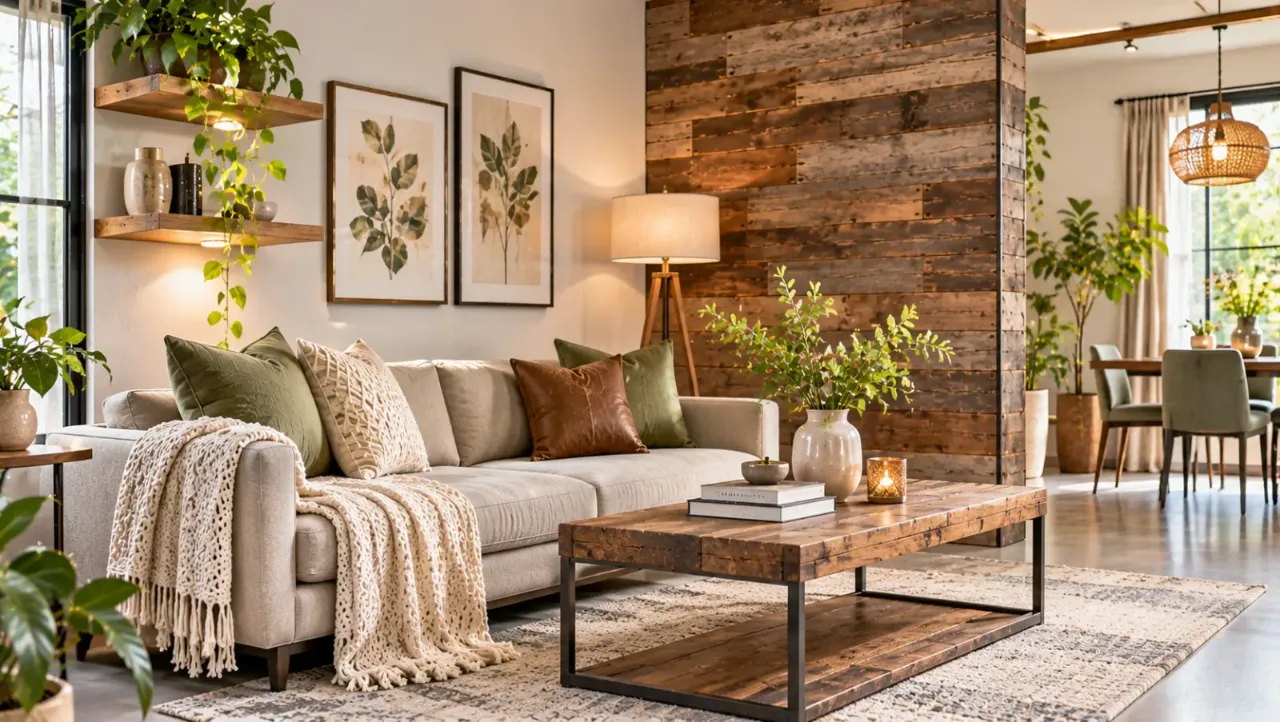
Rustic Interiors With Reclaimed Wood: A Practical Guide
There is something distinctive about wood that has already lived another life. Its grain may show natural variations, its surface may carry subtle marks of age, and its colour may have developed a depth that is difficult to reproduce with newly manufactured materials.
This is part of the appeal of reclaimed wood. Instead of using freshly harvested timber, reclaimed wood gives previously used wood a new purpose in furniture, flooring, wall finishes and decorative elements.
In interior design, it can help create rustic spaces that feel warm, relaxed and individual. It also offers an opportunity to reuse existing materials rather than automatically purchasing new ones.
However, reclaimed wood is not simply old wood that can be installed anywhere. Its previous use, condition, treatment and suitability for the new application all matter. In Indian homes, moisture, termites, dust and changing humidity make material selection particularly important.
Here is how to introduce reclaimed wood into your interiors while keeping the design attractive, practical and safe.
1. What Is Reclaimed Wood?
Reclaimed wood is timber recovered from an existing structure, product or previous use and prepared for a new application.
It may come from:
- Old houses, barns and buildings.
- Recovered doors, windows and wooden frames.
- Dismantled furniture and cabinetry.
- Old beams, rafters and structural timber.
- Shipping pallets and industrial wooden packaging, when suitable and traceable.
- Wooden flooring removed during renovation.
Once recovered, the timber may be cleaned, inspected, de-nailed, repaired, dried and refinished before it is reused.
It is important to distinguish reclaimed wood from recycled wood-based boards. Reclaimed timber generally retains its original solid-wood character, while recycled boards may be manufactured from wood fibres, chips or particles.
The previous source matters. A decorative beam recovered from an old building is not automatically suitable for a dining table, just as a pallet board is not automatically safe for indoor furniture.
2. Why Reclaimed Wood Works So Well in Rustic Interiors
Rustic interiors celebrate natural materials, visible textures and a less polished appearance. Reclaimed wood fits this approach because it often has distinctive grain patterns, colour variation, knots and signs of previous use.
Its appeal comes from several qualities:
- Natural character: Each piece can have a different grain pattern, tone and texture, giving furniture and surfaces a more individual appearance.
- A lived-in atmosphere: Subtle imperfections can make a room feel relaxed rather than overly formal.
- Material contrast: Reclaimed wood works well alongside stone, lime-based finishes, metal, linen, cotton and handmade ceramics.
- Reuse of existing resources: Using suitable recovered timber can reduce demand for newly sourced wood. The environmental benefit depends on its origin, transport, processing and the replacement materials involved.
- Design flexibility: It can be used for a single decorative detail or as a major material throughout a room.
The key is to let the wood add character without making every surface look aged or unfinished.
3. Choose the Right Reclaimed Wood for Your Home
Not all reclaimed timber looks or performs the same way. Its suitability depends on the species, previous use, age, condition and intended application.
| Type of reclaimed wood | Possible interior use | What to check |
|---|---|---|
| Old solid-wood beams | Decorative ceiling details, furniture | Cracks, structural condition and previous treatment |
| Recovered hardwood boards | Tables, shelves and cabinetry | Warping, joints and insect damage |
| Old floorboards | Flooring, wall detailing and furniture | Thickness, moisture and previous coatings |
| Recovered doors and shutters | Feature panels, partitions and decor | Stability, hardware and finish condition |
| Industrial timber | Shelves and selected furniture | Chemical contamination and source history |
| Recovered furniture wood | Small furniture and decorative pieces | Hidden joints, repairs and pest activity |
Hardwoods are often selected for furniture and high-use surfaces because many species offer good durability. However, the species name alone does not guarantee suitability. Condition, moisture, construction and finish matter just as much.
Ask the supplier where the timber came from, how it was stored and what treatment it has received. If the source cannot be established, avoid using it for sensitive indoor applications.
4. Use Reclaimed Wood as a Feature Wall
A reclaimed-wood feature wall can give a room a strong rustic identity without requiring wood throughout the entire space.
You can use boards of varying widths, consistent-width planks or a more controlled arrangement with visible grain and subtle tonal differences.
Suitable locations include:
- Behind a living-room sofa.
- Behind the bed as a headboard wall.
- Along a dining-area feature wall.
- Inside a study or reading corner.
- On a selected wall in an entryway.
For a modern Indian home, balance the wood with lighter wall finishes, simple furniture and good lighting. This prevents the room from feeling visually heavy.
Before installation, check that the wall is dry and free from seepage. The timber should be properly prepared, securely fixed and installed with an appropriate arrangement for ventilation and movement where required.
Do not cover damp walls with reclaimed timber. The underlying moisture problem must be resolved first.
5. Create Statement Furniture With Reclaimed Timber
Furniture is one of the most versatile ways to introduce reclaimed wood.
A single reclaimed-wood table can become the focal point of a dining area, while smaller pieces can add character without changing the entire room.
Consider these ideas:
- A dining table made from recovered hardwood.
- A coffee table with a reclaimed timber top and a simple metal base.
- A console table with visible grain and restrained detailing.
- Floating shelves made from properly prepared reclaimed boards.
- A bedside table with a natural wood finish.
- A study desk with a reclaimed timber surface.
When selecting furniture, pay attention to how the timber has been joined and supported. Old boards may need reinforcement, and wide solid-wood surfaces need construction that allows for seasonal movement.
For frequently used furniture, prioritise stable construction and a finish that can be cleaned without damaging the wood.
6. Bring Reclaimed Wood Into Flooring and Ceilings
Reclaimed timber can also be used on larger architectural surfaces, but these applications require more planning.
Flooring: Recovered floorboards can introduce variation and character. However, they need to be checked for thickness, wear, moisture, insect damage and suitability for the subfloor. The surface should be properly refinished and protected for its intended use.
Ceilings: Reclaimed beams or boards can create a rustic ceiling feature. Before using recovered structural timber, have its condition and load-bearing suitability assessed by a qualified professional. Decorative timber should be securely fixed and should not be assumed to provide structural support.
Ceiling accents: If a full timber ceiling feels excessive, use a limited number of decorative beams or a smaller timber feature to create visual interest.
In Indian homes, consider the roof and room conditions carefully. Heat, humidity, water ingress and ventilation can affect timber over time.
7. Pair Reclaimed Wood With the Right Materials
Reclaimed wood becomes more effective when it is combined with materials that complement its texture rather than compete with it.
| Material | How it complements reclaimed wood |
|---|---|
| Natural stone | Adds a solid, earthy contrast |
| Lime-based wall finishes | Creates a soft, understated background |
| Black or dark metal | Adds definition to furniture and fittings |
| Linen and cotton | Softens the visual weight of timber |
| Cane and rattan | Introduces another natural texture |
| Handmade ceramics | Adds individuality to shelves and tabletops |
| Concrete-look finishes | Creates contrast between raw and refined surfaces |
You do not need to use every material in one room. Choose two or three complementary finishes and repeat them thoughtfully.
For example, a reclaimed dining table can be paired with simple upholstered chairs, a stone floor and understated pendant lighting. The timber remains the main feature without dominating the room.
8. Select a Colour Palette That Supports the Rustic Look
Reclaimed wood comes in different shades, from pale weathered timber to deep brown and reddish tones. The colour of the wood should guide the rest of the room's palette.
| Wood appearance | Complementary colours | Suitable spaces |
|---|---|---|
| Pale, weathered wood | Ivory, soft grey and muted green | Living rooms and bedrooms |
| Medium natural brown | Beige, olive and charcoal | Dining areas and studies |
| Deep walnut-like tones | Warm white, muted blue and bronze | Living rooms and bedrooms |
| Rustic reddish-brown | Cream, stone and dark metal | Entryways and feature corners |
Before choosing paint, flooring or upholstery, view the timber sample in the actual room. Natural and artificial lighting can change how its colour appears.
Avoid trying to make every wooden element match exactly. A controlled variation in wood tones can look natural, provided the undertones and overall palette work together.
9. How to Prepare Reclaimed Wood Before Using It
This is one of the most important stages of a reclaimed-wood project. Timber that looks attractive on the surface may still have hidden problems.
A proper preparation process should include:
- Source inspection: Establish where the timber came from and what it was previously used for.
- Visual inspection: Check for cracks, splits, rot, loose fibres, stains and insect holes.
- Metal removal: Remove old nails, screws, staples and embedded metal before cutting or machining.
- Pest assessment: Check for active termite or wood-borer activity. Use appropriate professional treatment where needed.
- Moisture assessment: Measure moisture content and allow the timber to dry or acclimatise to the intended indoor environment.
- Cleaning and repair: Remove dirt and loose material, repair suitable defects and prepare the surface.
- Finishing: Apply an appropriate coating or protective treatment for the intended use.
Timber from unknown industrial or chemical uses needs particular caution. Avoid wood that may have been exposed to oils, pesticides, preservatives, industrial chemicals or other contaminants unless its safety can be established.
Old painted wood may also require assessment for hazardous coatings, including lead-containing paint. Do not dry-sand or machine an unknown old coating without appropriate precautions.
10. Is Reclaimed Wood Suitable for Indian Homes?
It can be, but local conditions should influence where and how it is used.
Indian homes experience different climate conditions, from dry interiors to humid coastal environments and areas with seasonal monsoon moisture. Reclaimed timber must be prepared for the environment in which it will be installed.
Consider the following:
- Humidity: Allow timber to acclimatise and use suitable moisture protection.
- Termites: Inspect for infestation and arrange appropriate treatment where necessary.
- Seepage: Do not install timber against walls or floors with unresolved dampness.
- Dust: Choose finishes that can be cleaned easily, especially on shelves and decorative surfaces.
- Sunlight: Direct sunlight can cause colour changes and uneven ageing.
- Cleaning: Avoid excessive water and harsh cleaning chemicals on timber surfaces.
For kitchens and bathrooms, use reclaimed wood selectively and away from direct water exposure unless the material, detailing and finish are specifically suitable for those conditions.
11. Common Mistakes to Avoid
| Mistake | Better approach |
|---|---|
| Buying wood without knowing its source | Ask for its history and previous use |
| Assuming old wood is automatically durable | Inspect its condition and suitability |
| Installing untreated timber | Arrange proper inspection, preparation and treatment |
| Covering damp walls with timber | Resolve moisture problems first |
| Using reclaimed wood on every surface | Choose one or two focal applications |
| Mixing too many wood tones and textures | Create a coordinated material palette |
| Using industrial timber without checking contamination | Verify its history or avoid uncertain sources |
| Ignoring maintenance | Choose suitable finishes and plan regular inspections |
12. How to Introduce Reclaimed Wood on a Budget
You do not need to redesign an entire home to create a rustic look. Begin with one piece or a small surface and build around it.
A few manageable starting points include:
- A reclaimed-wood coffee table.
- A small console in the entryway.
- Floating shelves in a study.
- A framed timber panel behind a bed.
- A recovered wooden door reused as a decorative feature, if it is suitable and safe.
- A small dining table with a reclaimed top and a new, stable base.
Compare the full cost, not just the price of the recovered timber. Sorting, transport, de-nailing, drying, treatment, repairs, fabrication and finishing can add substantially to the final expense.
Sometimes a reclaimed piece costs more than a new one because of the preparation involved. Its value should be assessed through material quality, workmanship, longevity and the design result—not simply the age of the wood.
Closing Thoughts
Rustic interiors with reclaimed wood offer a way to bring natural texture, individuality and a sense of history into a home. Whether used in a dining table, a feature wall, shelving or carefully selected architectural details, reclaimed timber can add warmth without requiring an elaborate design scheme.
The most important part is choosing the right wood and preparing it properly. Check its source, inspect its condition, address moisture and pest concerns, and select a finish suited to its use.
When combined with balanced colours, simple furniture and complementary materials, reclaimed wood can create an interior that feels personal, welcoming and practical for everyday Indian living.
Explore More with Walls to Wonder
Planning a home interior project? Explore Walls to Wonder's AI tools to visualise design ideas, understand costs and make more informed decisions.
- Whole Home Visualizer – Explore design ideas across your home.
- Design My Room – Experiment with different room styles and looks.
- Interior Design Cost Estimate – Get an initial understanding of interior costs.
- Interior Quotation Checker – Review and understand interior quotations.
- Rate My Room Design – Get feedback on your room design.
- Interior Style Finder – Discover an interior style that suits your preferences.
Visit Walls to Wonder for more interior design ideas and inspiration.
Turn this idea into a plan for your home
Visualise your space, understand the likely budget, or find a professional who can bring the idea to life.