
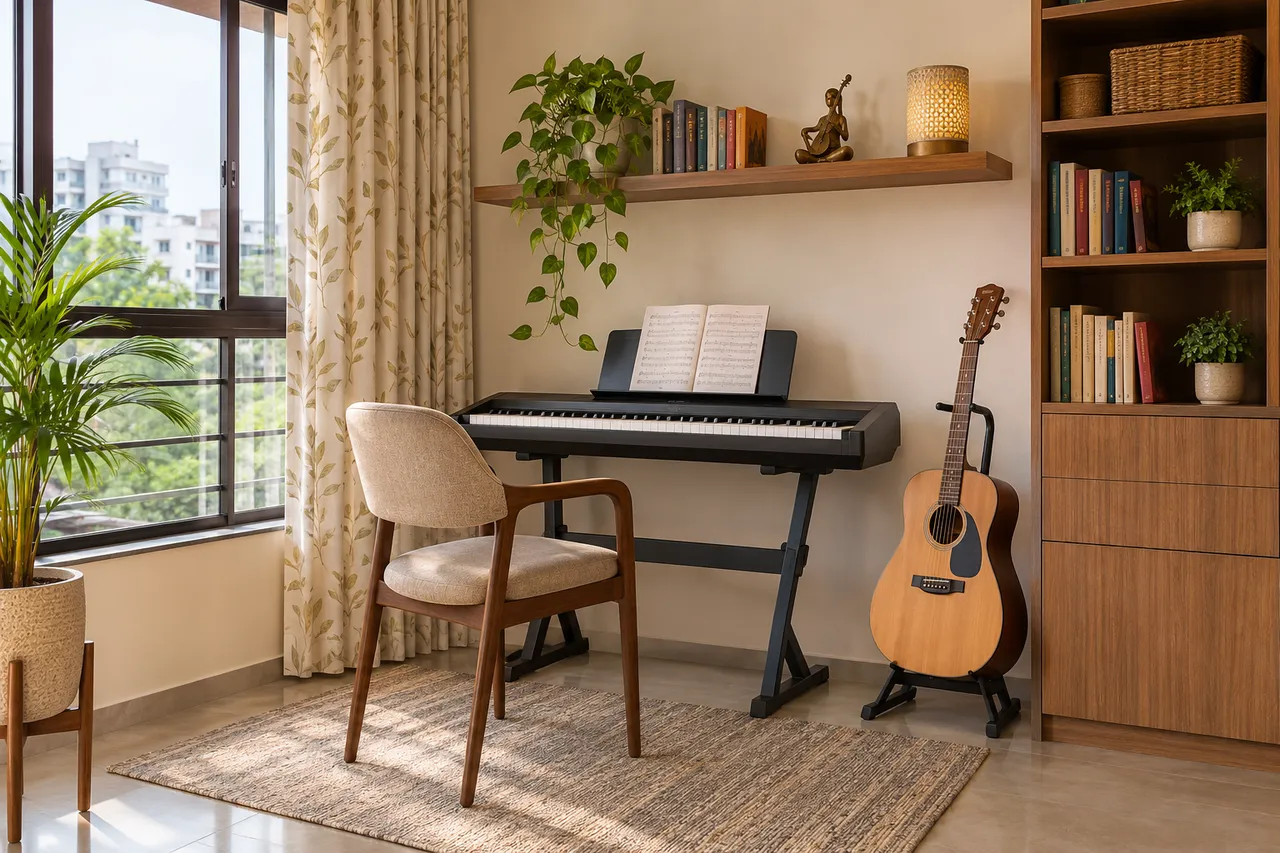
Music Practice Corners in Pashan Homes: Plan Instrument Storage and Discuss Sound Before Panelling
Plan a music corner around the instrument, the player’s movement and the effect on other people before buying decorative panels. In a Pashan home, distinguish equipment storage, room comfort and sound isolation. A rug or attractive wall treatment does not establish soundproofing; noise-control work needs an assessment of the actual property and practice routine.
Start with your Pashan property
Pashan is part of Pune, but the locality name does not reveal a home’s construction or neighbours’ sensitivity. Record the property type, adjoining rooms and when practice normally takes place. A keyboard used with suitable headphones, an acoustic instrument and amplified practice create different briefs. Building arrangements and discussions with neighbours are useful inputs, not substitutes for an acoustic design where one is needed.
Start with the instrument and the player
List the instruments, stands, pedals, music and equipment that need a home. Check the manufacturer’s guidance for support, placement and care. A digital keyboard on a suitable stand has different space and environmental needs from an acoustic piano. Trial the seated or standing position and movement needed to play, not just the equipment’s stored outline. Leave access for cleaning and moving the instrument without dismantling unrelated shelving.
Separate room sound from sound leaving the room
Reducing an echo inside a room and reducing transmission to another space are different tasks. Ask an acoustic professional to assess the concern before specifying walls, ceilings or other fixed work. Do not buy decorative slats or foam on the assumption that a material name guarantees privacy. The complete construction, openings, services and room relationships matter. State the actual issue in the brief: disturbance to a bedroom, recording quality or noise reaching a neighbouring property.
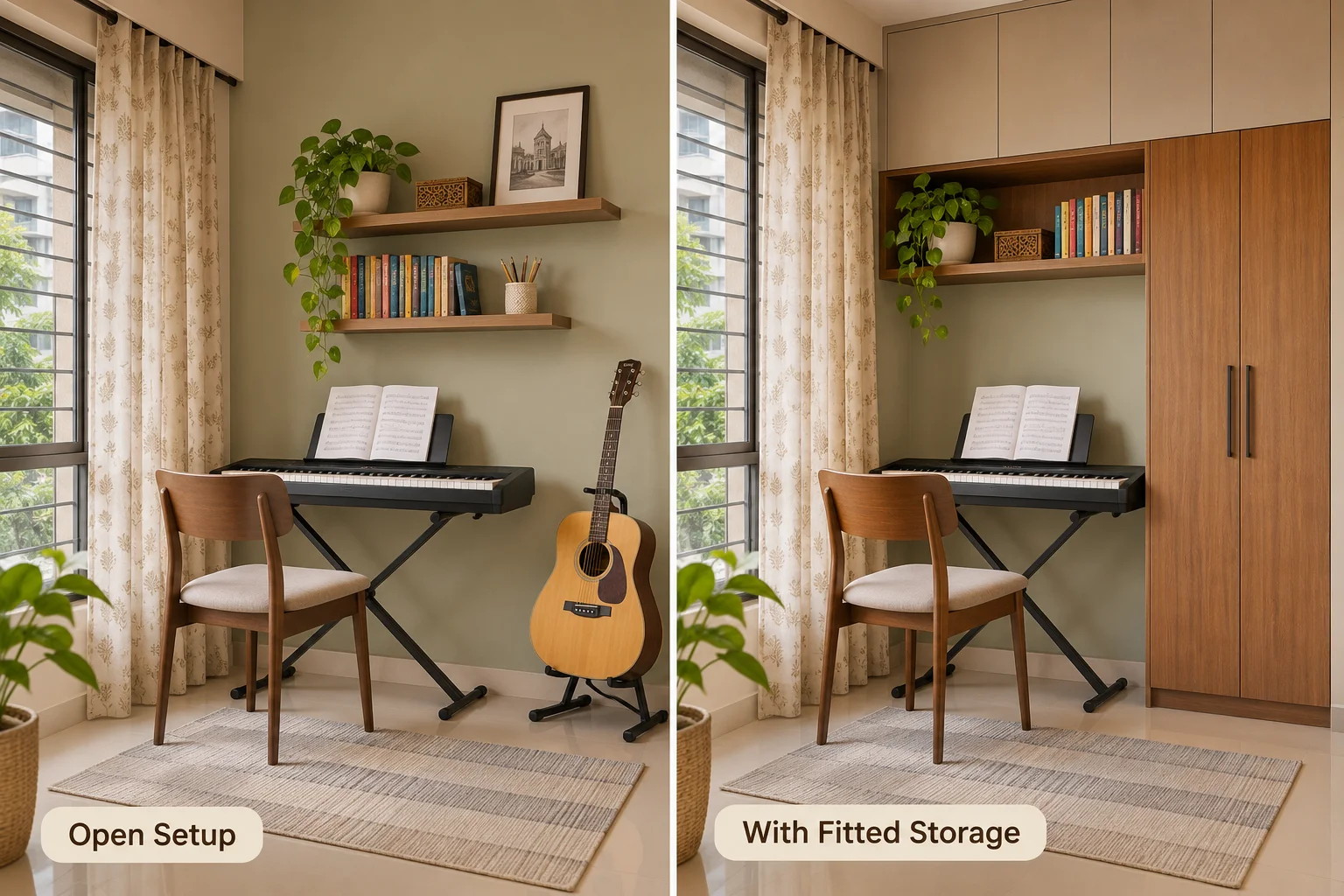
Choose storage that encourages use
A stand, suitable case or dedicated shelf may make setup simpler, but each must suit the instrument. Keep routine accessories close without allowing loose equipment to obstruct a door. Separate frequently used music from bulk storage and consider how the corner is returned to ordinary household use. Where a piano or keyboard is involved, follow its care guidance about environmental conditions rather than using a sunny-window arrangement solely because it looks attractive.
Trial before fixed panelling
Run a realistic practice session using the intended equipment and discuss what is heard in relevant adjoining spaces. This is a useful briefing exercise, not an acoustic performance test. Record the practice hours, room use and desired outcome for a specialist if sound control remains necessary. Select finishes after the equipment and technical scope are understood. A reversible arrangement can remain the right answer when the requirement is storage and comfortable practice rather than an isolated studio.
A practical example to test the decision
A family wants timber slats behind a keyboard, expecting the wall to prevent disturbance in the next room. The design review separates visual decoration from the sound requirement. They first arrange a suitable stand, storage and practice routine, then obtain advice on the remaining noise issue. The decorative finish is chosen only after its purpose is clear.
Step-by-step planning checklist
- List equipment and record practice activities and times.
- Trial the player’s position and instrument support.
- Identify whether the issue is storage, room sound or transmission.
- Obtain specialist assessment before commissioning claimed sound-control construction.
- Confirm instrument care, maintenance access and shared-room use before ordering finishes.
What to put in the quotation
- Instrument support and storage products.
- Design purpose of each proposed treatment.
- Specialist scope and any stated performance assessment method.
- Installation responsibilities, services, access and making good.
Planning budget and scope
| Scope | Planning allowance or pricing method |
|---|---|
| Organisers, music storage and simple room changes | ₹3,000–₹15,000 initial allowance |
| Furniture and a dedicated practice arrangement | ₹15,000–₹50,000 initial allowance |
| Acoustic assessment and construction | Specialist quotation after review |
These editorial allowances exclude instruments, amplification and acoustic construction. They are not local market quotes or promises of sound reduction. Price technical design separately from decoration and compare like-for-like specifications.
Preparation and project timing
Allow several real-use sessions before freezing the brief. Furniture follows selection and delivery; acoustic work needs assessment and a separate programme. Do not schedule panelling ahead of the review if the reason for buying it is sound performance.
Before you approve the final proposal
Keep a simple practice brief with the instrument, time of use, room arrangement and the problem you want to solve. Discuss this with any designer or specialist so quotations are tied to an outcome. Avoid approving a product solely because it is sold with acoustic language. Ask what part of the proposal is intended to affect the sound and how suitability will be assessed. Storage, decoration and technical sound-control work can coexist, but they should remain understandable in the scope.
Prepare a clearer brief with WallsToWonder
Collect photographs, measurements and the choices you want to compare. Use Design My Room to explore a visual direction, then have the relevant professional check the measured layout, product requirements and work scope. Account access and current tool allowances apply; a visual concept is not a costed construction drawing.
Organise the proposal with the interior cost planning tool and explore interior companies serving Pune. Confirm service availability for Pashan directly and ask the firm to explain deliverables, site involvement and exclusions.
For related planning, read Home Office Design in Hinjewadi: A Comfortable Setup Without a Spare Room.
Frequently asked questions
Will wall slats soundproof the room?
Do not assume that. Have the complete sound-transmission issue assessed rather than relying on a decorative material.
Can a rug help?
It may change the room’s sound or comfort, but it does not establish isolation from neighbours or adjoining rooms.
Where should a keyboard go?
Use its support and care instructions, then test the playing position and household access.
Do I need a separate music room?
Not always. A suitable corner may meet storage and practice needs; specialist work depends on the actual sound requirement.
What should I tell an acoustic consultant?
Describe the instrument, equipment, practice routine, affected spaces and desired outcome, and provide the property layout.
Further reference: Yamaha guidance on instrument placement and care.
Turn this idea into a plan for your home
Visualise your space, understand the likely budget, or find a professional who can bring the idea to life.