
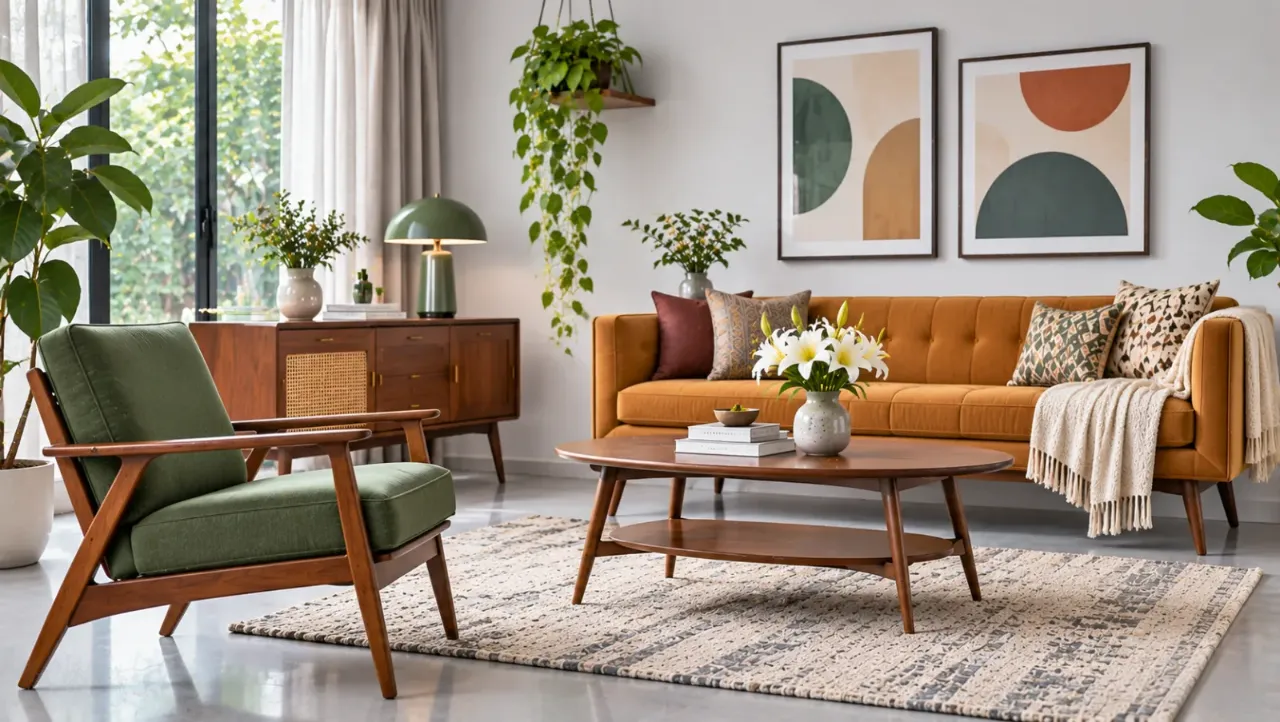
Mid-Century Modern Furniture: A Guide for Indian Homes
Mid-century modern furniture has a distinctive appeal that goes beyond changing interior design trends. Known for its clean lines, natural wood finishes, functional forms and understated elegance, this furniture style brings together simplicity and character. It offers a way to create interiors that feel thoughtfully designed without appearing overly decorated.
In Indian homes, where furniture often needs to accommodate multiple activities, family requirements and varying room sizes, mid-century modern designs can be particularly practical. Their streamlined proportions, versatile finishes and functional approach make them suitable for apartments, independent houses and contemporary urban interiors.
But what exactly makes furniture mid-century modern, and how can you introduce this style into an Indian home without making the interiors feel disconnected from your everyday lifestyle?
Here is how to understand, select and style mid-century modern furniture while keeping your home comfortable, functional and visually balanced.
1. What Is Mid-Century Modern Furniture?
Mid-century modern furniture refers to a design movement that became popular between the 1940s and 1960s. It developed around the idea that furniture should be visually appealing while remaining comfortable, practical and suitable for everyday use.
Instead of elaborate carvings, heavy ornamentation and decorative detailing, this style focuses on clean silhouettes, organic shapes and functional construction.
Some of its most recognisable characteristics include:
- Clean lines: Straight edges, gentle curves and uncluttered silhouettes.
- Tapered legs: Furniture legs that gradually narrow towards the bottom, creating a lighter appearance.
- Natural wood finishes: Teak, walnut and other warm-toned wood finishes that add depth and texture.
- Functional forms: Furniture designed around comfort, usability and efficient proportions.
- Minimal ornamentation: Decorative details are kept limited, allowing materials and shapes to stand out.
- Balanced proportions: Furniture that feels visually light without compromising stability or comfort.
The result is a style that feels neither overly traditional nor excessively contemporary. Its timeless character makes it suitable for homeowners who prefer interiors that remain relevant beyond short-lived design trends.
2. Why Mid-Century Modern Furniture Works in Indian Homes
Indian homes have diverse design requirements. A living room may function as a family gathering space, an entertainment area and a place to receive guests. Bedrooms need comfortable storage, while dining spaces often accommodate larger family gatherings.
Mid-century modern furniture offers several advantages in these settings:
- Space-efficient appearance: Furniture with raised, tapered legs allows more of the floor to remain visible, helping compact apartments feel less crowded.
- Versatile styling: Mid-century modern pieces work well with contemporary, Scandinavian, minimalist and Indian-inspired interiors.
- Everyday functionality: Storage cabinets, dining tables, desks and seating can feature streamlined designs without unnecessary decoration.
- Natural warmth: Wooden finishes, textured upholstery and muted colours create an inviting atmosphere.
- Timeless appeal: Its simple forms and balanced proportions make it easier to update surrounding decor without replacing every furniture piece.
The style can be introduced throughout the home or through a few carefully selected furniture pieces. This makes it particularly useful when planning an interior makeover without replacing everything at once.
3. Choose the Right Materials for Mid-Century Modern Furniture
Material selection plays an important role in achieving the right look. While the original movement featured several types of wood, metal and upholstery, Indian homes offer additional opportunities to adapt the style using locally available materials.
Some commonly suitable material choices include:
| Material | Common applications | What to consider |
|---|---|---|
| Teak wood | Dining tables, beds and cabinets | Grain, durability and finish quality |
| Sheesham wood | Sideboards, coffee tables and storage | Wood condition and construction |
| Walnut veneer | Cabinet fronts, tabletops and decorative surfaces | Veneer thickness and edge finishing |
| Metal | Furniture legs, frames and handles | Finish, stability and corrosion resistance |
| Cane and rattan | Chair backs, cabinet panels and accents | Weaving quality and maintenance |
| Upholstery fabrics | Sofas, accent chairs and dining seats | Durability and ease of cleaning |
| Glass | Side tables and cabinet details | Safety, thickness and maintenance |
Wood is one of the defining materials of mid-century modern furniture. Walnut is especially associated with the style because of its rich brown tone and distinctive grain. Teak and sheesham can also be used to create furniture with a similar visual character.
Solid wood is valued for its natural grain, strength and longevity, while quality veneer can provide a consistent appearance and more economical use of decorative timber.
For Indian homes, consider the local climate, furniture usage and maintenance requirements before selecting materials. Humidity, heat and seasonal moisture changes can affect wood and certain finishes.
4. Use Mid-Century Modern Furniture in Your Living Room
The living room is one of the easiest places to introduce this style because it offers opportunities to combine seating, storage and decorative furniture.
A mid-century modern living room can feature a low-profile sofa with clean arms, tapered wooden legs and neutral upholstery.
Consider these furniture choices:
- A streamlined sofa with wooden legs and comfortable cushioning.
- A wooden coffee table with rounded corners or a geometric structure.
- A compact sideboard with clean cabinet fronts.
- An accent chair with a curved backrest and tapered legs.
- A wooden console table with understated detailing.
For Indian homes, consider a sofa with suitable seat depth and comfortable cushioning rather than choosing a design based only on its appearance.
Pair the furniture with neutral walls, textured cushions and a carefully selected rug. This allows the furniture's material and silhouette to remain the main focus.
5. Introduce Mid-Century Modern Furniture in the Bedroom
In the bedroom, mid-century modern furniture can create a calm and organised environment through simple shapes and warm wooden finishes.
A wooden bed with a simple headboard can establish the look. Complement it with matching bedside tables featuring slim legs and understated handles.
Some suitable furniture ideas include:
- A wooden bed with a low-profile frame.
- Bedside tables with tapered legs and practical drawers.
- A dresser or chest of drawers with simple geometric detailing.
- A compact wardrobe with minimal handles.
- A wooden dressing table with a clean silhouette.
If the bedroom is compact, choose furniture with practical storage and proportions that leave sufficient walking space. Avoid filling every available corner with furniture simply to maintain a matching set.
Soft beige, warm white and muted blue can complement the natural wood tones and create a comfortable bedroom environment.
6. Create a Mid-Century Modern Dining Area
A wooden dining table with a clean rectangular or gently rounded top works well in this style. Its natural finish can become the focal point of the dining area without requiring excessive decorative elements.
Pair it with chairs featuring tapered legs and curved backrests. Upholstered seats can add comfort, while cane detailing can bring an interesting Indian design influence.
Consider the following combinations:
- A walnut dining table with neutral upholstered chairs.
- A teak dining table with cane-back chairs.
- A rounded wooden dining table with sculptural chairs.
- A simple wooden table with dark metal furniture accents.
For larger Indian families, the number of seats, table dimensions and circulation space should take priority over achieving a particular silhouette.
Lighting can also contribute to the overall appearance. A simple pendant above the dining table can create a focal point while maintaining the understated character of the furniture.
7. Design a Functional Study or Home Office
A mid-century modern desk can make a home office feel organised without appearing overly formal.
Look for a wooden tabletop, slim legs and practical drawer storage. Pair it with an ergonomic chair that provides adequate support, even if its design is more contemporary.
Other useful additions include:
- A compact wooden bookshelf.
- Floating shelves with natural wood finishes.
- A desk organiser with minimal detailing.
- A small side cabinet for documents and stationery.
- A comfortable task chair with appropriate back support.
The key is to balance appearance with usability. A beautiful desk should still provide enough working surface, storage and legroom for everyday activities.
8. Select Colour Combinations That Complement the Style
Colour plays an important role in highlighting mid-century modern furniture. The furniture itself often features warm wood tones, so the surrounding palette should create balance rather than compete with it.
| Colour combination | Overall appearance | Suitable spaces |
|---|---|---|
| Walnut and warm white | Clean, balanced and warm | Living rooms and bedrooms |
| Teak and olive green | Earthy and natural | Living rooms and reading corners |
| Dark wood and muted blue | Sophisticated and contrasting | Bedrooms and studies |
| Natural wood and terracotta | Warm and inviting | Dining areas and living rooms |
| Walnut and beige | Subtle and understated | Bedrooms and compact apartments |
Avoid introducing too many strong colours at once. Let the furniture's material and form remain the primary focus.
Before selecting paint, upholstery or flooring, view material samples together under the lighting conditions of the actual room.
9. How to Mix Mid-Century Modern Furniture With Indian Design Elements
Mid-century modern furniture does not have to look disconnected from Indian interiors. In fact, combining its simple forms with selected Indian materials and craftsmanship can create an interesting and individual design direction.
Consider incorporating these elements:
- Cane detailing: Use cane-backed chairs, cabinet shutters or decorative panels to introduce natural texture.
- Handcrafted decor: Pair wooden furniture with handmade ceramics, metal accessories and locally crafted objects.
- Indian textiles: Introduce block-printed cushions, cotton upholstery or textured throws in coordinated colours.
- Traditional craftsmanship: Use carefully selected carved or handcrafted accents alongside simpler furniture silhouettes.
- Natural stone: Combine wooden furniture with stone flooring or selected stone surfaces for material contrast.
The goal is not to reproduce a Western mid-century interior exactly. Instead, use its defining furniture characteristics while adapting the overall room to Indian lifestyles, materials and preferences.
10. Practical Tips Before Buying Mid-Century Modern Furniture in India
Choosing furniture involves more than selecting an attractive design. The piece should suit the room, withstand regular use and meet your household's requirements.
- Check the actual material: Ask whether the furniture is made from solid wood, engineered wood or veneer. These materials differ in appearance, maintenance, durability and price.
- Examine the construction: Check the stability of the legs, quality of joints, drawer movement and overall finishing. Tapered legs should look elegant but must also provide adequate support.
- Measure before purchasing: Measure the available floor area, doorways and movement clearances. Furniture that looks compact in a showroom may occupy more space than expected at home.
- Consider Indian weather conditions: Humidity, heat and seasonal moisture changes can affect wood and certain finishes. Choose suitable materials, protective finishes and furniture construction for the conditions in your location.
- Prioritise comfort: For sofas, chairs and beds, check seat depth, cushioning, back support and mattress compatibility.
- Think about maintenance: Open wooden surfaces, upholstered seating and cane panels have different cleaning requirements. Choose finishes and fabrics that match your household's maintenance preferences.
For expensive furniture purchases, ask about warranties, repair options, material specifications and the quality of hardware before placing an order.
11. Common Mistakes to Avoid
While mid-century modern furniture is relatively easy to introduce into different interiors, a few design mistakes can affect the overall result.
| Mistake | Better approach |
|---|---|
| Using too much dark wood | Balance darker furniture with lighter walls, fabrics and flooring. |
| Choosing appearance over comfort | Check seating support, cushioning and everyday usability. |
| Mixing too many furniture styles | Maintain a consistent design direction and repeat selected materials. |
| Ignoring room proportions | Measure furniture and maintain sufficient movement space. |
| Overdecorating furniture | Keep accessories restrained and allow the furniture's form to stand out. |
| Using unsuitable materials | Choose materials and finishes based on climate, usage and maintenance. |
| Prioritising matching furniture sets | Combine complementary pieces with different but coordinated forms. |
A balanced approach usually works best. Combine a few distinctive furniture pieces with simple backgrounds, practical lighting and restrained accessories.
12. How to Introduce Mid-Century Modern Furniture on a Budget
You do not need to redesign an entire home to achieve this look. A few carefully selected furniture pieces can establish the style without requiring a complete makeover.
Some manageable starting points include:
- A wooden coffee table with tapered legs.
- A compact walnut-finish sideboard.
- A pair of simple wooden bedside tables.
- A cane-back accent chair.
- A streamlined dining table.
- A wooden console for the entryway.
Compare the full cost of furniture rather than looking only at its initial purchase price. Material quality, hardware, upholstery, fabrication, delivery and maintenance can all affect the final expense.
If you are working with a limited budget, consider combining one statement furniture piece with more affordable complementary items. This can help create a coordinated look without overspending.
Closing Thoughts
Mid-century modern furniture offers Indian homeowners a practical way to introduce timeless design into everyday spaces. Its clean lines, warm wood finishes, functional construction and versatile forms make it suitable for a variety of room sizes and interior preferences.
You do not need to redesign your entire home to achieve this look. A well-chosen wooden coffee table, a pair of tapered-leg bedside tables or a streamlined dining set can introduce the style gradually.
The key is to select furniture that balances visual appeal with comfort, durability and the practical requirements of Indian living. When these elements come together, mid-century modern design can create a home that feels warm, organised and effortlessly timeless.
Explore More with Walls to Wonder
Planning a home interior project? Explore Walls to Wonder's AI tools to visualise design ideas, understand costs and make more informed decisions.
- Whole Home Visualizer – Explore design ideas across your home.
- Design My Room – Experiment with different room styles and looks.
- Interior Design Cost Estimate – Get an initial understanding of interior costs.
- Interior Quotation Checker – Review and understand interior quotations.
- Rate My Room Design – Get feedback on your room design.
- Interior Style Finder – Discover an interior style that suits your preferences.
Visit Walls to Wonder for more interior design ideas and inspiration.
Turn this idea into a plan for your home
Visualise your space, understand the likely budget, or find a professional who can bring the idea to life.