
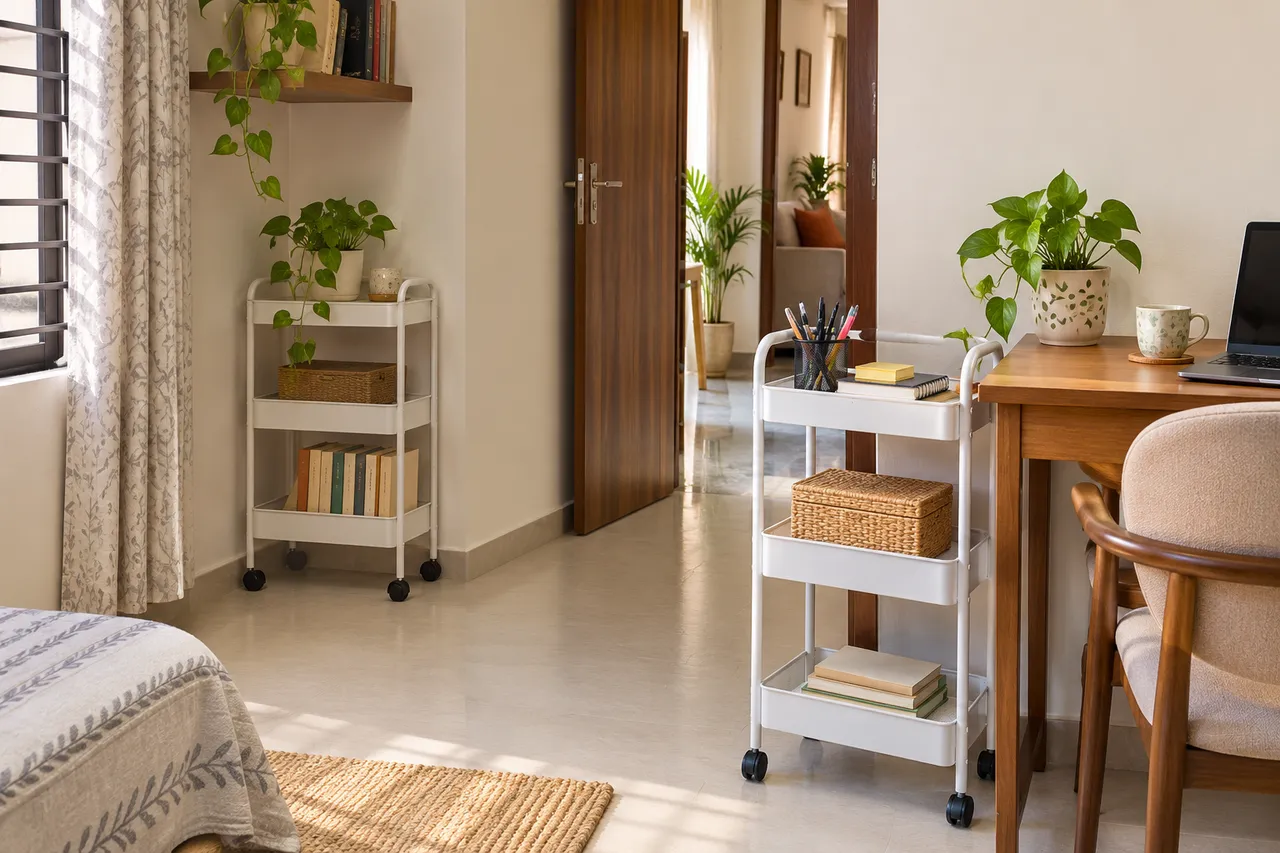
Mobile Storage Trolleys in BTM Layout Homes: Check Movement, Parking and Everyday Use
Choose a mobile storage trolley by testing its loaded movement, parking position and intended use. In a BTM Layout home, the convenience of wheels depends on the floor, route and person moving it. Check the actual product instructions before using a trolley as an appliance stand, heavy archive or substitute for fixed furniture.
Start with your BTM Layout property
For a BTM Layout room, identify what needs to move and why. Stationery used at a shared desk has a different brief from household supplies that rarely leave a cupboard. Record doors, floor transitions and retained furniture. A trolley should have a defined parked home within the property rather than become a movable obstruction that is repeatedly pushed into somebody else’s route.
Assign a specific job
List contents and where they are used. Distinguish items needed daily from occasional overflow and avoid selecting maximum shelving before understanding the routine. A small trolley can be useful when it reduces trips or supports a shared task. If the contents never move, compare a suitable fixed shelf or cupboard. Wheels are a feature, not evidence that movement improves every storage problem. Keep intended use within the selected product’s specification.
Check the whole product and load
Obtain the supplier’s information about capacity, assembly, surfaces and any operating features. Do not infer suitability from the trolley’s appearance or a similar product. The complete assembly, not one shelf alone, needs to suit the intended contents. Avoid adapting an ordinary light-duty organiser for equipment or heavy files without confirmation. Load and use the product only as instructed, and have particular access or handling needs considered appropriately rather than assuming every user can move the same arrangement.
Trial the route and parked position
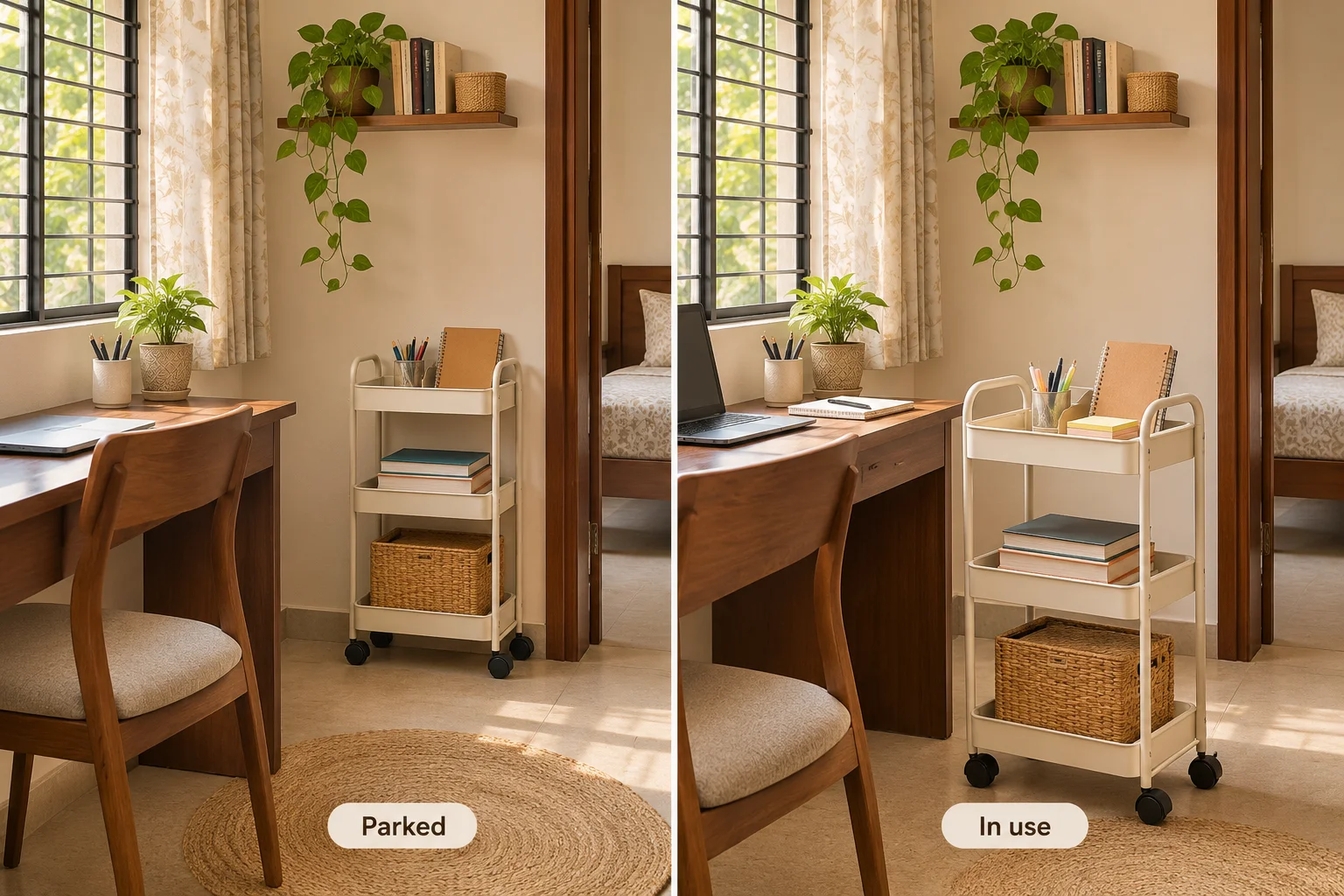
Check movement across the actual floor and around furniture, using the approved product method. Doorways, turns and surface changes can affect the task. Identify whether the parked trolley blocks a cupboard or reduces normal circulation. Any product locking or securing features should be used according to the instructions, not treated as interchangeable across models. A room concept with the trolley centred in empty space does not establish how it behaves in a furnished home.
Plan care and future changes
Ask how the wheels, shelves and other components are maintained or replaced. Keep access for cleaning and avoid overfilling the unit because another shelf looks available. Trial the complete use-and-return routine before buying more than one trolley or building a parking niche. If a future floor or furniture change alters the route, reassess the arrangement. The useful outcome is predictable storage and movement, not merely a collection of shelves that can roll.
A practical example to test the decision
A household buys a trolley to share supplies between a desk and dining table. The route works, but its first parked location blocks a cabinet. They define a different parking space and reduce the contents to the items actually moved. The trolley becomes useful because the whole routine is planned rather than because it adds more visible storage.
Step-by-step planning checklist
- List contents and the reason they need to move.
- Check the selected product’s intended use and assembly information.
- Trial the route and appropriate loaded handling.
- Define a parked location clear of ordinary access.
- Review maintenance and the return routine before expanding storage.
What to put in the quotation
- Exact product and intended contents.
- Assembly and supplied operating features.
- Delivery, inspection and care information.
- Any proposed furniture or floor adaptation priced separately.
Planning budget and scope
| Scope | Planning allowance or pricing method |
|---|---|
| Reorganise existing storage | ₹0–₹2,000 initial allowance |
| Suitable household trolley | ₹2,000–₹10,000 initial allowance |
| Custom storage or special equipment requirements | Separate product-specific proposal |
These are editorial allowances, not live BTM Layout prices. Capacity, materials and hardware vary. Compare suitable products on complete specifications rather than counting shelves or assuming the heaviest-looking unit is appropriate.
Preparation and project timing
Trial the route before committing to custom parking furniture. Stock products follow availability and assembly. Keep the setup reversible until normal use confirms that the trolley returns to its designated place instead of accumulating in a passage.
Before you approve the proposal
Keep a small contents list rather than letting the trolley become general overflow. If its purpose changes from light supplies to equipment or files, review suitability before loading it differently. A clear storage brief makes future decisions simpler: which objects belong there, where they travel and where the unit returns when the task ends.
Prepare a clearer brief with WallsToWonder
Collect photographs, measurements and the choices you want to compare. Use Design My Room to explore a visual direction, then have the relevant professional check the measured layout, product requirements and work scope. Account access and current tool allowances apply; a visual concept is not a costed construction drawing.
Organise the scope with the interior cost planning tool and explore interior companies serving Bengaluru. Confirm service availability for BTM Layout directly and ask the firm to explain deliverables, site involvement and exclusions.
For related planning, read Office Desk Decoration Ideas That Keep Your Workspace Clear.
Frequently asked questions
Does adding wheels always save effort?
No. Test the actual route, contents and intended user with the selected product.
Can a trolley support an appliance?
Only if the complete product and equipment requirements support that use.
Where should it park?
Choose a defined private location that keeps doors, storage and ordinary movement usable.
Are all wheel locks equivalent?
Follow the actual product’s instructions; do not assume a universal operating method.
What should be checked after assembly?
Intended use, appropriate movement, parked access and the supplied care information.
Turn this idea into a plan for your home
Visualise your space, understand the likely budget, or find a professional who can bring the idea to life.