
Art Deco Touches in Indian Homes: A Practical Guide
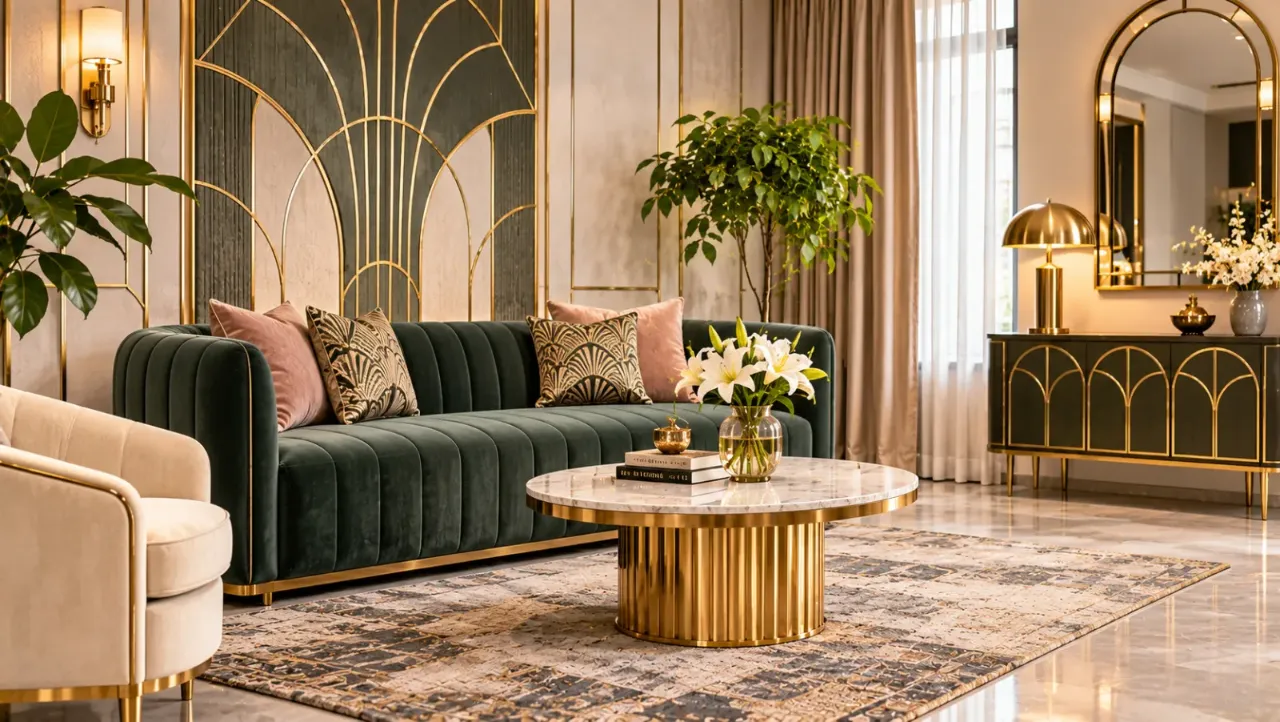
Art Deco has a distinctive way of making interiors feel polished and memorable. Recognisable through geometric patterns, symmetrical arrangements, curved furniture, metallic finishes and rich-looking materials, the style brings a sense of glamour without relying on excessive decoration.
Although Art Deco became popular nearly a century ago, its design language can work beautifully in contemporary Indian homes. The key is to borrow its strongest features and adapt them to modern layouts, everyday routines and local conditions.
You do not need a completely themed home to achieve the look. A geometric feature wall, a curved console, a statement mirror or a pair of elegant wall lights can introduce Art Deco character without overwhelming the space.
1. Understand the Defining Features of Art Deco
Art Deco is known for confident shapes, clean symmetry and carefully considered decorative details. It often combines strong geometric forms with polished surfaces and rich-looking materials.
- Geometric patterns: Repeating lines, chevrons, fans, sunbursts, stepped shapes and symmetrical motifs.
- Curved forms: Rounded armchairs, arched mirrors, circular tables and curved cabinet edges.
- Metallic finishes: Brass, bronze, chrome and polished nickel used as accents.
- Contrasting materials: Marble, timber, glass, lacquered surfaces and textured upholstery.
- Statement lighting: Sculptural pendants, tiered chandeliers, globe lights and decorative wall sconces.
The style can be dramatic, but it does not have to be dark or heavily decorated. Modern interpretations often use fewer patterns and more restrained finishes.
2. Choose a Colour Palette That Feels Balanced
Traditional Art Deco interiors are associated with rich colours and strong contrasts. However, a modern Indian home can interpret the palette in a lighter and more flexible way.
| Colour combination | Where it works |
|---|---|
| Ivory, charcoal and brushed brass | Living rooms and entryways |
| Deep green, warm beige and bronze | Study corners and bedrooms |
| Navy blue, soft grey and chrome | Contemporary living spaces |
| Burgundy, cream and aged gold | Dining areas and feature corners |
| Black, white and muted gold | Bathrooms and compact accent spaces |
You do not need to use every colour associated with the style. Start with a neutral base and introduce one deeper colour through furniture, upholstery or a feature surface.
In smaller Indian apartments, lighter walls and flooring can help preserve a sense of openness. Use darker shades selectively on a console, a chair, a headboard or a single wall.
3. Bring in Geometric Patterns Through Walls and Flooring
Geometric detailing is one of the easiest ways to make an interior feel Art Deco-inspired.
A feature wall can use fan-shaped motifs, repeated arches, stepped lines or symmetrical patterns. These can be created with paint, wallpaper, wall panelling or decorative mouldings.
For flooring, consider geometric tile patterns in an entryway, a powder room or a small transition area. If patterned flooring is already present, keep nearby walls and furniture relatively simple.
For Indian homes, practical choices include:
- Geometric ceramic or porcelain tiles in suitable wet and dry areas.
- Patterned wallpaper for a dry feature wall.
- Painted motifs for a more budget-conscious update.
- Timber or MDF panelling with stepped or linear detailing, subject to suitable material and installation conditions.
Avoid using bold patterns on every surface. One well-planned feature usually has more impact than several competing patterns.
4. Select Furniture with Curves and Strong Silhouettes
Art Deco furniture often has a confident outline. Rounded edges, fan-shaped backs, fluted fronts and symmetrical proportions can all contribute to the look.
A few carefully selected pieces can establish the style:
- A curved upholstered accent chair.
- A console with a stepped or geometric front.
- A round coffee table with a metallic base.
- A fluted sideboard with restrained hardware.
- A bed with a rounded or gently scalloped headboard.
In Indian homes, furniture also needs to support practical requirements such as storage, movement and cleaning. Check the dimensions before ordering, especially in compact living rooms and bedrooms.
A statement chair or console can become the focal point. The remaining furniture can stay relatively simple so the room does not look like a themed showroom.
5. Use Metallic Accents with Restraint
Metallic finishes are closely associated with Art Deco interiors. Brass, bronze, chrome and polished nickel can add definition to furniture, lighting and decorative details.
Good places to introduce them include:
- Cabinet handles and drawer pulls.
- Table and chair legs.
- Mirror frames.
- Wall sconces and pendant fittings.
- Narrow trim details on furniture.
- Decorative trays and small accessories.
The finish should suit the overall palette. Brushed brass can soften a neutral room, while chrome can create a sharper, more contemporary effect.
Try to repeat one or two metal finishes rather than mixing too many different ones. Also consider maintenance: highly polished surfaces may show fingerprints, water marks and dust more clearly.
6. Make Lighting Part of the Design
Lighting is more than a practical requirement in Art Deco interiors. It is an opportunity to introduce sculptural shapes and decorative symmetry.
Consider a pendant light above the dining table, a pair of wall sconces beside a bed or a decorative floor lamp near an accent chair.
For Indian homes, plan lighting around actual use:
- General lighting: For overall visibility.
- Task lighting: For reading, cooking and working.
- Accent lighting: For artwork, panelling or display areas.
Choose fixtures that are proportionate to the room. A large chandelier may suit a high-ceilinged living room, but a compact pendant or pair of wall lights may work better in an apartment.
Use appropriate electrical fittings and professional installation, particularly for heavier ceiling fixtures.
7. Add Mirrors, Glass and Reflective Surfaces
Mirrors and glass help introduce the polished character associated with Art Deco. They can also make a room feel brighter when positioned thoughtfully.
A sunburst mirror, a geometric-framed mirror or a tall mirror with stepped detailing can work well in an entryway or living room.
Other options include:
- Glass-fronted display cabinets.
- Smoked or fluted glass panels.
- Mirrored cabinet inserts.
- Glass tabletops with a simple metallic base.
In compact homes, avoid placing reflective surfaces where they create visual clutter or reflect an untidy storage area. A mirror works best when it reflects daylight, an attractive view or a considered part of the room.
8. Adapt Art Deco Details Room by Room
You do not have to apply the same level of decoration throughout the home. Different rooms can borrow different elements depending on their function.
| Room | Art Deco detail to consider | Practical note |
|---|---|---|
| Living room | Curved accent chair, geometric rug, statement mirror | Keep the main circulation path clear |
| Bedroom | Upholstered headboard, symmetrical bedside lights | Choose comfortable, easy-care fabrics |
| Dining area | Sculptural pendant, rounded table, metallic details | Ensure the light does not obstruct sightlines |
| Entryway | Geometric console, framed mirror | Keep enough space for everyday movement |
| Bathroom | Patterned tiles, chrome or brass fittings | Choose finishes suitable for moisture and cleaning |
| Kitchen | Fluted glass, simple metallic handles | Prioritise easy-to-clean surfaces |
The aim is to create a connection between rooms without repeating the same decorative feature everywhere.
9. Bring Art Deco into Indian Homes Without Losing Practicality
Indian homes have specific considerations: compact rooms, varied daylight, dust, humidity, frequent use of kitchens and bathrooms, and the need for useful storage.
A few adjustments can help the style work in everyday conditions:
- Choose washable or maintainable finishes in frequently used areas.
- Use metallic details where they will not be exposed to excessive moisture or harsh cleaning products.
- Check that decorative wall panels do not interfere with switches, sockets or access panels.
- Select upholstery that suits the household's cleaning needs.
- Use patterned tiles only where the layout and grout maintenance make sense.
- Keep decorative objects away from busy walkways and frequently used surfaces.
Art Deco should make a home feel more considered, not more difficult to maintain.
10. Common Mistakes to Avoid
| Mistake | A better approach |
|---|---|
| Using too many geometric patterns | Choose one main pattern and keep other surfaces quieter |
| Adding metallic finishes everywhere | Repeat one or two finishes in selected places |
| Choosing oversized statement furniture | Measure the room and preserve movement space |
| Making every wall dark | Use deeper colours as controlled accents |
| Treating every room as a themed space | Introduce Art Deco details selectively |
| Choosing decorative fixtures without checking function | Consider light output, maintenance and installation |
11. Create the Look Gradually
You do not need to renovate an entire home to introduce Art Deco. Start with one room or one focal point and build around it.
For example, a living room could begin with a geometric rug, a curved accent chair and a brass-framed mirror. Later, you might add a sculptural pendant or a fluted console.
Before buying anything, look at the room as a whole. Consider the existing flooring, wall colour, furniture proportions, natural light and storage requirements. This helps new details feel intentional rather than added at random.
Closing Thoughts
Art Deco can bring structure, elegance and personality to Indian homes when its defining elements are used thoughtfully. Geometric patterns, curved furniture, metallic accents and sculptural lighting can create a distinctive interior without requiring elaborate decoration.
The most successful approach is to balance decorative character with everyday comfort. Choose a few recognisable details, adapt materials to the room's conditions and leave enough visual space for the design to breathe.
A home does not need to look like a period-inspired set to capture the appeal of Art Deco. A few well-chosen details can be enough.
Explore More with Walls to Wonder
Planning an interior update? Explore Walls to Wonder's AI tools to visualise ideas, understand costs and make more informed design decisions.
- Whole Home Visualizer – Explore design ideas across your home.
- Design My Room – Experiment with different room styles and looks.
- Interior Design Cost Estimate – Get an initial understanding of interior costs.
- Interior Quotation Checker – Review and understand interior quotations.
- Rate My Room Design – Get feedback on your room design.
- Interior Style Finder – Discover an interior style that suits your preferences.
Visit Walls to Wonder for more interior design ideas and inspiration.
Turn this idea into a plan for your home
Visualise your space, understand the likely budget, or find a professional who can bring the idea to life.