
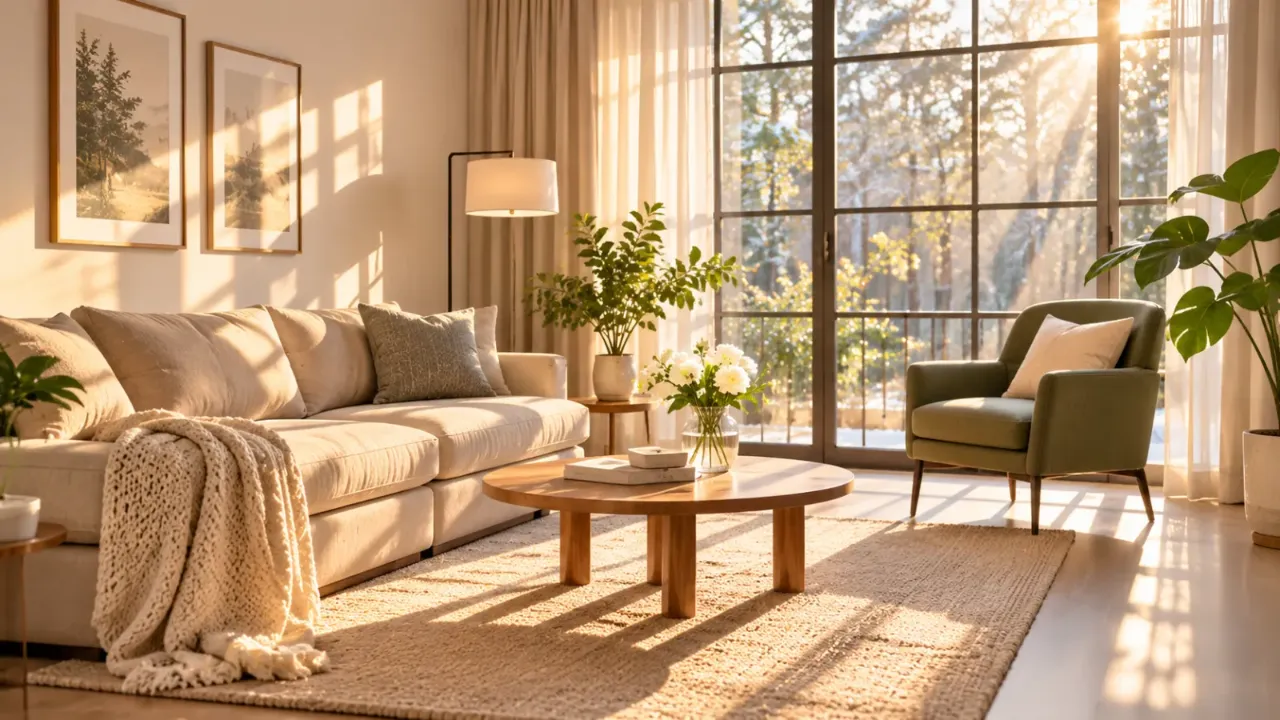
Arranging Furniture to Catch the Low Winter Sun
There is something special about a patch of winter sunlight falling across the floor, warming a favourite chair or brightening a quiet corner of the living room. During colder months, natural sunlight can make a home feel more inviting without requiring a major change in its interiors.
But enjoying that sunlight is not just about having large windows. The way furniture is arranged determines whether the light reaches the places where you spend time or gets blocked by bulky sofas, tall cabinets and unnecessary accessories.
A small change in the position of a chair, dining table or reading corner can make a noticeable difference. Here is how to arrange furniture to make the most of low winter sun while keeping your home functional and comfortable.
1. Understand Where Winter Sunlight Enters Your Home
Before moving furniture, observe how sunlight travels through your rooms. In India, which lies in the Northern Hemisphere, the winter sun generally follows a lower path across the southern part of the sky. South-facing openings can receive useful direct sunlight around the middle of the day, while east-facing windows receive morning light and west-facing windows receive afternoon light.
However, the actual sunlight entering a room depends on its orientation, window size, balcony projections, nearby buildings, trees and surrounding structures.
Start by observing three things:
- Morning: Notice which windows receive the first direct sunlight and where the light falls.
- Afternoon: Check whether sunlight reaches the centre of the room or remains close to the window.
- Late afternoon: Look for areas that receive warm, low-angle sunlight and check whether it creates glare.
Do this over a few clear days rather than relying on one observation. The sun's position changes through the season, so a spot that receives direct sunlight in December may receive it differently in January or February.
2. Create a Sunny Seating Corner in the Living Room
The living room is often the easiest place to enjoy winter sunlight because it usually has a larger window, balcony or open area.
Instead of arranging every seat around the television, consider whether one part of the room can become a comfortable sunny corner.
Position an accent chair near the window
A single lounge chair placed near a sunny window can create a relaxed spot for reading, drinking tea or simply enjoying the daylight.
Leave enough space between the chair and the window for curtains to move freely and for the window to be opened when required. Avoid placing the chair so close that it blocks access to the balcony or makes the room difficult to move through.
Angle the sofa towards the light
If the sofa is currently positioned against a wall that receives very little daylight, consider whether it can be rotated or shifted slightly towards a brighter part of the room.
You do not necessarily need to place the entire sofa directly in front of the window. A slight change in orientation can help people enjoy the light without obstructing the opening.
Keep low furniture near the window
A low side table, compact bench or small ottoman can sit comfortably near a window without blocking as much of the incoming light as a tall cabinet would.
Design tip: Use a light-textured throw and one or two cushions in warm neutral shades to make the seating corner feel inviting without adding visual clutter.
3. Make a Reading Corner Around Natural Light
A winter reading corner does not need an entire room. Even an unused corner beside a window can become a comfortable retreat.
Choose a chair with a supportive back and enough seat depth for relaxed reading. Position it so that daylight falls on the book or reading surface without shining directly into your eyes.
Consider adding:
- A compact side table for books, tea or a reading lamp
- A floor lamp for cloudy days and evenings
- A small rug to define the seating area
- A cushion or throw for additional comfort
- A low bookshelf if it does not block the window
Think about the direction of light as well. For reading, side lighting is often more comfortable than having strong direct sunlight fall straight onto the page or screen.
If the window receives intense afternoon sun, use an adjustable blind or light curtain to soften it when necessary.
4. Position Your Dining Table to Enjoy Daylight
Winter meals can feel more pleasant when the dining area receives natural light. If your dining space is close to a window or balcony, see whether the table can be moved to make better use of it.
For compact dining spaces
A round or small rectangular table can work well near a bright opening, provided there is enough space to pull out chairs and walk around it.
For larger dining areas
If the room allows, position the table so that diners can enjoy the natural light without sitting directly in the path of strong glare.
Keep the window visually open
Avoid placing tall crockery units, display cabinets or bulky storage directly in front of the brightest window. If storage is necessary, consider a lower unit or place the taller piece on a less sunny wall.
The goal is not to push the dining table as close to the window as possible. It is to create a layout where daylight reaches the dining area while everyday movement remains comfortable.
5. Arrange Your Bedroom for Gentle Morning Sun
A bedroom can benefit from winter sunlight, especially when it enters during the morning and makes the space feel brighter.
If your room receives morning light, consider placing a small chair or a compact bench near the window. It can become a useful spot for getting ready, reading or enjoying a few quiet minutes before the day begins.
Keep the bed placement practical
Do not shift the bed into an awkward position just to catch sunlight. Maintain comfortable access on both sides where possible, keep wardrobes easy to open and avoid blocking the bedroom door.
If direct sunlight falls on the bed, think about how it affects sleep and comfort. Adjustable curtains or blinds can help you control the amount of light entering the room.
Use a window-side bench carefully
A low bench beneath a window can provide extra seating or a place to keep a cushion and blanket. Check that it does not block a radiator, ventilation opening or window access, where these are present.
6. Give Your Work Desk a Better Relationship With Daylight
Natural light can make a home workspace feel more pleasant, but direct sunlight on a monitor can create reflections and make working uncomfortable.
Instead of placing the desk directly in front of the brightest window, experiment with a position where the window is to the side of your screen.
Try these adjustments:
- Place the desk perpendicular to the window where the layout permits.
- Keep the monitor away from direct reflections.
- Use adjustable blinds to control changing sunlight.
- Avoid placing tall shelves between the window and your desk.
- Keep frequently used stationery and accessories organised so the desk remains uncluttered.
If you work from home for long hours, prioritise screen comfort and a consistent working position over chasing a patch of direct sunlight.
7. Use Low Furniture to Keep Sunlight Moving Through the Room
One of the simplest ways to improve daylight access is to look at the height of the furniture placed near windows.
Tall furniture can interrupt the path of incoming sunlight, particularly in compact rooms where every piece occupies a significant amount of visual space.
Consider these alternatives:
- Replace a tall storage unit near a window with a low console.
- Use a compact bench instead of a bulky cabinet.
- Choose open-legged furniture where it suits the design.
- Move tall plants away from the brightest part of the window.
- Keep decorative objects grouped rather than spread across the sill.
This does not mean every room should have low furniture. It simply means that the brightest areas should not be unnecessarily blocked by large objects.
8. Choose Materials and Colours That Work With Winter Light
Furniture placement determines where sunlight falls, but materials and colours influence how the room looks when it gets there.
Light and warm neutrals
Ivory, beige, warm white and soft taupe can make a sunlit corner feel calm and welcoming.
Natural wood
Wooden furniture adds warmth and works particularly well in reading corners, living rooms and dining spaces.
Textured fabrics
Cotton, linen, wool blends and textured upholstery can add depth without making a room look visually heavy.
Reflective accents
A mirror placed thoughtfully on a side wall can help spread daylight visually, although it should not be positioned where it creates uncomfortable glare.
Avoid assuming that a room needs a completely pale colour scheme to feel bright. A darker accent chair or wooden side table can provide contrast while the surrounding surfaces remain light.
9. Keep Glare, Heat and Privacy Under Control
More sunlight is not always better. Direct low-angle sunlight can create glare on televisions, computer screens and glossy surfaces. It can also make certain seating areas uncomfortable, even during winter.
Use a few simple controls:
- Install adjustable blinds or curtains rather than relying only on fixed coverings.
- Use sheer curtains when you want softer daylight and privacy.
- Keep screens away from direct reflections.
- Avoid placing delicate materials or objects in prolonged direct sunlight.
- Move seating slightly away from the window if the area becomes uncomfortably warm.
- Keep window handles and balcony doors accessible.
For homes with strong afternoon sun, especially through west-facing windows, adjustable shading can make the space easier to use.
Remember that winter sun is seasonal. A layout should still work when the sunlight shifts or disappears.
10. Common Furniture Placement Mistakes to Avoid
A few layout decisions can prevent you from enjoying the sunlight your home already receives.
Blocking the window with tall furniture: A large cabinet or display unit can reduce the amount of daylight reaching the room.
Pushing every seat against the wall: This may leave the brightest part of the room unused. A carefully positioned chair can make better use of the space.
Placing the television opposite strong sunlight: Reflections can make the screen difficult to view during the day.
Ignoring walking space: Furniture should not block balcony access, window operation or the main circulation route.
Using too many accessories: A sunny corner can quickly become crowded if it is filled with planters, side tables, baskets and decorative objects.
Assuming the sun will stay in the same place: The angle and duration of sunlight change through the season. Observe the room before finalising the layout.
11. A Simple Winter Sun Furniture Checklist
Before rearranging your room, use this checklist:
- Observe the direction and timing of sunlight over a few clear days.
- Identify the window or balcony that receives the most useful sunlight.
- Move tall furniture away from the brightest opening where practical.
- Create one comfortable seating or reading spot.
- Check that curtains and windows can still be operated easily.
- Keep enough walking space around furniture.
- Check for screen glare in work and entertainment areas.
- Use adjustable window coverings for changing sunlight.
- Make sure the layout remains functional after the winter season.
You do not need to rearrange your entire home. Often, moving one chair, changing the direction of a desk or clearing a window-side area is enough to make the room feel more inviting.
Closing Thoughts
Winter sunlight is one of the simplest elements that can make a home feel more comfortable. The key is to arrange furniture around the way your rooms actually receive daylight rather than following a fixed layout rule.
A sunny reading chair, a dining table positioned near a bright opening or a desk that avoids screen glare can make everyday routines more enjoyable. Observe the sunlight, experiment with small furniture changes and keep the layout flexible.
A well-arranged home does not just look good. It makes better use of the natural conditions already available to it.
Explore More with Walls to Wonder
Planning a room layout becomes easier when you can experiment with furniture positions, colours and design ideas before making changes. Explore Walls to Wonder's AI tools to visualise your home and make more informed interior decisions.
- Whole Home Visualizer
- Design My Room
- Interior Design Cost Estimate
- Interior Quotation Checker
- Rate My Room Design
- Interior Style Finder
Visit Walls to Wonder for more ideas and inspiration for your home.
Turn this idea into a plan for your home
Visualise your space, understand the likely budget, or find a professional who can bring the idea to life.