
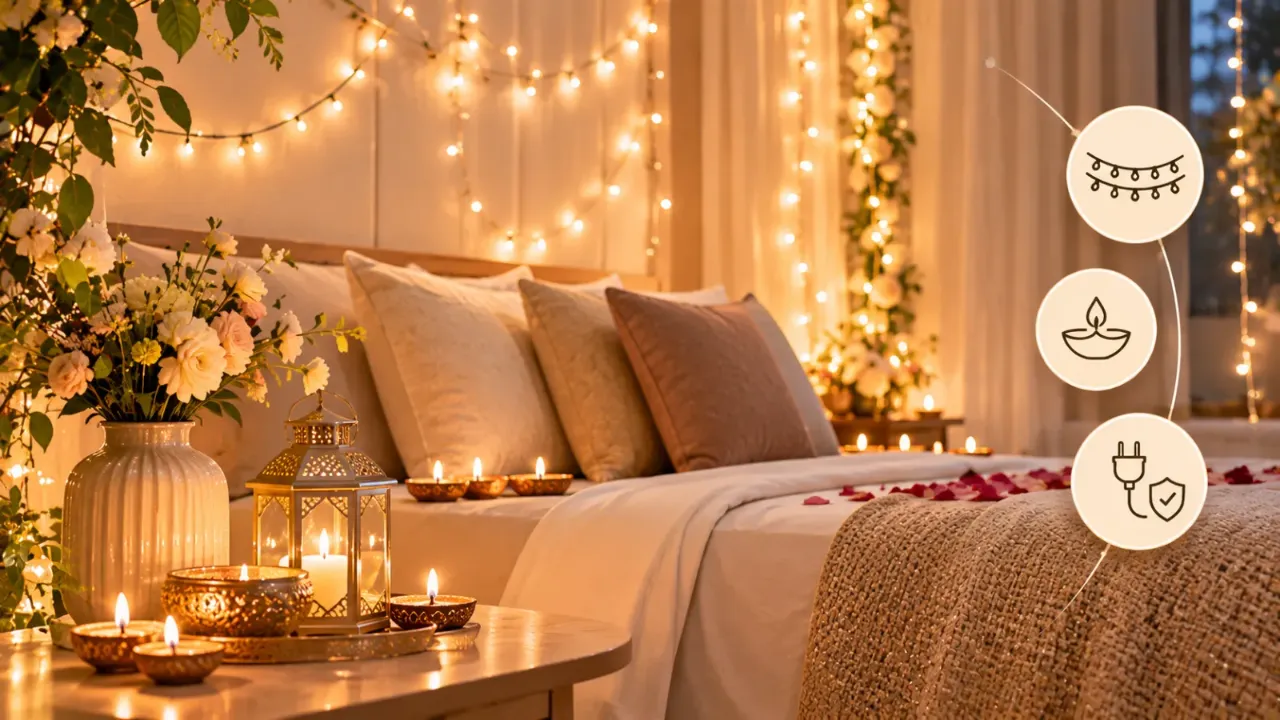
Lighting a Wedding Night at Home: String Lights, Diyas and Safe Wiring
A wedding celebration at home feels different when the evening arrives and the lights come on. A balcony lined with warm fairy lights, a welcoming entrance illuminated by diyas and a softly lit courtyard can make even a familiar space feel special. The best wedding lighting, however, is not simply about adding as many lights as possible. It is about creating the right atmosphere while keeping guests, decorations and the home safe.
In Indian homes, wedding celebrations often involve a mix of decorative electrical lights and traditional oil lamps. These can work beautifully together, provided they are planned carefully. From choosing the right lighting for each area to avoiding overloaded sockets and keeping open flames away from fabrics, a little preparation can prevent last-minute problems.
1. Start With a Lighting Plan for Each Area
Before buying lights or calling a decorator, identify the areas that need attention. A home wedding may use the entrance, balcony, living room, courtyard, terrace and dining area differently. Each space needs a suitable lighting approach.
- Entrance: Use warm string lights around the doorway or along a suitable architectural edge. Keep the entrance bright enough for guests to see steps and thresholds.
- Balcony: Use weather-appropriate decorative lights, secured along railings or walls without obstructing the route.
- Living room: Combine ambient lighting with a few decorative accents. Avoid placing bright lights directly in guests' eyes.
- Courtyard: Use a combination of overhead lighting and carefully positioned decorative lights. Keep walking paths clear.
- Dining area: Prioritise comfortable, even illumination so guests can see food, crockery and seating clearly.
- Staircase and corridors: Keep these areas well lit and free from trailing wires, lamps and decorative obstructions.
A simple plan also helps you decide where electrical connections are required and where battery-operated lights may be more practical.
2. Choose String Lights That Suit the Occasion
String lights are among the easiest ways to create a festive atmosphere. They can outline architectural details, highlight balconies and add a gentle glow to outdoor spaces.
Warm White Lights
Warm white lights are a versatile choice for traditional and contemporary wedding decor. They complement marigold flowers, brass accents, wooden furniture and neutral walls.
Soft Golden Lights
Soft golden lights work well with richer wedding palettes such as ivory, burgundy, deep red and antique gold.
Subtle Multicolour Lights
Subtle multicolour lights can add a playful touch to a balcony or courtyard, but use them selectively. Too many competing colours can make a small space feel visually busy.
When choosing string lights, check the product's intended use. Indoor-only lights should not be installed outdoors or exposed to rain. For balconies and terraces, select lights with a suitable outdoor-use rating and follow the manufacturer's installation instructions. Inspect the cable, plug and lamp holders before use. Avoid products with exposed conductors, damaged insulation or loose connections.
3. Use Diyas to Add a Traditional Glow
Diyas bring a warmth that decorative bulbs cannot quite replicate. They can be used near the entrance, around a designated decorative arrangement or in a prayer area, provided the location is suitable for an open flame.
A few well-placed diyas usually look more elegant than a large number crowded together. Consider using brass, terracotta or other stable holders that suit the decor.
Keep these precautions in mind:
- Place diyas on a stable, level, non-flammable surface.
- Keep them well away from curtains, fabric backdrops, flower garlands, paper decorations and loose clothing.
- Avoid placing them where guests may brush against them or where children can reach them.
- Do not position diyas beneath hanging decorations or near electrical cables.
- Keep them away from doorways, narrow passages and staircase landings.
- Never leave a burning diya unattended. Extinguish it when the area is no longer supervised or before going to bed.
If the decor includes fabric drapes, artificial flowers or dense decorative installations, battery-operated LED diyas can create a similar visual effect without an open flame.
4. Combine Diyas and String Lights Without Creating Clutter
The most attractive arrangements give each type of lighting its own role. String lights can provide the overall decorative glow, while diyas can create small points of warmth in selected areas.
For example, outline the entrance with warm white lights and place a few diyas on a stable, separate platform away from the doorway. On a balcony, use securely installed string lights along the railing and choose LED diyas for decorative clusters near fabrics or plants.
Avoid running electrical wires close to burning lamps. Keep a clear physical separation between open flames and electrical installations. This is particularly important when using artificial flower walls, fabric canopies, paper lanterns or hanging decorations.
The aim is to create layers of light, not to fill every available surface.
5. Plan Safe Wiring Before Installation
Temporary wedding decorations can increase the number of electrical connections used at home. Multiple strings of lights, speakers, fans and other equipment may compete for the same supply points. Poor connections and overloaded circuits can overheat and become fire hazards.
Before installation:
- Inspect plugs, cables, sockets and extension boards for damage.
- Use good-quality, correctly rated electrical products from reliable suppliers.
- Avoid loose connections, exposed wires and makeshift joints.
- Do not connect several extension boards together to create extra reach.
- Do not overload sockets or extension boards.
- Keep wires away from hot surfaces, wet areas and open flames.
- Do not run cables beneath carpets, rugs or doorways where they may be crushed.
- Secure cables along safe edges so guests cannot trip over them.
- Keep plugs and extension boards away from rain, water spills and damp floors.
If the existing sockets are insufficient or the planned lighting load needs additional circuits, do not improvise. Electrical additions, alterations and repairs should be handled by a suitably licensed electrical contractor, in line with applicable regulations.
6. Be Extra Careful With Outdoor and Monsoon Lighting
Balconies, terraces and courtyards are popular locations for wedding decorations, but outdoor conditions need additional attention. Even a covered balcony may be exposed to wind, moisture or rain.
Use only decorative lights and connections intended for the conditions in which they will be installed. Keep plugs and connections protected as specified by the manufacturer. Do not use indoor-only lights outdoors, and never handle electrical connections with wet hands.
If rain begins, switch off the decorative lighting from a safe, dry location. Do not touch wet cables, plugs or electrical equipment. Have a qualified electrician inspect any equipment that has become wet before it is used again.
For a celebration during the monsoon, battery-operated decorative lights may be a practical choice in areas where safe electrical protection is difficult to arrange.
7. Make Lighting Comfortable for Guests
Wedding lighting should look beautiful in photographs, but it should also help people move comfortably through the home.
Avoid very bright bulbs aimed directly at seating areas. Use softer ambient lighting in spaces where guests will sit and talk. Keep the dining area bright enough for serving and eating, and make sure stairs, corridors and changes in floor level remain visible.
Also consider older guests, children and anyone who may have difficulty navigating dim spaces. Decorative lighting should never replace the basic lighting needed for safe movement.
Keep emergency exits, staircases and access to electrical switches unobstructed. Do not hide switches behind fabric panels or decorative installations.
8. A Simple Wedding-Night Lighting Checklist
Use this checklist before guests arrive:
- Test every string light before installing it.
- Confirm that indoor and outdoor lights are suitable for their locations.
- Check cables, plugs and sockets for visible damage.
- Ensure the electrical load is within the capacity of the circuit and equipment.
- Have a qualified electrician review any additional wiring requirements.
- Secure cables away from walking routes.
- Keep diyas on stable surfaces and away from combustible decorations.
- Assign someone to supervise areas where diyas are burning.
- Keep staircases and exits clear and adequately illuminated.
- Switch off decorative lights and extinguish diyas when the celebration ends.
9. Common Wedding Lighting Mistakes to Avoid
Using Too Many Lights on One Connection
More lights do not automatically create a better effect. Plan the electrical load rather than relying on multiple adaptors.
Mixing Indoor and Outdoor Products
A decorative light designed for indoor use may not be suitable for a balcony or terrace.
Placing Diyas Beside Fabric Decor
Drapes, artificial flowers and paper decorations can catch fire. Keep open flames away from them.
Leaving Cables Loose on the Floor
Guests may trip over them, and cables can become damaged when crushed underfoot.
Ignoring the Basic Lighting
A beautiful decorative setup is not useful if guests cannot see steps, corridors or dining areas clearly.
Leaving Everything Switched on Overnight
Turn off decorative electrical lighting when it is no longer needed and extinguish all diyas before leaving the area or going to sleep.
Closing Thoughts
A well-lit wedding celebration at home is a balance of atmosphere, thoughtful placement and safety. Warm string lights can highlight the architecture, diyas can bring a traditional touch, and practical ambient lighting can make guests feel comfortable throughout the evening.
Plan the layout before installation, use suitable products, keep open flames away from decorations and avoid makeshift electrical connections. When additional wiring is needed, involve a qualified professional. With these details taken care of, your home can feel festive and welcoming without compromising safety.
Explore More with Walls to Wonder
Planning a celebration or refreshing your home? Explore Walls to Wonder's AI-powered tools to visualise spaces, discover design ideas and plan your interiors with greater clarity.
- Whole Home Visualizer
- Design My Room
- Interior Design Cost Estimate
- Interior Quotation Checker
- Rate My Room Design
- Interior Style Finder
Discover more at Walls to Wonder.
Turn this idea into a plan for your home
Visualise your space, understand the likely budget, or find a professional who can bring the idea to life.