
Reusing Solid-Wood Furniture in a Ballygunge Renovation: Repair, Refinish or Replace?
Assess solid-wood furniture piece by piece before deciding to repair, refinish or replace it. In a Ballygunge renovation, check construction, stability, damage, usable dimensions and the household’s needs. A sound retained piece may fit a new room scheme, but sentimental value or a fresh finish does not resolve an unsuitable or damaged structure.
Start with your Ballygunge property
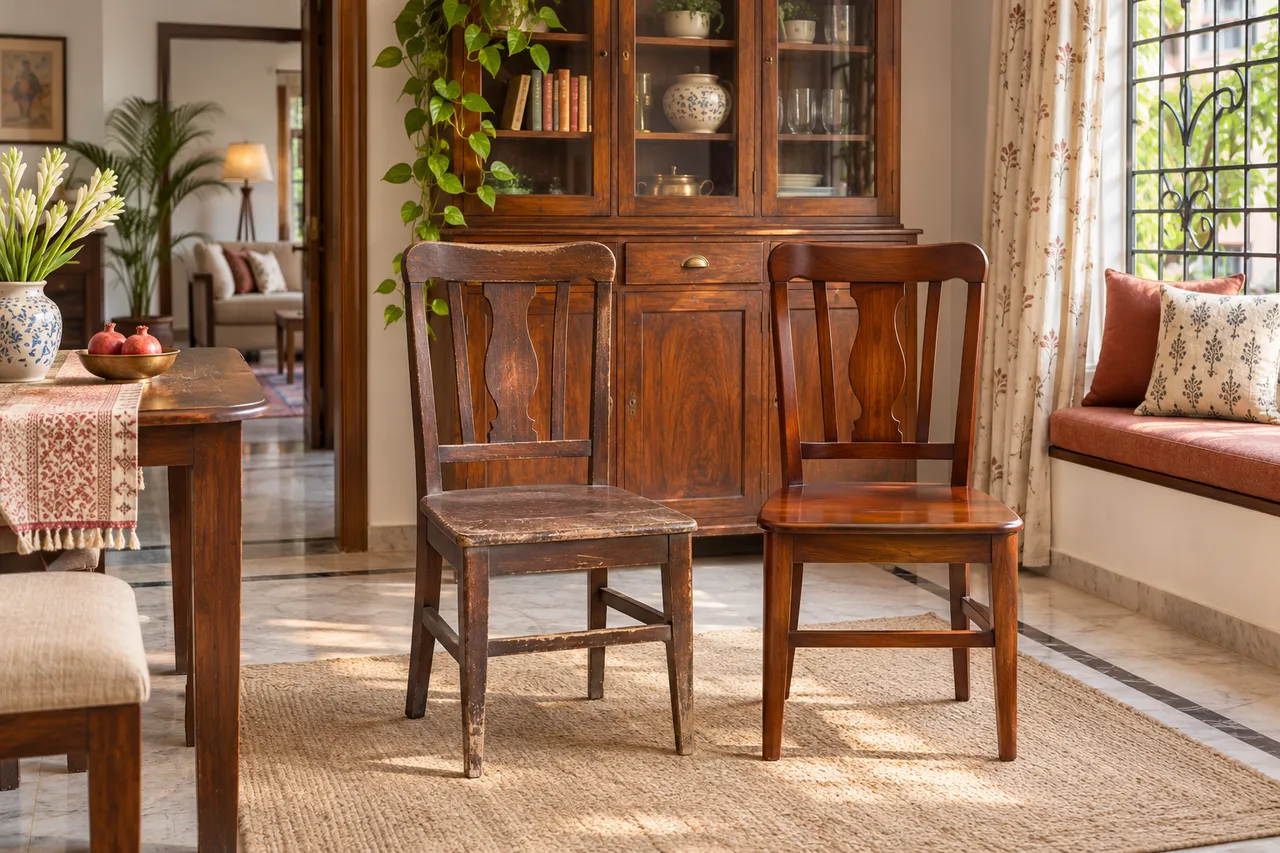
A Ballygunge address does not establish a furniture piece’s age, species or heritage value. Make a room-by-room inventory of what is actually present and record any reliable purchase or maker information. Separate ordinary reusable furniture from items that may need specialist conservation. The decision should respect the piece and its use without inventing a provenance from its appearance.
Inspect before pricing a finish
Photograph the whole piece, joints, drawers, legs and damaged areas. Have a competent furniture professional assess condition and distinguish structural repair from surface work. Veneers, previous coatings and mixed construction may not be obvious in a wide photograph. Do not assume every timber-looking panel is solid wood or that aggressive sanding is appropriate. If an object may have historical or exceptional value, obtain suitable specialist advice before an irreversible treatment.
Check whether it still works in the room
Measure the complete footprint and moving parts. A beautiful cabinet is not a good reuse candidate for a particular location if it blocks doors or cannot hold the intended objects. Test chair comfort and stability rather than retaining a matching set purely for its look. Compare moving a sound piece to a different room with altering it. A new arrangement can preserve both function and character without changing the furniture unnecessarily.
Specify the treatment and sample
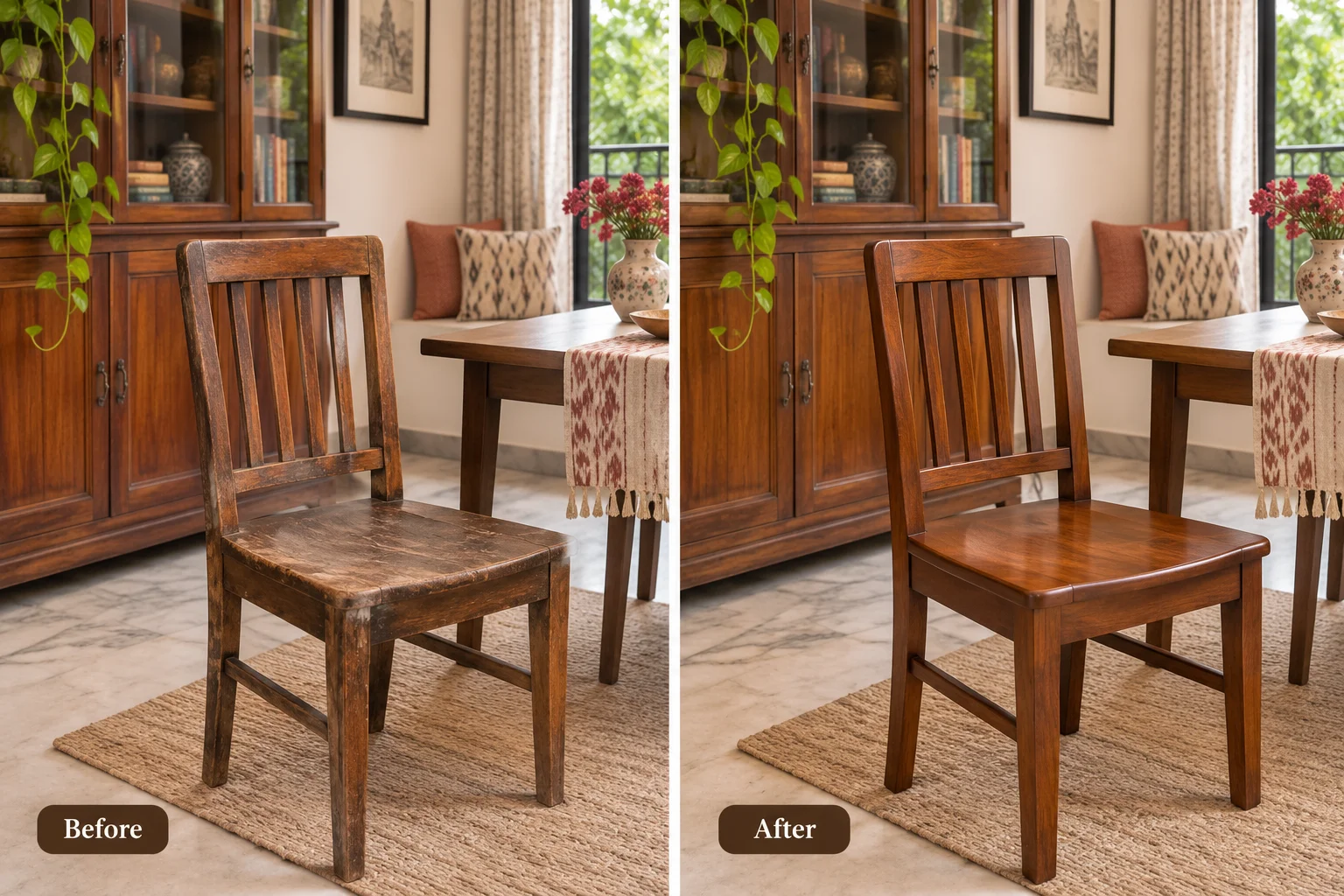
Ask the restorer or contractor to describe the proposed repair, preparation and finish, including what original material or appearance will be retained. Approve a suitable sample or test area where appropriate. A request for a modern polish is not a complete specification. Discuss expected variation in old timber and any limitations after repair. Avoid a promise of an identical new-looking surface when the condition and material do not support it.
Coordinate handling and installation
Establish whether work happens on site or in a workshop, how the piece is protected and who is responsible for transport. Check delivery routes in both directions and record condition before moving. Follow relevant product or professional advice for stability and restraint after reinstatement. Keep furniture work coordinated with dusty or wet renovation activities so a completed finish is not immediately exposed to avoidable damage.
A practical example to test the decision
A family wants to discard a timber cabinet because its finish looks dated. Inspection finds a serviceable piece that fits a different wall, while two dining chairs need attention before reuse. They price repair and a suitable finish separately, preserve the cabinet and compare replacement of the unsuitable items. The decision is item-specific rather than a rule to retain everything old.
Step-by-step planning checklist
- Inventory each piece and record known construction or provenance.
- Arrange a condition and stability assessment.
- Test dimensions and intended use in the new layout.
- Approve the treatment, sample and limitations before work.
- Document handling, reinstatement and the final condition check.
What to put in the quotation
- Condition assessment and identified repairs.
- Preparation, finish system and approved sample.
- Transport, protection, storage and reinstatement responsibilities.
- Items excluded from repair and what further assessment would trigger a revised quote.
Planning budget and scope
| Scope | Planning allowance or pricing method |
|---|---|
| Initial assessment and small adjustments | Agree a defined assessment or repair fee |
| Refinishing individual pieces | Quote per piece after condition review |
| Structural restoration or specialist conservation | Specialist proposal required |
Use itemised quotations rather than a single whole-house polishing rate. Condition, construction, preparation and transport affect the price. Compare repair with a suitable replacement, but include the cost of retaining, moving and reinstalling the piece in both options.
Preparation and project timing
Inventory before ordering replacement furniture. Workshop availability, repairs and the selected finish determine the programme and when the piece can be handled or used. Ask for product-specific curing guidance and avoid scheduling delivery into an unfinished wet-work area.
Before you approve the final proposal
Keep a before-and-after condition record and note any remaining limitations in writing. A repaired piece can be useful without becoming indistinguishable from new furniture. Agree what variation is accepted and which defects require further attention. If the piece is being retained for personal reasons, separate that preference from claims about market value or historical importance. This allows a realistic decision about treatment and budget while preserving the information that matters for future care.
Prepare a clearer brief with WallsToWonder
Collect photographs, measurements and the choices you want to compare. Use Design My Room to explore a visual direction, then have the relevant professional check the measured layout, product requirements and work scope. Account access and current tool allowances apply; a visual concept is not a costed construction drawing.
Organise the proposal with the interior cost planning tool and explore interior companies serving Kolkata. Confirm service availability for Ballygunge directly and ask the firm to explain deliverables, site involvement and exclusions.
For related planning, read Teak, Sheesham or Mango Wood: Which Is Best for Furniture?.
Frequently asked questions
Can a photograph confirm solid wood?
No. Have the construction assessed, especially before choosing a treatment or valuation.
Should old furniture always be retained?
No. Consider condition, suitability, repair scope and the household’s needs piece by piece.
Can every finish be sanded away?
Do not assume so. Veneers, previous treatments and construction can affect the appropriate method.
How do I protect sentimental pieces?
Document condition and agree handling and treatment responsibilities. Seek specialist advice for potentially significant items.
What should I compare in quotations?
The same repairs, preparation, finish, transport, protection and reinstatement scope, with stated limitations.
Further reference: IKEA guidance on furniture stability and restraint.
Turn this idea into a plan for your home
Visualise your space, understand the likely budget, or find a professional who can bring the idea to life.